


By Cosmos Obiri Yeboah
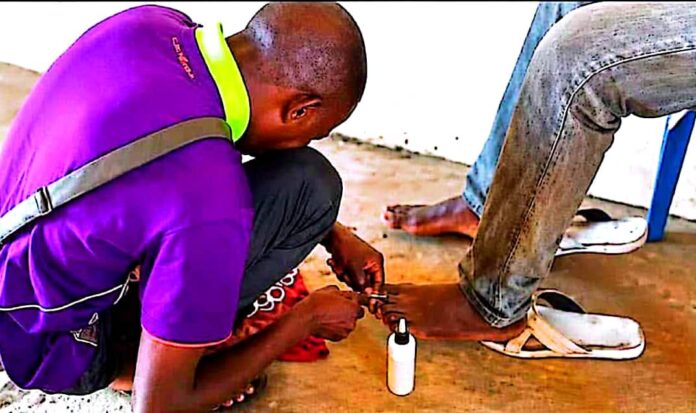
Everyday beauty routines such as manicures, pedicures, shaving and nail grooming are common across Ghana, with many people relying on roadside barbers and neighborhood nail technicians because the services are affordable and convenient.
But health experts are warning that the reuse of unsterilized sharp instruments in some informal grooming settings could expose clients to blood-borne infections, particularly Hepatitis B and, in rare cases, HIV.
Tools including razors, nail clippers, blades and cuticle cutters can become contaminated when they cause small cuts or breaks in the skin. If the same instruments are used on another person without proper sterilization, infected blood may be transferred and lead to infection.
Experts say Hepatitis B is the bigger concern because the virus is significantly more infectious than HIV and can survive outside the human body for up to seven days. This means contaminated grooming equipment can remain a potential source of transmission if proper cleaning and disinfection procedures are not followed.
Although HIV transmission through shared grooming tools is considered rare, medical professionals say it remains biologically possible when a blood-contaminated instrument is used on another person while the virus is still viable. They emphasize, however, that this route is far less common than sexual transmission.
A Ghanaian woman living with Hepatitis B, who requested anonymity, said she was shocked when she received her diagnosis because she was unsure how she contracted the infection. She said her husband was tested but received a negative result.
“I honestly don’t know where I got Hepatitis B from. When I tested positive, my husband also got tested and he was negative. We couldn’t understand how I became infected.”
She said she had regularly visited informal nail technicians in her community, including local “kli kli” operators, for manicures and pedicures. During those visits, she said metal tools were used to trim her nails and remove cuticles.
“I usually visited some local nail technicians, including some kli kli boys in my area, for my manicures and pedicures. They used metal tools to cut my nails and remove the skin around them. At the time, I never asked whether those instruments had been sterilized before they were used on me.”
The woman said her diagnosis changed the way she approaches personal grooming.
“I cannot say those tools infected me because I have no proof. But after learning that Hepatitis B can spread through contaminated sharp instruments, I became much more careful. Now I either carry my own nail tools or make sure the instruments are properly sterilized before they are used on me”.
Health professionals caution that her experience does not prove that grooming tools were the source of her infection. Hepatitis B can be transmitted through several routes, and determining the exact cause requires proper medical investigation.
However, experts say contaminated sharp instruments remain a recognized risk and can contribute to the spread of Hepatitis B and, in rare circumstances, HIV when fresh infected blood is involved.
They are advising the public to take preventive measures, including using personal manicure and pedicure kits where possible, ensuring disposable blades are used only once, confirming that reusable tools are sterilized between clients, and receiving the Hepatitis B vaccine.
As informal beauty services continue to grow across Ghana, health experts say improving hygiene standards and public awareness will be critical in reducing preventable infections.
They say a simple decision by clients to demand properly sterilized equipment could help prevent exposure to diseases that may have lifelong health consequences.