


Artificial intelligence is no longer merely a tool for writing propaganda or spreading extremist videos. It is beginning to enter the battlefield. That should alarm African governments because the continent is already fighting terrorist organizations that operate across porous borders, exploit weak institutions and adapt faster than many state security systems can respond.
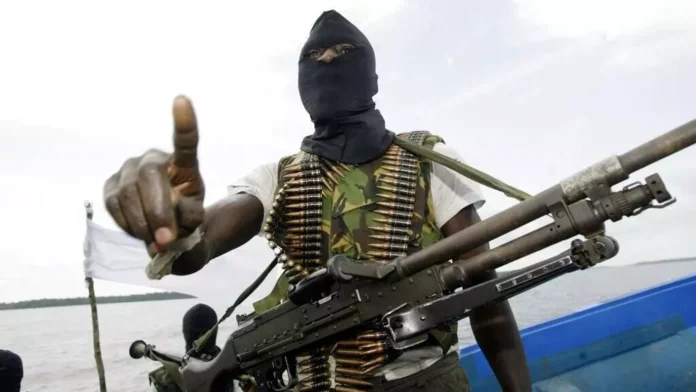
A new report from Cambridge University, based on in-depth interviews with former members of Boko Haram and its factions in northeast Nigeria, provides a disturbing glimpse of what may be coming. The research found that the jihadist group had been using AI systems to support combat and operational activities, including planning, weapons troubleshooting and improving drone-delivered explosives.
The significance extends well beyond Boko Haram. The danger is not that AI will suddenly transform poorly armed insurgents into technologically sophisticated armies. It is more subtle and potentially more consequential. AI can act as a force multiplier, allowing terrorist organizations to extract greater operational value from limited manpower, information and resources.
That means Africa’s counter-terrorism campaign is entering a new phase: one in which the technological advantage traditionally enjoyed by states can no longer be taken for granted.
A Terrorism Problem Already Under Pressure
AI is arriving at precisely the wrong moment. Africa is already confronting one of the world’s most serious militant Islamist threats. The Africa Centre for Strategic Studies estimates that militant Islamist violence produced about 18,900 fatalities across Africa in 2024, while the three-year average remained more than one-third higher than during 2019-2021.
The Sahel accounted for the largest share of the continent’s militant Islamist violence. By 2025, fatalities linked to militant Islamist groups had reached more than 22,000 over the preceding year, with the Sahel, Somalia and the Lake Chad Basin accounting for 99 percent of the continental total.
These numbers reveal the scale of the challenge facing African states. Terrorist groups do not operate in isolation; they are embedded in environments characterized by weak governance, poverty, ungoverned spaces, communal grievances and porous borders. AI could make those existing advantages more powerful.
AI Can Shrink the Advantage of States
The first major problem is speed. Terrorist organizations have traditionally depended on human networks to gather information, analyze it and convert it into operational decisions. AI can potentially compress that cycle. A group collecting information from informants, captured documents, social media, battlefield observations and other sources can use AI to organize and interpret information far more rapidly.
The Cambridge research found evidence that AI-assisted analysis was already influencing how jihadists deployed forces, including a shift away from larger formations that had suffered heavy casualties towards smaller and more coordinated units. That creates an uncomfortable asymmetry: African militaries may possess superior aircraft, weapons, surveillance systems and manpower, but a terrorist organization does not necessarily have to match those capabilities if technology allows it to make much better use of what it already possesses.
The strategic danger, therefore, is not simply that terrorists will acquire better technology. It is that AI could enable them to close part of the gap between themselves and much better-resourced states, making relatively small militant organizations more adaptive, more efficient and potentially harder to detect and defeat.
The Democratization of Technical Expertise
The second problem is expertise. Terrorist organizations have historically faced technical limitations. Training an individual to repair weapons, understand complex equipment or develop sophisticated attack methods requires time and experienced personnel. AI can reduce that barrier.
The Cambridge findings on weapons and explosives are particularly significant because they suggest that AI can help militants overcome technical limitations that previously constrained their operations. A terrorist group may no longer need to possess extensive technical expertise internally if AI tools can provide guidance, interpret complex information or assist with specialized tasks.
That matters in Africa because terrorist groups routinely capture weapons and equipment from national armies. Boko Haram and Islamic State West Africa Province, for example, operate around the Lake Chad Basin, where borders between Nigeria, Niger, Chad and Cameroon create enormous challenges for security forces.
The Global Terrorism Index found that 64 percent of terrorist attacks recorded across Africa in 2025 occurred within 100 kilometres of a national border. AI could make those borderlands even harder to police. A terrorist group does not need to build an advanced military-industrial complex if it can capture equipment and use AI to obtain technical assistance, analyze battlefield information or improve operational planning.
The Propaganda War Is Changing
The third danger is information warfare. Terrorist groups have always understood propaganda. AI changes the economics of propaganda by making content cheaper, faster and potentially more personalized. Extremist organizations can use AI to produce text, images, audio and video in multiple languages, adapt narratives to different audiences and flood digital platforms with content at a scale that human communications teams would struggle to match.
The threat is especially serious because extremist recruitment in Africa is often driven by grievances that have little to do with ideology. UNDP research involving nearly 2,200 respondents across eight African countries found that one-quarter of voluntary recruits identified employment opportunities as their primary reason for joining violent extremist groups. Forty percent said they were in urgent need of livelihoods.
Even more revealing, 71 percent of respondents who identified a specific event that triggered their decision to join pointed to human-rights abuses, often involving state security forces. These findings suggest that terrorist organizations do not need to manufacture grievances; in many cases, the grievances already exist.
AI could allow terrorist organizations to exploit those grievances with unprecedented precision. Instead of broadcasting one generic message, a terrorist organization could potentially tailor narratives to unemployed young people, communities affected by military abuses, ethnic grievances or local political disputes. AI does not need to make extremist ideology more convincing. It only needs to make the messenger more effective.
Africa’s Institutional Weakness Is a Vulnerability
The fourth danger is that African states are not equally prepared for the technological dimension of the threat. The problem is not simply a shortage of AI technology. It is a shortage of institutional capacity to use technology intelligently and safely. INTERPOL’s 2025 Africa Cyberthreat Assessment found that 90 percent of African countries reported needing significant improvement in law-enforcement or prosecution capacity.
Its 2026 assessment found that AI was linked to 55 percent of reported cybercrime across Africa, while the continent had more than 1.1 billion mobile subscriptions in 2025. That combination: rapid technological diffusion and uneven institutional capacity, is precisely what terrorist organizations can exploit.
Terrorists do not need to possess the best AI systems in the world. They need only to acquire enough technological capability to exploit weaknesses in systems that are slower, more bureaucratic and less adaptable
The AI Governance Gap
Africa’s AI governance architecture is also developing unevenly. As of April 2026, only 22 of the continent’s 55 countries had published national AI strategies, while another 21 were still drafting them. That does not mean every country without an AI strategy is incapable of confronting AI-enabled terrorism. But it illustrates a wider problem: technological development is advancing faster than the institutions required to govern and secure it.
Counter-terrorism agencies will increasingly need specialists who understand artificial intelligence, digital forensics, online radicalization, autonomous systems and synthetic media. They will also need mechanisms for sharing intelligence across borders.
This is crucial because terrorists are not constrained by the boundaries that divide African security institutions.
The Danger of Fighting AI with More Surveillance
There is, however, a serious danger in responding badly. Governments could treat AI-enabled terrorism primarily as a technological problem and respond with indiscriminate surveillance, censorship and militarisation. That would be a mistake.
Africa’s experience with counter-terrorism demonstrates that military force alone cannot eliminate insurgencies when the political, economic and social conditions that sustain recruitment remain unresolved. UNDP’s research makes this clear. Economic opportunity was a major factor in recruitment, while human-rights abuses were identified as a critical trigger for many recruits. If governments respond to AI-enabled extremist propaganda by expanding indiscriminate surveillance or suppressing legitimate political speech, they could unintentionally create more grievances for terrorist organizations to exploit.
The response must therefore be technological and political. African governments need the capacity to detect and disrupt AI-enabled threats while simultaneously addressing the economic, political and social conditions that allow extremist organizations to recruit and retain support.
Africa Needs a New Counter-Terrorism Architecture
African governments need specialized AI capabilities within counter-terrorism institutions, stronger digital-forensics capacity, real-time intelligence-sharing and deeper cooperation between intelligence agencies, technology companies and regional organizations. They also need stronger mechanisms for monitoring terrorist use of drones, synthetic media, encrypted communications and AI-assisted operational planning.
Most importantly, regional cooperation must improve. A terrorist organization operating around Lake Chad does not care whether an intelligence lead belongs to Nigeria, Niger, Chad or Cameroon. Yet African security institutions often remain constrained by national jurisdictions and fragmented databases. AI-enabled terrorism will exploit precisely those gaps.
INTERPOL has already called for stronger digital-forensics capabilities, cross-border cooperation and AI literacy among law-enforcement officers. Those recommendations should become integral to Africa’s counter-terrorism strategies rather than being treated solely as cybercrime measures.
The Race Has Already Begun
The broader lesson is stark: Africa cannot afford to fight twenty-first-century terrorism with twentieth-century institutional capabilities. AI will not by itself determine the future of terrorism in Africa. Terrorist organizations will still require recruits, money, weapons, territory and social networks.
But AI can make each of those resources more efficiently exploited. It can shorten decision-making cycles, reduce technical barriers, amplify propaganda and allow relatively small organizations to operate with greater precision.
The Cambridge findings should therefore not be dismissed as an isolated Boko Haram story. They are an early warning. Africa is already confronting historically high levels of militant Islamist violence. If terrorist organizations learn to combine that established infrastructure with increasingly capable AI systems while governments remain constrained by fragmented intelligence, weak digital capabilities and porous borders, the security balance could shift further against the state.
The race has already begun. The question is whether African governments recognize it before AI becomes not merely another tool in the terrorist arsenal, but the technology that makes existing terrorist networks significantly harder, faster and more expensive to defeat.