

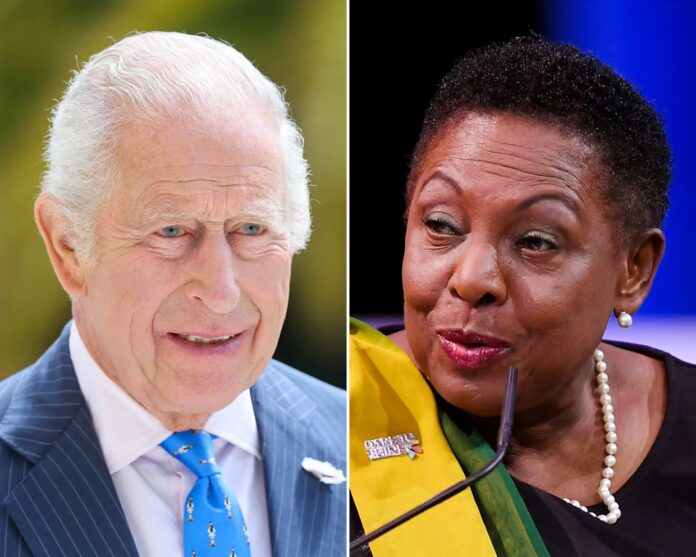

Jamaica will hand King Charles a petition on Monday seeking a legal ruling on whether Britain owes the Caribbean nation reparations for slavery and its continuing economic and social consequences. The petition asks Charles, Jamaica’s head of state, to use his authority to request an opinion from the Judicial Committee of the Privy Council, which serves as the final court of appeal for Britain’s overseas territories and several Commonwealth countries.
Jamaica wants the committee to determine whether the forced transportation of Africans to the island was lawful, whether slavery amounted to a crime against humanity and whether Britain has an obligation to provide restitution for slavery and its enduring effects. Culture Minister Olivia Grange, who arrived in London with members of Jamaica’s National Council on Reparations, said the legal questions were central to the country’s campaign.
“We’re a resilient people”, Grange said, pointing to Jamaica’s recovery from Hurricane Melissa. But she argued that the country continues to carry structural disadvantages inherited from slavery. “If we did not have those inherited problems, the legacy that came out of slavery, how much better we would have been able to do so”, she said.
Jamaica announced the petition in June 2025 as part of a broader effort to secure recognition and redress for the legacy of the transatlantic slave trade. More than 12.5 million Africans were kidnapped, forcibly transported to the Americas and sold into slavery between the 15th and 19th centuries.
Grange said Jamaica established the Caribbean’s first national reparations mechanism in 2009 to address the lasting consequences of slavery. She said those consequences continue to affect education, healthcare, nutrition and the country’s economic capacity, including its ability to respond to modern threats such as climate change. “We have inherited systems that continue to deprive our country and our people”, she said.
Ralph Gonsalves, the former prime minister of St Vincent and the Grenadines who helped establish the Caribbean Community Reparations Commission, said the region’s present economic difficulties could not be separated from its history of enslavement and colonialism. “The present is very much the past”, Gonsalves said, arguing that underdevelopment could be traced to the genocide of Indigenous peoples and the enslavement of Africans. European countries, he said, were enriched through the exploitation of enslaved Africans.
Jamaica’s initiative comes amid growing international pressure on former colonial powers to address the legacy of slavery. In March, 123 countries backed a UN resolution describing chattel slavery as the gravest crime against humanity. The Caribbean followed in June with a manifesto setting out what it called the moral, ethical and legal case for reparations. Last month, a UN committee on the elimination of racial discrimination said countries were legally obliged to consider reparations for the transatlantic slave trade and take measures to address the continuing legacy of racial discrimination.
Britain abstained from the March UN vote. In October 2024, then-Prime Minister Keir Starmer resisted calls from Commonwealth members to place reparations on the agenda of their leaders’ meeting. Jamaica nevertheless plans to pursue the issue at several international forums, including a Caribbean reparations conference in Barbados later this month, the UN General Assembly in September and the Commonwealth heads of government meeting in Antigua in November, which Charles is expected to attend.
The Jamaican delegation will also meet British lawmakers and visit the British Museum to discuss the repatriation of Jamaican artefacts, while a remembrance service is planned in Brixton. Grange said the campaign was ultimately about confronting a shared history and building a more equal relationship between Britain and Jamaica.
“We may have different history, different heritage, different skin colour, but it’s about humanity”, she said. She added that Jamaica would continue to promote the message of “One Love”, made globally famous by Jamaican reggae icon Bob Marley, alongside its campaign for reparatory justice.