


By Augustina Birago Dwomoh
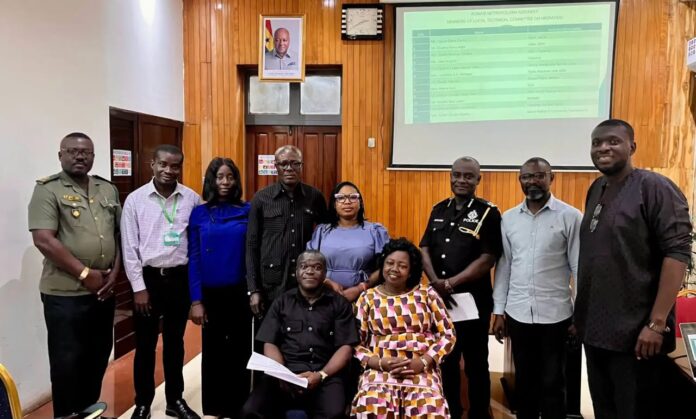
The Kumasi Metropolitan Assembly (KMA), in partnership with the International Organization for Migration (IOM), has established a 12-member Local Technical Committee (LTC) to improve coordination and information sharing among institutions responsible for migration governance in the metropolis.
The committee, inaugurated at its maiden meeting, brings together representatives of key public institutions, including the KMA, Ghana Immigration Service, Ghana Education Service, Ghana Police Service, Ghana Health Service, National Disaster Management Organization (NADMO) and Ghana Enterprises Agency, among others.
Its formation is intended to provide a structured platform through which institutions can work together on migration-related issues, strengthen inter-agency cooperation and improve the flow of information needed to respond effectively to the changing demographic and social realities of Kumasi.
Speaking at the inauguration, KMA Metro Coordinating Director Francis Dwira Darko described migration as an enduring feature of human society and said Ghana, like countries around the world, must confront the complex challenges that accompany population movement.
He commended the KMA-IOM partnership for promoting public awareness and strengthening institutional support for migration governance. He also highlighted the Assembly’s practical commitment to the initiative, including the provision of a new office space for the committee to facilitate its work.
Mr. Dwira Darko urged the participating institutions to work closely with city authorities and one another, stressing that effective migration management requires a coordinated and inclusive response rather than isolated action by individual agencies.
The establishment of the committee marks a step towards giving migration governance in the Kumasi Metropolis a more coordinated institutional framework. By bringing agencies with different responsibilities around the same table, the initiative is expected to strengthen collaboration and create a more systematic approach to addressing migration-related issues across the metropolis.
The 12-member committee’s membership reflects the broad range of sectors affected by migration, with representation spanning local government, immigration, education, policing, healthcare, disaster management and enterprise development.