

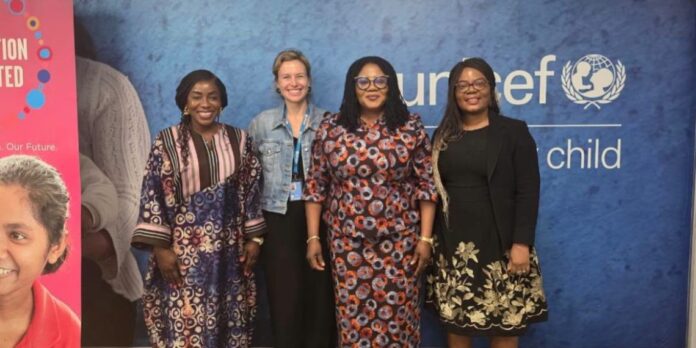

Ghana and UNICEF are seeking to strengthen the country’s child protection system, with particular attention to vulnerable girls, child marriage, adolescent pregnancy and the gaps that leave some children without legal identity or access to essential services.
The commitment emerged from a high-level meeting in New York between Minister for Gender, Children and Social Protection Dr Agnes Naa Momo Lartey and senior officials of the United Nations Children’s Fund (UNICEF) on the sidelines of the 81st United Nations General Assembly.
The discussions placed birth registration at the centre of broader child-protection efforts. The two sides examined how stronger registration systems could make it easier to identify vulnerable children, connect them with appropriate protection services and support interventions aimed at preventing child marriage.
“Birth registration” was discussed not simply as an administrative exercise, but as an important tool for protecting children whose vulnerability may otherwise remain difficult to identify. UNICEF has previously highlighted the role of birth certificates in establishing legal identity and reducing children’s exposure to exploitation and abuse.
The meeting also focused on the Livelihood Empowerment and Productive Inclusion Programme (LEPIP), a joint Government of Ghana-UNICEF initiative designed for out-of-school, vulnerable and at-risk adolescent girls and young mothers aged 16 to 21.
LEPIP brings together social protection, financial inclusion, life and livelihood skills, access to essential services and livelihood assistance. The objective is to help beneficiaries move beyond skills training towards sustainable income generation.
Dr Lartey and the UNICEF delegation also considered how Ghana’s wider social protection architecture could better identify and assist vulnerable households, including families with pregnant women.
The Minister stressed the need for stronger financing of social protection programmes, arguing that adequate resources are necessary to improve the targeting and reach of interventions for children, adolescent girls and families facing multiple forms of vulnerability.
She also reaffirmed the Ministry’s commitment to working with UNICEF, other government institutions and stakeholders to strengthen child protection systems and address the social and economic circumstances that expose children and girls to risk.
UNICEF, meanwhile, commended Ghana’s efforts to tackle child marriage and other vulnerabilities affecting children and adolescent girls and expressed its readiness to continue supporting efforts to strengthen systems that safeguard their rights and wellbeing.
The discussions come as Ghana continues efforts to improve birth registration. UNICEF Ghana reported in September 2026 that 588,972 births had been registered by the end of 2025, representing 73.4 per cent of the expected total, while coverage in the Eastern Region increased from about 60 per cent in 2024 to 65 per cent in 2025.
For Ghana and UNICEF, the broader challenge is therefore to ensure that child protection, social protection, legal identity and livelihood interventions work together rather than operate in isolation.