

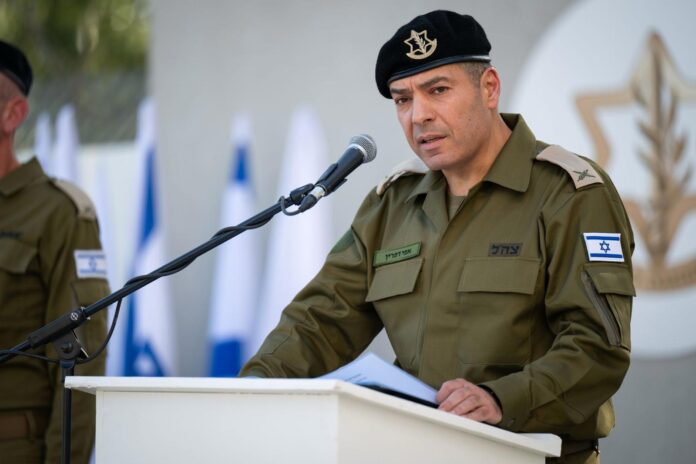

The Israel Defense Forces has sharply rejected the portrayal of its military planning and targeting procedures in the Naza film, accusing its filmmakers of presenting a distorted account of how the Israeli military selects and approves targets during operations.
In a statement responding to the film, IDF Spokesperson Brig. Gen. Effie Defrin said the production presented what he described as an inaccurate picture of the IDF’s decision-making process and failed to give the military an opportunity to respond before the film was released.
“The film presents a distorted, distorted and unrealistic picture of the IDF’s planning and targeting process”, Defrin said.
According to Defrin, the IDF was not provided with an opportunity to review the film or respond to its allegations before publication. He said the military only examined the film after its release and subsequently analyzed the claims made against it.
Defrin argued that the film’s central allegations rely on an assessment that does not accurately reflect the IDF’s procedures or the circumstances in which military targets are selected. He said the IDF’s formal response addresses what he described as the film’s principal claims and attempts to place them against the military’s account of events and its procedures on the ground.
At the centre of the IDF’s defence is its assertion that its targeting process is governed by international law and involves distinctions between combatants and civilians.
“The IDF operates and operates in accordance with international law”, Defrin said, adding that the filmmakers had, in his characterization, failed to adequately reflect that aspect of the military’s conduct.
Defrin further rejected any suggestion that the IDF deliberately plans attacks knowing that large numbers of civilians would be killed. He said the military’s targeting procedures involve intelligence assessments, authorization and command oversight.
“The IDF has never planned, directed or carried out any kind of attack in which it was expected that 500 civilians would be killed”, he said.
Defrin said intelligence officers are responsible for identifying and approving targets and that attacks require authorization from the appropriate command structure. He also rejected what he described as attempts to portray the IDF as deliberately conducting indiscriminate attacks.
The IDF spokesperson also accused Hamas and its supporters of attempting to create an image of indiscriminate Israeli military action, arguing that the presence of Hamas personnel among Gaza’s civilian population creates additional challenges for military operations.
Defrin’s statement represents the IDF’s institutional response to the allegations contained in the film. His claims about specific incidents and casualty expectations are therefore claims made by the Israeli military and require assessment against the available evidence, including independent investigations and other relevant documentation.
The dispute highlights a broader battle over competing narratives surrounding Israel’s military operations in Gaza. For the IDF, the question is not simply how individual strikes are portrayed but whether the processes governing target selection, intelligence assessment and command authorization are accurately represented.
Defrin concluded by insisting that the IDF would continue to defend its conduct and challenge what it considers inaccurate allegations, while maintaining that its operations are guided by its stated legal and ethical obligations.