

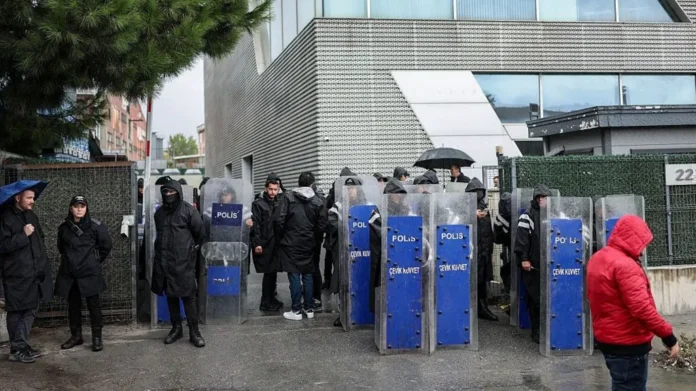

Turkey’s President Recep Tayyip Erdoğan should understand a basic democratic truth: governments must tolerate the scrutiny they demand of others. Yet on October 14, police raided Halk TV, a prominent opposition-leaning broadcaster and authorities appointed a state trustee who halted its live programming. Prosecutors said the operation formed part of a corruption investigation; warrants targeted 17 people and 11 were reportedly detained. Human Rights Watch called the takeover part of a crackdown on opposition voices.
This is the latest warning in a deterioration under a president whose Justice and Development Party has governed since 2002. Erdoğan may insist the investigation concerns criminal conduct, not journalism; that claim deserves a fair hearing. But it cannot justify treating a newsroom as collateral damage or removing critical reporting while a case is investigated. The public must ask whether justice is being pursued or scrutiny neutralized.
The Numbers Tell a Damning Story
Reporters Without Borders ranked Turkey 163rd among 180 countries in its 2026 World Press Freedom Index, down from 159th in 2025, while its score fell from 29.40 to 27.94 out of 100. The organization estimates that around 90 per cent of national media outlets are under government control. Freedom House, meanwhile, scored Turkey 32 out of 100 in its 2026 global freedom assessment, classifying the country as “Not Free”. Its report says most major media networks are owned by businesses dependent on public tenders or closely aligned with President Recep Tayyip Erdoğan, while independent outlets face prosecution, censorship, fines and shutdowns.
The pressure extends beyond media ownership and regulation. According to quarterly monitoring by the independent BİA Media Monitoring group, at least 30 journalists were assaulted and 58 detained in Turkey during 2025. Detention is not imprisonment and an allegation is not a conviction. However, the figures illustrate the risks journalists face when reporting on powerful political and economic interests, particularly in an environment where independent reporting can attract legal action or other forms of intimidation.
The Reuters Institute’s 2026 analysis also describes a concentrated media landscape in which major television and print groups are controlled by conglomerates close to the government. It notes that state authorities have transferred seized media assets to a state-run fund and increased licensing pressure on independent online broadcasters. These developments point to a system in which control over media ownership, regulatory decisions and access to information can limit the space available for critical journalism, even without an outright ban on every dissenting voice.
The cumulative effect is a media environment in which independent journalism faces structural disadvantages. Ownership concentration narrows the range of perspectives available to the public, while regulatory pressure, court actions and the threat of detention can encourage self-censorship. Journalists may consequently weigh the professional and personal costs of investigating those in power, weakening the media’s ability to hold public officials accountable. The result is not necessarily the disappearance of critical reporting, but a more restrictive environment in which its production and distribution become increasingly difficult.
Law Must Not Become a Muzzle
Turkey faces genuine security challenges, from regional conflict to terrorism and the 2016 coup attempt. Journalists are not above the law, and corruption must be investigated. The central question, however, is whether laws are precise and applied impartially or selectively used against those who embarrass the powerful. Broad offences involving presidential insult, terrorism, misleading information and public order can discourage reporting when journalists cannot distinguish legitimate scrutiny from criminal exposure.
In February 2026, journalist Alican Uludağ, who worked for Deutsche Welle’s Turkish service and reported on the judiciary and corruption, was arrested over alleged presidential insult and misleading information. The charges remain allegations, not proof of guilt, but criminal prosecution over expression raises serious questions about proportionality. A president secure in democratic legitimacy should answer criticism with evidence, rebuttal and open records rather than the threat of imprisonment.
The same principle applies to Halk TV. If investigators have evidence of bribery or tender manipulation, they should present it transparently, uphold due process and permit independent judicial review. Allegations against an owner, however, do not automatically justify silencing a broadcaster or transferring control of its editorial platform. A newsroom’s public value is not determined solely by its proprietor’s legal position, and the state must demonstrate that any intervention is necessary, proportionate and unrelated to the outlet’s reporting.
Accountability requires evidence and fair trials, while press freedom demands that journalism remain possible throughout the legal process. Neither principle should be sacrificed under political pressure. Without safeguards against punishment by association and political interference, anti-corruption enforcement risks becoming indistinguishable from intimidation, undermining public trust in both the justice system and the institutions responsible for protecting democratic freedoms.
The Cost of Intimidation and the Way Out
Press freedom is the public’s right to receive information, challenge official claims and judge its rulers. When reporters fear detention, editors anticipate punishment and owners fear losing their companies, corruption becomes harder to expose, citizens receive less information and officials face weaker scrutiny. Governments that suppress uncomfortable information risk mistaking loyalty for truth until their failures become crises.
Erdoğan’s international partners should stop treating these developments as an inconvenient footnote to Turkey’s strategic importance. As a NATO member and consequential regional power, Turkey’s democratic accountability matters even more. European Union Enlargement Commissioner Marta Kos said on October 9 that recent Turkish actions, including restrictions on media freedom, were widening the gap between Ankara and its stated EU membership goal. Accession talks began in 1999 and have long been stalled, but strategic cooperation cannot erase the democratic standards Turkey has formally pursued.
The remedy is practical. Authorities should restore editorial control at Halk TV unless a court establishes, through transparent and appealable proceedings, a lawful and proportionate basis for restrictions. Prosecutors must present evidence, courts must scrutinize detention and publication bans, and parliament must narrow offences vulnerable to selective enforcement. Regulators should explain sanctions and provide avenues for appeal, while media ownership, public advertising and state support must be transparent. International organizations should consistently insist on due process.
Erdoğan can still choose a different legacy. A leader who tolerates hostile questions demonstrates confidence in institutions, while one who treats criticism as a threat exposes the fragility of his own authority. The real test is whether journalists can investigate, publish and correct mistakes without fearing that the state will seize their workplace or imprison them for their words.
The Halk TV raid is therefore more than a dispute over one broadcaster; it is a test of whether Turkish law protects citizens from abuses of power or equips those in power to protect themselves from public scrutiny. Erdoğan should end the intimidation, defend independent journalism and let evidence, not political convenience, determine legal outcomes. A government that cannot endure scrutiny is not demonstrating strength. It is advertising fear.