

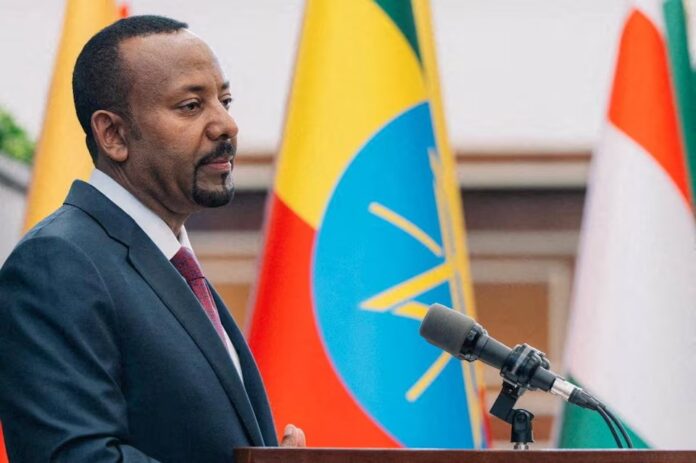

Ethiopian Prime Minister Abiy Ahmed has installed a six-month caretaker administration in Tigray, tasking it with restoring stability, organizing elections and addressing the humanitarian fallout of renewed fighting in the conflict-ravaged northern region.
The move follows a fresh offensive by the Tigray People’s Liberation Front (TPLF) against federal forces last month, reigniting hostilities in a region still struggling to recover from the devastating 2020–2022 war, which killed hundreds of thousands of people.
Abiy’s office said the interim administration would work to establish conditions for free and transparent elections within six months, alongside efforts to repair damaged infrastructure and facilitate the return of displaced residents.
In a statement published on X, Abiy said ending the recurring conflict was essential to restoring peace, safeguarding Tigray’s right to self-administration and enabling residents to benefit from development after years of instability.
The TPLF, which governed Tigray and dominated Ethiopian national politics for decades before Abiy came to power in 2018, had not immediately commented on the appointment.
The latest fighting has shifted the military balance in favour of federal forces. Ethiopia’s military, supported by a pro-government militia, has made substantial advances and seized large parts of Tigray, including the regional capital, Mekelle.
The renewed confrontation has also deepened tensions between Ethiopia and neighbouring Eritrea. Addis Ababa has accused Asmara of supporting the rebel alliance, an allegation the Eritrean government denies.
Ethiopia has separately accused Egypt and Sudan of backing the rebels, claims both countries have rejected.
Beyond the political and military crisis, the resurgence of violence threatens to compound Tigray’s severe humanitarian challenges. The region has yet to recover from the previous war, which devastated communities, disrupted livelihoods and pushed hundreds of thousands of people towards famine.
About 750,000 people in Tigray remained internally displaced as of February, according to the United Nations refugee agency. The region is also facing drought conditions associated with the El Niño climate phenomenon, adding pressure on already vulnerable households.
The renewed instability has raised concerns about a wider regional crisis in the Horn of Africa, where longstanding rivalries and competition for influence could amplify the consequences of Ethiopia’s internal conflict.
Whether the caretaker administration can create the conditions for credible elections and a durable political settlement remains a central test as fighting threatens to reverse fragile gains towards recovery.