

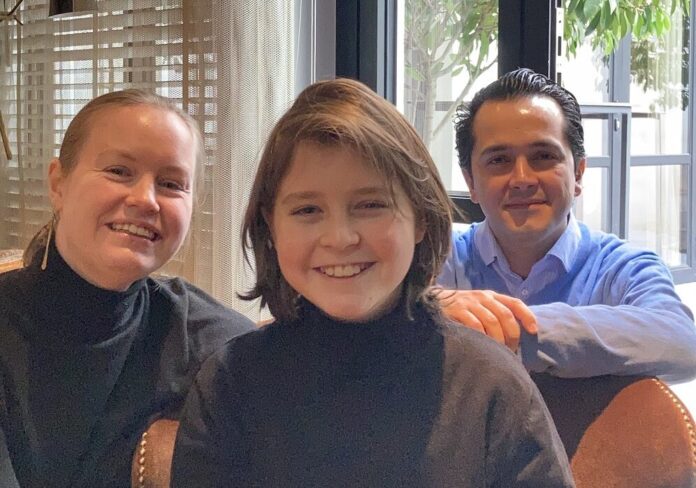

A doctorate at 15 is extraordinary. Trying to understand how humans might live longer is harder still. Laurent Simons, the Belgian prodigy who completed a PhD in theoretical quantum physics at the University of Antwerp in November 2025, is now preparing to join research laboratories at Israel’s Bar-Ilan University, where his ambition turns from the behaviour of matter to one of biology’s deepest problems: ageing. His move illuminates the strategic value of scientific talent, the politics of longevity and the distance between a laboratory breakthrough and a longer life.
Simons defended his doctoral work, “Bose polarons in superfluids and supersolids”, at 15, after completing a master’s degree in quantum physics at 12. The work concerns complex quantum systems, not an anti-ageing treatment. Quantum physics may bring useful mathematical and computational tools to biology, but expertise in one field does not automatically confer mastery of another. The challenge is to turn intellectual speed into reproducible, cross-disciplinary research.
Reports say Simons is pursuing a second doctorate connected to medical science and artificial intelligence, with the aim of understanding ageing and extending human life. His proposed move to Bar-Ilan places him within an Israeli research ecosystem already investing in healthy longevity. The university’s work includes the Sagol Healthy Human Longevity Centre and Professor Haim Cohen’s laboratory, which investigates molecular mechanisms of ageing, especially the protein SIRT6. His precise role and project timetable remain distinct from the broader ambition reported about him; institutional fit does not mean a treatment is near.
Why Longevity Has Become a Strategic Question
Ageing is no longer a niche scientific concern. The World Health Organization estimates that the global population aged 60 and older will rise from 1 billion in 2020 to 1.4 billion by 2030 and 2.1 billion by 2050. The share of humanity over 60 is projected to nearly double, from 12 per cent in 2015 to 22 per cent in 2050. By 2050, about 80 per cent of older people will live in low-and middle-income countries. Longevity is therefore a question of health systems, public budgets, labour markets and national resilience, not personal immortality.
The United Nations puts global life expectancy at birth at 73.3 years in 2024, 8.4 years above the 1995 level. That rise reflects improvements in health, living standards and survival from disease. But longer life does not necessarily mean more years in good health. Age is a major risk factor for cancer, cardiovascular disease, diabetes and neurodegenerative conditions; the policy prize is therefore not simply adding birthdays, but compressing the period of illness and disability near the end of life.
The geopolitical implications are substantial. Countries that develop effective therapies, diagnostics and biomedical platforms could gain commercial advantages, attract talent and shape standards for a fast-growing market. Israel already has an innovation-oriented research sector: Bar-Ilan University reported that national research and development spending reached 5.44 per cent of gross domestic product in 2022, among the world’s highest levels. Its university says ageing research spans geroscience, regenerative medicine, genetics and personalized medicine. Simons can add visibility and intellectual capacity, but no scientist substitutes for sustained funding, peer review, clinical infrastructure and collaboration.
From Promising Biology to Proven Medicine
Bar-Ilan’s SIRT6 research illustrates both the promise and the limits. The university has reported that increasing SIRT6 activity extended lifespan by 30-40 per cent in experimental models and protected against some harmful effects associated with obesity and ageing. In 2026, researchers reported that increasing SIRT6 activity restored some gene-expression patterns in ageing mouse livers towards a more youthful state. These findings suggest some age-related cellular changes may be modifiable.
But mice are not people. A result in an animal model does not establish that a treatment is safe, effective or capable of extending human life. Researchers must reproduce findings, establish dosage and toxicity and test whether benefits outweigh harms. Trials can take years and fail despite promising laboratory results. Ageing itself is complex, involving interacting processes across organs and systems. There is no established therapy that stops human ageing, and claims of near-term immortality should be treated as marketing, not medicine.
The useful ambition is to delay disease, preserve cognition and mobility and extend independent living. That demands measurable outcomes and clinical trials, not celebrity or a race to announce the youngest researcher. Simones’ age may draw public attention, but scientific credibility will depend on the quality of the questions, the methods used and whether other teams can reproduce the results.
The Politics of Living Longer
Longevity science also raises questions of fairness. If costly treatments arrive first, wealthy people and countries may capture the gains while poorer populations continue to face preventable deaths from infections, maternal complications and inadequate basic care. The WHO’s projection that four in five older people will live in low-and middle-income countries by 2050 makes access central, not peripheral. Governments will need to weigh investment in advanced therapies against vaccination, primary care, nutrition and disease prevention. These goals are connected, but budgets are finite.
There is also a demographic paradox. Longer, healthier lives could help people remain active, experienced and economically productive for longer. They could also raise pension and care costs if healthspan fails to keep pace. Governments will need to adapt retirement systems, workplaces and long-term care, while resisting the temptation to treat older citizens solely as fiscal burdens. The strategic measure of success should be not how long a small elite survives, but whether societies can make added years healthier and more widely shared.
Simons’ move to Bar-Ilan is worth watching, but not as a prophecy of what lies ahead. A 15-year-old doctorate holder entering longevity research captures the daring of science at its best: the refusal to accept today’s limits as permanent. Yet biology is not conquered by brilliance alone. It advances through teams, replication, cautious trials and public accountability. The breakthrough will be evidence that more people can live longer without preventable illness.