


By Augustina Birago Dwomoh
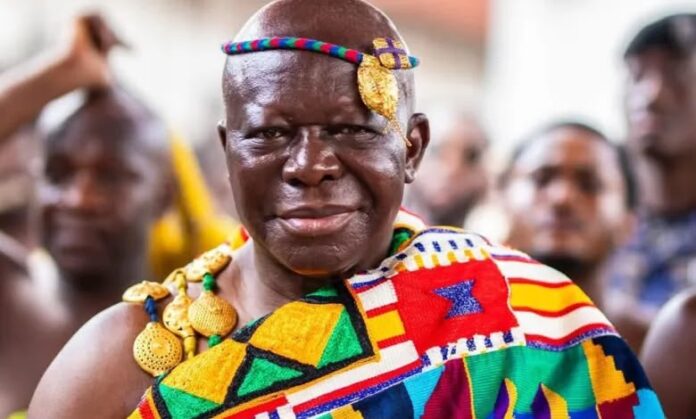
Asantehene, Otumfuo Osei Tutu II, has thrown his weight behind Ghana’s mining reforms, describing efforts to strengthen state control over the country’s mineral wealth as a necessary step towards retaining more gold revenue at home.
The King’s endorsement, delivered on his behalf by the Essumejahene, Nana Okyere Kusi Ntrama, at the Mining in Motion Conference in Accra, comes amid public controversy surrounding the Ghana Gold Board (GoldBod), a flagship initiative under the government’s Reset agenda.
Despite the concerns surrounding GoldBod, Nana Okyere Kusi Ntrama maintained that such controversies should not overshadow the broader objective of ensuring that Ghana exercises greater control over its natural resources and derives more economic value from its gold.
He described the reforms as an act of political courage, drawing parallels between the government’s current approach and the vision of Ghana’s first President, Dr. Kwame Nkrumah, who sought to bring the country’s mineral resources under greater state control.
The Essumejahene recalled Nkrumah’s efforts to increase local economic benefits from mineral production, including plans to establish a gold refinery in Tarkwa.
“It reflects the political courage of the kind of which only true heroes are gifted. It takes us right back to the very foundation of our republic, when Dr Kwame Nkrumah sought to bring our minerals under the control of the state and moved to establish a gold refinery in Tarkwa”, he stated.
Government Moves to Overhaul Mining Laws
Meanwhile, the Minister for Lands and Natural Resources, Emmanuel Armah-Kofi Buah, has outlined plans for a far-reaching overhaul of Ghana’s mining sector, promising clearer rules for investors, stronger community protections and improved economic returns from mineral production.
Addressing the conference in Accra, the Minister announced that Cabinet had approved a revised Minerals and Mining Policy and endorsed extensive amendments to the Minerals and Mining Act, paving the way for parliamentary consideration.
The proposed changes focus on licensing arrangements, indigenous equity participation and socioeconomic development in mining communities, areas the government considers critical to improving the management of the country’s mineral resources.
The reforms also seek to increase the share of mineral wealth retained within Ghana by strengthening mechanisms for capturing value from domestic production, particularly small-scale gold mining.
Mr. Buah credited GoldBod with bringing greater organization to the purchasing and export of gold produced by small-scale miners.
“The Ghana Gold Board has brought a more organized approach to the purchase and export of small-scale gold”, he said.
Gold Refining, Traceability in Focus
The Minister further stressed that expanding Ghana’s domestic gold-refining capacity would be crucial to securing greater value from the country’s mineral resources.
To support that ambition, the government is prioritizing improvements to local gold-testing facilities and stronger traceability systems to track gold through the supply chain.
The measures are intended to improve transparency, curb revenue leakages and ensure that more of the economic benefits generated by gold production remain within the country.
Discussions at the conference centred on how stronger regulation, improved oversight and increased domestic value addition could help Ghana protect its mineral wealth and channel more of the proceeds into national development.
Asantehene’s endorsement adds a significant traditional voice to the debate over how Ghana should manage its mineral resources, as the government pushes ahead with reforms aimed at strengthening state oversight and increasing the country’s economic returns from gold.