

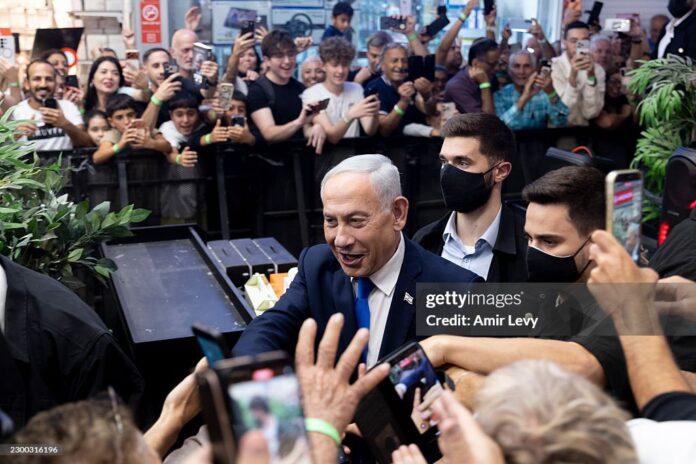

Israel’s October 27 election is not an ordinary contest. It is a verdict on whether Benjamin Netanyahu’s long rule remains an asset or has become a strategic liability. The Hamas-led assault of October 7, 2023, exposed a catastrophic failure of national security under his government; the wars that followed have tested Israel’s military power, diplomatic standing, economy and social cohesion. Voters must judge who can rebuild institutions and alliances. No contender can govern alone: the 120-seat Knesset requires a coalition of at least 61 members. Israel’s president asks a candidate to form a government, but parliamentary arithmetic, not simply winning the most votes, determines who governs.
Netanyahu enters with the greatest experience and a hardened political machine. Likud remains a major force, but polling estimates can shift sharply before election day, and no survey should be treated as a forecast. The central question is whether Netanyahu can assemble a governing majority from parties willing to serve with him. Even a first-place finish would not guarantee that outcome. Conversely, a rival could emerge as prime minister if several parties agree on a shared government. The election therefore concerns not only popularity, but also coalition discipline, turnout and the willingness of ideological opponents to compromise.
Netanyahu
Netanyahu’s strongest argument is experience. He was prime minister from 1996 to 1999 and again from 2009 to 2021, returning in 2022; he has also served as foreign minister, finance minister and Israel’s ambassador to the United Nations. The Abraham Accords, signed in 2020 with the United Arab Emirates and Bahrain, remain a major diplomatic achievement; Morocco later normalized relations, while Sudan’s process has been more complicated. Supporters argue that Netanyahu’s focus on Iran and relationships with conservative American leaders help preserve deterrence.
The October 7 failure will remain central to voters’ assessment of accountability, preparedness and political responsibility. Netanyahu’s dependence on far-right and ultra-Orthodox parties can constrain strategic choices and deepen domestic division. International criticism over Gaza and settlement policy has damaged Israel’s diplomatic room for manoeuvre, while disputes over judicial power have weakened trust at home. Economic resilience does not erase the costs of prolonged conflict, pressure on reservists, displacement near front lines or uncertainty for investors. Netanyahu can still prevail if security fears outweigh demands for change, but forming a stable majority may prove difficult. His opponents will argue that a leader responsible for the prewar security system cannot credibly promise its repair without accepting political accountability.
Eisenkot and the Bennett-Lapid Alternative
Gadi Eisenkot offers a different kind of authority. He commanded the Israel Defense Forces as chief of staff from 2015 to 2019, after decades in uniform that included senior operational and Northern Command roles. He entered electoral politics in 2022, served in Netanyahu’s emergency government after October 7, and later established Yashar around institutional repair, public education, equal national service and stronger checks and balances. His credentials may appeal to voters seeking security without Netanyahu’s polarizing politics. Yet military command is not the same as managing a diverse civilian coalition, public services or a national budget. Eisenkot has spent far less time in elected office than Netanyahu, and he must explain how his security doctrine would translate into a diplomatic strategy, including a realistic approach to Palestinians and regional stability.
He must win support beyond voters already opposed to Netanyahu and persuade potential partners that he can lead a government rather than merely unite an opposition. Arab parties may influence the parliamentary arithmetic, but cooperation with them remains contentious among Jewish parties. Excluding their representatives can be electorally convenient, yet it risks perpetuating deadlock and ignoring the political agency of Arab citizens. A viable candidate must be honest about these constraints before election day, not discover them during coalition negotiations.
Naftali Bennett and Yair Lapid bring complementary governing experience. Bennett served as prime minister in 2021-22, leading a remarkably diverse coalition; Lapid served as foreign minister and then prime minister in 2022. Their partnership combines Bennett’s security-minded, right-leaning appeal with Lapid’s centrist profile and diplomatic experience. The previous government demonstrated that parties with sharp ideological differences can cooperate around practical priorities. It also lasted only about a year before collapsing, exposing the fragility of a coalition with little room for dissent. Their alliance must convince voters that a renewed partnership would be more durable, coherent and decisive. They may become kingmakers even if they do not finish first, but that role depends on their seat total and the willingness of other parties to work with them.
Who Should Lead Israel?
The candidates offer different strengths. Netanyahu is the most seasoned executive and diplomat; Eisenkot has the strongest senior military credentials; Bennett and Lapid have recent experience managing a broad civilian coalition and conducting diplomacy. Israel needs a leader who can protect citizens, maintain credible deterrence, preserve the United States partnership, rebuild relations with other democracies, address the Palestinian question and restore public confidence. None can succeed through security rhetoric alone.
On balance, Eisenkot is the strongest candidate for a reset, provided he expands his civilian policy team, sets out a clearer diplomatic strategy and negotiates a workable coalition. His military background fits the security crisis, while his reform message addresses weaknesses exposed on October 7. But he must show that he can move beyond military management and articulate a credible political endgame. Bennett is a serious alternative with executive experience; Lapid could add diplomatic depth, although their partnership needs a stronger mandate and evidence of greater durability. Netanyahu remains formidable, and his diplomatic achievements should not be dismissed. Neither, however, should they erase the security failure that occurred on his watch.
The result will depend on turnout, the electoral threshold and whether parties can assemble 61 seats. Polls are snapshots, not certainties and party labels alone cannot guarantee a governing majority. Israel needs leadership that can defend the state without exhausting its democracy. The decisive test is not who sounds toughest, but who can convert military strength into sustainable security, credible partnerships and a government trusted by its citizens.