


Ghana must stop treating illegal gold mining as merely an environmental scandal. It is also a governance failure with serious national-security consequences. When gold can be extracted, bought, transported and exported beyond effective state oversight, criminal networks gain revenue, corruptible intermediaries and routes across borders. In a region where jihadist violence is moving closer to the Gulf of Guinea, that combination demands urgent attention.
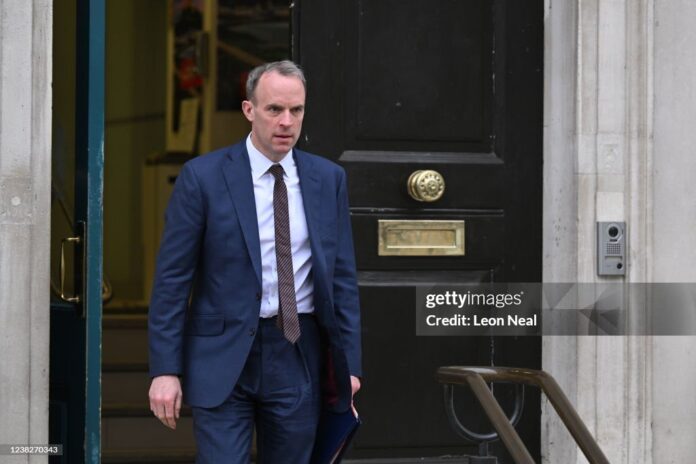
Former British deputy prime minister Dominic Raab, now a World Gold Council special envoy, warned at the Mining in Motion Summit 2026 that illicit gold networks could connect Ghana and neighbouring Togo to supply chains sought by groups expanding south from the Sahel. This is a risk assessment, not proof that Ghanaian illegal miners finance terrorist organizations. That distinction is far from trivial. Policy must be driven by evidence, not panic; uncertainty about individual links, however, is no excuse to ignore vulnerabilities.
The Global Terrorism Index 2025 reported 3,885 terrorism deaths in the Sahel in 2024, with the region accounting for 51 per cent of global terrorism deaths. Groups including Jama’at Nusrat al-Islam wal-Muslimin and Islamic State affiliates have exploited weak governance, local grievances and porous borderlands. Coastal states are not uniformly under attack, and Ghana is not equivalent to conflict zones to its north. Yet geography cannot insulate it from networks moving people, money, weapons and commodities across borders.
Follow the Gold and the Money
The economic scale makes the exposure difficult to dismiss. Ghana’s 2025 IMF country report said the country mined and exported more than 4.5 million ounces of gold worth about US$10 billion in 2024. Artisanal and small-scale mining drove the increase in production, while large-scale output remained around three million ounces annually. The challenge is not to criminalize every miner, but to distinguish legitimate production from illicit extraction, laundering and trade.
Ghana’s Ministry of Finance cited estimates that 60 tonnes of gold, worth about US$1.2 billion, left the country illicitly in 2022. A 2025 IMF report later referenced an estimate of 229 tonnes, valued at US$11.4 billion, missing from official trade data between 2019 and 2024. Ghana’s Extractive Industries Transparency Initiative estimated that roughly 1.1 million ounces of artisanal gold were smuggled in 2023, nearly equivalent to officially declared small-scale output. These estimates cover different periods and methods; they should not be added together. Nevertheless, they expose serious weaknesses in traceability and trade reporting.
Gold attracts illicit actors for straightforward reasons: it is valuable, relatively easy to transport in concentrated form, and can be melted or recast to obscure origin. Smuggling can evade taxes, foreign-exchange controls and licensing requirements; fraudulent documents can make illegally sourced gold appear legitimate. Those mechanisms can support organized crime and, where a demonstrable connection exists, terrorist financing. But evidence that gold is smuggled does not itself prove that jihadists receive the proceeds. Investigators must trace beneficial ownership, payments, transporters and cross-border buyers before declaring a financing link.
Make Enforcement Target the Network
Ghana needs enforcement that targets the entire chain, not only excavators at mining sites. Raids on pits may disrupt production temporarily while leaving financiers, equipment suppliers, buyers, exporters and corrupt protectors untouched. A response requires intelligence-led investigations, coordinated operations across mining districts and borders, financial scrutiny and prosecutions that withstand judicial review. The Economic and Organized Crime Office, Financial Intelligence Centre, police, customs, Minerals Commission and Ghana Gold Board need clear responsibilities and dependable channels for sharing information.
Authorities should prioritize suspicious transactions, unexplained wealth, shell companies, false export declarations and repeated movement of gold through high-risk routes. Gold traders and refiners should verify suppliers, maintain auditable records and report suspicious activity under applicable law. Intelligence exchange should follow evidence and legal safeguards, rather than treating northern communities or foreign nationals as inherently suspect.
Enforcement must also confront corruption. If licences can be bypassed, weigh-ins manipulated or shipments protected through bribery, more patrols alone will not solve the problem. Track seizures through prosecution and final judgment; arrest totals mean little if cases collapse or networks quickly reconstitute. Investigators should pursue the people who finance extraction and arrange exports, not merely those operating machinery.
Make Legal Gold the Better Deal
Ghana Gold Board (GoldBod), offers an opportunity to improve traceability and channel small-scale production into formal purchasing and export systems. The government and the UK-Ghana Gold Programme have also cooperated on efforts to disrupt smuggling. These initiatives should be judged by independently verifiable results: how much gold is traceable to licensed sites, how promptly miners are paid, how much foreign exchange is repatriated, and whether illicit premiums and smuggling decline.
Formalization must be practical. Licensed buying centres need transparent, competitive prices, calibrated scales, prompt payment and accessible testing. Miners need affordable licences, technical support, safer equipment and a clear path to legal operation. Responsible-sourcing rules should record each shipment’s origin and custody from mine to refinery, supported by independent audits and penalties for false claims. International refiners, jewellery companies and bullion buyers must not simply demand paperwork; they should help finance traceability and refuse gold whose origin cannot be verified.
Environmental enforcement belongs in this security strategy, too. Mercury contamination, damaged farmland and polluted rivers impose costs on communities and can deepen distrust of the state. Reclamation obligations, mercury controls and community monitoring should accompany mining permits, with penalties applied consistently to powerful operators as well as small miners.
Raab’s warning should be understood as a call to close a preventable vulnerability, not a declaration that Ghana has become a jihadist financing hub. The evidence establishes a substantial illicit-trade problem and a regional terrorist threat; the precise links between them require case-by-case proof. Ghana should act before the connection becomes entrenched: trace the gold, follow the money, prosecute enablers and make lawful trade commercially credible. The strategic objective is simple. Gold must strengthen Ghana’s economy and institutions, not finance criminal networks that could undermine them. That requires political resolve, public transparency and sustained regional cooperation. Regional cooperation must become routine, not rhetorical.