

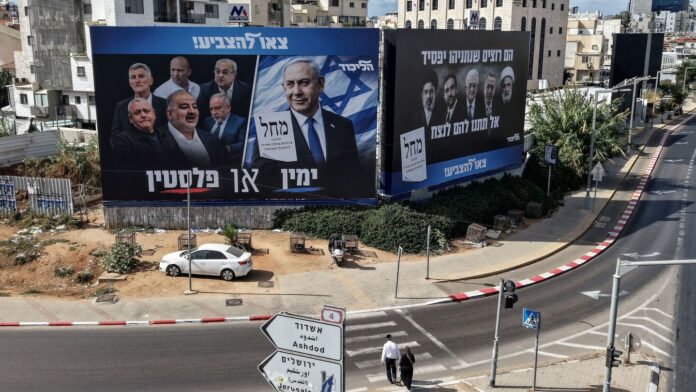

Israel’s election is not a presidential contest. Voters do not choose a prime minister directly; they choose a party list, and the arithmetic that follows determines who can govern. That distinction is the key to understanding the vote on October 27, 2026. The ballot decides the composition of the Knesset, Israel’s single-chamber parliament. The premiership is decided afterwards, through negotiations and a parliamentary vote of confidence. Israeli citizens aged 18 or older may vote; each casts one ballot for a party list, not in a separate national contest for prime minister. The ballot is secret.
The Knesset has 120 members, normally elected for four years, although early elections are common. Under the Basic Law: The Knesset, elections are national, direct, equal, secret and proportional. Israel is one nationwide district: voters choose an ordered party list, not a local constituency representative. The number of seats won determines how many candidates from that list enter parliament.
This system gives smaller political movements a route into national politics, but it also makes coalition-building unavoidable. No party has ever won an outright majority of the Knesset’s 120 seats. Governments have therefore depended on alliances among parties with different ideological, religious, economic and security priorities. Israeli voters are not simply choosing a governing party. They are shaping the bargaining power of the parties that may assemble the next government.
From Votes to Seats: The Threshold Matters
Seat allocation begins with the valid votes cast nationwide. A party list must win at least 3.25 per cent of those votes to qualify for representation. The threshold is equivalent to roughly four Knesset seats, although the precise number of votes required changes with turnout and the number of valid ballots. Lists that fall short receive no seats, and their votes are excluded from the allocation among qualifying lists.
That rule can transform the political map. In November 2022, turnout was 70.6 per cent and 4,764,742 valid votes were recorded. Likud emerged as the largest party with 32 seats; Yesh Atid won 24. But neither result alone settled who would govern.
Seats are distributed proportionally, using a legal formula based on the votes won by qualifying lists. Parties can also sign surplus-vote agreements, allowing their unused votes to be combined for the purpose of allocating an additional seat. Such agreements can matter in a close contest: a small shift in the final seat distribution may strengthen one bloc’s negotiating position.
The threshold creates a dilemma: supporting a small list may help it enter parliament, but if it falls short, those votes win no seats. Parties with similar platforms sometimes unite to reduce that risk.
How A Prime Minister Is Chosen
Once official results are published, the president consults representatives of the elected parties. The president is Israel’s head of state, not its chief executive, and the role in government formation is largely procedural but consequential. After the consultations, the president assigns a member of the Knesset the task of forming a government, choosing the lawmaker considered most likely to win parliamentary backing. The nominee is not automatically the leader of the largest party.
The designated lawmaker normally has 28 days to form a government, with a possible extension of up to 14 days. The task is to negotiate a coalition whose parties together can secure the Knesset’s confidence. Negotiations cover policy, ministerial portfolios, budgets and legislative commitments. Smaller parties can gain influence far beyond their seat totals when their support is essential.
The government must win a Knesset confidence vote. Although the vote is carried by a majority of members present and voting, 61 of 120 seats is the benchmark for a stable coalition. A government unable to command that support risks defeat on legislation, budgets or confidence motions.
If the first nominee fails, the president can give another member of the Knesset an opportunity. The law also provides a further route in which 61 lawmakers can support a candidate during a specified period. If no one succeeds, the Knesset can be dissolved and another election called. Until a successor government is sworn in, the outgoing government remains in office.
Why The Biggest Party May Lose
The largest party has an advantage, not a constitutional entitlement to the premiership. The decisive question is which candidate can assemble a viable coalition. In 2021, Naftali Bennett became prime minister despite leading a parliamentary faction far smaller than the largest parties. His government was formed through an unusual alliance spanning right-wing, centrist, left-wing and Arab-led parties. It demonstrated the system’s central rule: coalition arithmetic can outweigh first place.
The 2022 election offers another illustration. Likud won 32 seats, while its allies ultimately secured 64, giving Benjamin Netanyahu a clear route back to office. The result was not simply a victory for the largest party; it was a victory for a bloc capable of translating votes into a parliamentary majority. Parties that pass the threshold can become pivotal, even if they win only a handful of seats, when neither major camp can govern without them.
The system broadens representation, but carries costs. Small partners can demand policy concessions or ministries in return for support. Ideological divisions can weaken governments, complicate decisions and trigger early elections. Proportional representation is not the only cause of Israel’s political crises, but fragmentation makes stable majorities difficult.
The October 27 vote will therefore be about more than which party finishes first. Voters will determine which lists enter the Knesset, how many seats each receives and which political blocs have a credible path to 61. The president will then begin consultations; party leaders will bargain; and a prospective prime minister will have to prove that a government can command parliamentary confidence.
That is the essential distinction. Israelis elect a parliament, not a prime minister. The prime minister emerges from the negotiations that follow. In Israel, winning the election and winning the right to govern are two different contests.