

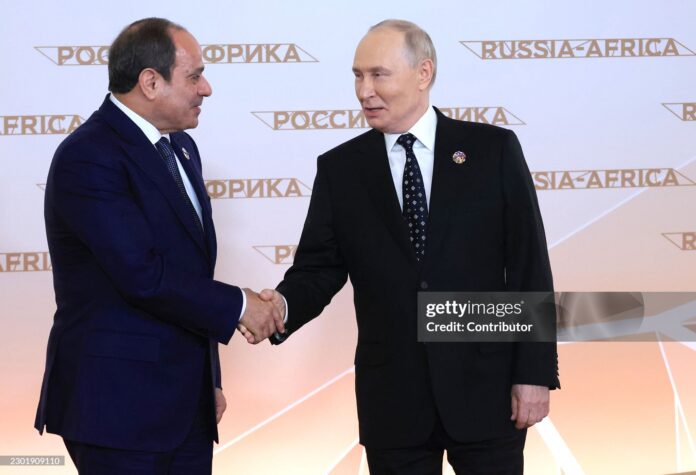

African governments cannot credibly defend national sovereignty while remaining silent when their citizens are allegedly deceived, exploited and recruited to die in another country’s war. That is the uncomfortable question confronting African leaders gathering in Moscow for the Russia-Africa Summit on 28-29 October 2026. Their challenge is not simply whether to strengthen relations with Russia, but whether those relations should come at the expense of the lives, dignity and fundamental rights of African nationals.
Amnesty International has placed that question squarely before the continent’s political leadership. In an open letter dated 27 October, directors of its African sections urged participating heads of state, ministers and government representatives to confront Russian authorities over the coercive and deceptive recruitment of Africans into the Russian armed forces to fight against Ukraine. They demanded an immediate end to practices which, in numerous cases, amount to human trafficking under international law.
The distinction, however, is important: Amnesty called on African leaders to make this demand; that does not establish that they collectively did so. As the summit opened, available reporting had not demonstrated a coordinated public declaration by participating governments demanding an end to the recruitment. The central issue, therefore, is whether African leaders translated the organization’s warning into meaningful diplomatic pressure or allowed economic and strategic considerations to overshadow the protection of their citizens.
The stakes are considerable. According to Reuters, the gathering brought together delegations from 48 countries, including 22 African leaders. Russian President Vladimir Putin used the occasion to promote Moscow as a strategic partner, emphasizing trade, security, agricultural cooperation and a multipolar international order. Yet the recruitment of Africans for the war in Ukraine exposes a contradiction at the heart of this partnership: a relationship presented as cooperation among sovereign equals cannot be credible if vulnerable citizens become expendable military manpower.
The Scale and Human Cost
On 26 October, a United Nations Commission of Inquiry on Ukraine found compelling evidence that Russian authorities trafficked men from 29 countries into their armed forces through deception and coercion. Recruiters posed as legitimate businesses, arranged visas and travel and coordinated with contacts in Russia. Recruits were then pressured or forced to sign Russian-language contracts they could not understand before deployment to dangerous front-line duties. Many were killed or disappeared. The Commission called for their discharge. This does not mean every foreign recruit was trafficked, but establishes evidence of an organized practice involving 29 countries.
Journalists for Justice documented at least 3,066 Africans from 40 countries recruited since October 2022, with 502 deaths recorded by June 2026. Kenya accounted for 873 cases, Egypt 407, Cameroon 383, Ghana 337, Nigeria 214 and Uganda 108. The figures are not comprehensive; researchers cross-checked intelligence data with interviews, contracts, financial records, visas and family accounts. Amnesty’s September briefing describes false civilian job offers in security, logistics, construction and IT; promises of high salaries, legal status or Russian citizenship; and exploitation of migrants’ precarious circumstances. Some recruits reportedly faced imprisonment or death threats if they tried to escape. Consent obtained through fraud or coercion is not genuine.
Moscow’s Interests, Africa’s Contradiction
African governments have reasons to value Russia’s arms, grain and fertilizer supplies, military cooperation and support for a multipolar order. Putin said Russia supplied 13 million tonnes of agricultural products to Africa in the first nine months of 2026 and hosted around 40,000 African students. The Associated Press reported bilateral trade exceeded $27 billion in 2025 and Moscow had military cooperation agreements with 45 African countries. African states are entitled to diversify partnerships, but strategic autonomy cannot mean indifference to abuses by any partner. Leaders who condemn colonial exploitation while overlooking the conversion of jobseekers into battlefield manpower undermine their arguments about equality and sovereignty. The question is not whether Africa should sever ties, but whether partnership can withstand accountability.
Recruitment spans countries and channels. Journalists for Justice found a shift from prisons towards employment agencies, universities, military networks and corporate structures. The Insider, citing Ukrainian intelligence, reported sharp increases in enlistment from Burundi and Zimbabwe in 2026, suggesting pressure in one country may redirect recruitment elsewhere.
From Concern to Accountability
African leaders should make five demands. Russia must halt deceptive recruitment and investigate implicated recruiters, intermediaries and officials. Moscow should identify African recruits, disclose their whereabouts and status and provide consular access. Victims of trafficking or fraud must be released and safely repatriated. African governments should establish a joint mechanism to share intelligence, investigate agencies, prosecute traffickers and coordinate repatriation. Embassies need hotlines and case registers; labour ministries must scrutinize overseas job offers. Russia should disclose deaths, injuries, missing personnel and prisoners of war and cooperate with families. Governments should publish progress reports and give families regular updates on all outstanding recruitment cases.
The UN Trafficking in Persons Protocol identifies recruitment through deception or coercion for exploitation as trafficking. A military contract cannot legitimize fraud or force. States must protect their nationals and investigate credible allegations. The UN Commission’s findings make dismissal difficult. The answer to Amnesty’s challenge is qualified but clear. Leaders were urged to demand an end to recruitment, but public evidence during the summit did not establish that they collectively did so. Putin’s public pitch focused on partnership, trade, security and multipolarity; reporting showed no unified African rebuke. That does not prove silence in private, but private concern is no substitute for public commitment.
The political cost is visible. Kenya has faced pressure from families searching for missing relatives, while several governments have investigated recruitment networks. Governments are not powerless: they can warn citizens, close fraudulent agencies, coordinate on prisoners and insist that Moscow provide names, locations and evidence of life. Support all affected African recruits. Africa must not choose between geopolitical independence and protecting its people. If leaders leave Moscow without demanding an end to trafficking, the message is devastating: sovereignty matters in speeches, but African lives remain negotiable.