


A sanction on a ministry is a diplomatic shot across the bow. A sanction on the bank allegedly helping pay for weapons and move conflict gold is sharper: an attempt to disrupt the machinery of war. On October 28, 2026, Washington designated Rwanda’s Ministry of Defence and Zigama Credit and Savings Society, accusing them of enabling the M23 rebellion in eastern Democratic Republic of Congo (DRC). But sanctions do not stop armies by themselves. Their test is whether they change Kigali’s calculations, constrain M23 and create space for civilians to return home.
The US Treasury says Rwanda’s defence ministry directed thousands of Rwanda Defence Force (RDF) troops into North and South Kivu, where they operated alongside M23 and supplied weapons, logistics and training. It alleges Rwandan forces introduced surface-to-air missiles and electronic jamming equipment, endangering civilian aviation. These are Washington’s findings, not a judicial verdict. Yet they align with a 2025 UN Group of Experts report documenting RDF participation in M23 operations and estimating about 6,000 Rwandan troops in the provinces in January and February 2025. A later UN assessment put the force at 14,000-18,000 by late December 2025.
Zigama is an even more pointed target. Treasury alleges the institution, which serves Rwanda’s security services, processed payments to suppliers in China and elsewhere for weapons and ammunition, paid for troop travel and training and facilitated gold transfers from M23-controlled areas to Kigali. It says Zigama handled tens of millions of dollars in transactions for M23 and its political-military umbrella, the Congo River Alliance. The designation blocks property under US jurisdiction and generally bars US persons from transactions with the named entities; it also reaches entities at least 50 per cent owned by blocked persons. Foreign banks and businesses may reduce exposure rather than risk US penalties.
The action is an escalation, not an isolated gesture. On March 2, Washington sanctioned the RDF and four senior officers. In June it targeted commanders from M23 and the Democratic Forces for the Liberation of Rwanda (FDLR), and a network accused of smuggling Congolese minerals through Rwanda. October’s designations move pressure higher up Rwanda’s chain of command and deeper into its financial infrastructure.
Why Kigali Is Under Pressure
The conflict is driven by security fears, regional rivalries, weak state authority and competition over resources. Rwanda says the FDLR, an armed group rooted in the aftermath of the 1994 genocide against the Tutsi, threatens its security and argues Kinshasa has failed to neutralize it. The DRC, the United States and UN experts accuse Rwanda of backing M23. UN experts described Rwandan command-and-control over the movement; Kigali rejects the charge and calls its actions defensive.
M23’s territorial gains explain the urgency. In early 2025 it captured Goma and Bukavu, the provincial capitals of North and South Kivu and strategic mining zones, including Rubaya’s coltan deposits and gold-producing areas. A 2026 UN assessment put the AFC/M23 force at about 30,000 fighters. The movement has also built parallel administrative structures in territory it controls. Human Rights Watch documented killings, torture, arbitrary detention and forced recruitment by M23 and Rwandan forces. The human cost is staggering. The European Commission puts DRC internal displacement at 5.8 million in 2026, with more than 1.2 million Congolese refugees abroad; it estimates 8.2 million people displaced overall.
The Consequences
For Kinshasa, the sanctions offer diplomatic validation and strengthen its demand that Rwanda withdraw its forces and stop supporting M23. The Congolese government welcomed the decision. If banks, insurers, arms suppliers and commodity traders tighten compliance, sustaining military operations and illicit mineral channels could become more expensive. Scrutiny of gold and coltan supply chains may make it harder to turn territorial control into revenue.
But the limits are substantial. US sanctions are not a blockade of Rwanda, and Zigama’s designation does not sever every transaction involving the Rwandan economy. Kigali can seek alternative intermediaries, non-dollar channels and suppliers beyond US reach. Enforcement depends on intelligence, third-country cooperation and commercial actors’ willingness to accept compliance costs. A financial squeeze may disrupt procurement without forcing a withdrawal. Nor will it dismantle M23’s recruitment networks or resolve the Congolese state’s chronic weakness.
The designation also carries a signalling effect beyond Rwanda: governments and commercial networks that facilitate armed proxies may face scrutiny even when support is routed through ostensibly civilian financial institutions. Yet deterrence will depend on consistency. If Washington applies pressure only when its strategic interests align, Kigali and regional actors may conclude that the costs are negotiable and temporary.
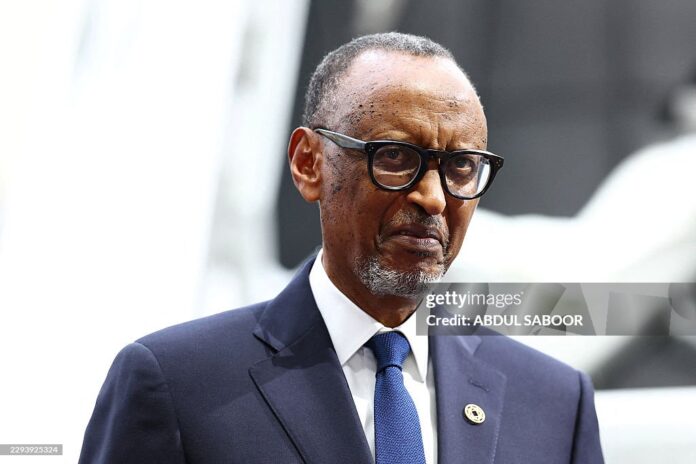
There is also a danger of escalation. If Kagame sees the measures as humiliation or an attempt to dictate Rwanda’s security policy, he could double down, reduce cooperation with Washington or shift support into less visible channels. M23 may entrench its parallel administration, recruit more fighters or retaliate against civilians suspected of aiding Kinshasa. Pressure on Rwanda must not become a blank cheque for Congolese forces or allied Wazalendo militias, whose abuses also require accountability. Selective sanctions lose credibility; impartial scrutiny can reinforce the principle that no armed actor is above the law.
The Washington Accords
The Washington Accords face a credibility test. Their promise of security cooperation and regional economic integration will remain hollow without verifiable foreign troop withdrawals, an end to external support for armed groups, credible action against the FDLR and independent monitoring of mineral supply chains. Washington should coordinate with the African Union, UN and regional states, publish clear benchmarks and offer delisting when compliance is demonstrated. It must also protect humanitarian and legitimate commercial channels from over-compliance.
The verdict is clear: these sanctions raise the price of Rwanda’s alleged intervention, but cannot deliver peace alone. Success should not be measured by blacklist entries or frozen assets. It should be measured in troop withdrawals, dismantled armed-group financing, restored civilian administration and fewer people driven from their homes. It does not need another diplomatic performance. It needs enforcement, reciprocal obligations and a settlement that makes sovereignty real on the ground.