

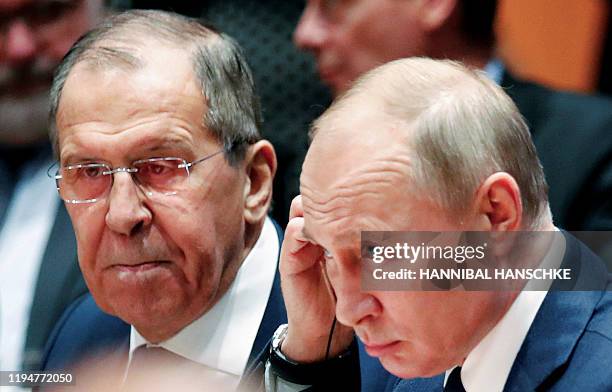

The G20 did the right thing in Atlanta. When European representatives objected to standing in the traditional “family photograph” beside Russia’s Foreign Minister Sergei Lavrov, Washington cancelled the photo opportunity. That was not diplomatic weakness, childish theatre or an assault on dialogue. It was a refusal to manufacture an image of normality where none exists.
A photograph is not a treaty and its absence will not stop a missile. But diplomatic rituals carry meaning: ministers smiling shoulder to shoulder signal common purpose and political trust. In October 2026, that message would have been false. Russia continues its war against a sovereign neighbour; European governments support Ukraine. The camera would have implied what the facts deny.
The objection was not confined to Europe. A Western diplomat told Reuters that roughly one-third of participants, including Australia and Canada, opposed appearing with Lavrov. German Foreign Minister Johann Wadephul said there could be no joint photograph with European partners because “there is no normalcy with Russia”. US Secretary of State Marco Rubio removed the event from the agenda to prevent it becoming a spectacle or distraction. It was sensible event management and defensible politics.
The Record Is Not a Matter of Optics
The underlying reality is measurable. On 2 March 2022, the UN General Assembly adopted resolution ES-11/1 condemning Russia’s aggression and demanding withdrawal. The vote was 141 in favour, five against and 35 abstentions. This was not merely a European or NATO position. It was an overwhelming international judgment that the invasion violated the UN Charter’s prohibition on force against another state’s territorial integrity or political independence.
The human cost has grown, not receded. The UN Human Rights Monitoring Mission verified 2,514 civilian deaths and 12,142 injuries in Ukraine during 2025, making it the deadliest year for civilians since 2022. Its July 2026 update recorded another 1,839 deaths and 10,638 injuries in the first seven months of this year. These are verified minimums; access restrictions mean the true toll may be higher. UNHCR estimates that 3.7 million people remain internally displaced inside Ukraine and more than 5.9 million are refugees abroad in 2026.
Nor is the destruction merely humanitarian. A joint assessment by Ukraine, the World Bank, the European Commission and the United Nations estimated recovery and reconstruction needs at $587.7 billion over ten years, based on damage through December 2025. Direct damage was estimated at $195.1 billion. These figures measure the destruction wrought by Moscow’s war, not abstractions to be tidied away for a photograph.
The International Criminal Court’s 2023 arrest warrants for Vladimir Putin and Maria Lvova-Belova concern alleged unlawful deportation and transfer of Ukrainian children. They are not convictions; the presumption of innocence remains essential. But they show this is not simply a border dispute.
Dialogue Does Not Require Staged Closeness
The strongest objection is that the G20 exists to bring rivals together. Russia is a member; Lavrov was entitled to attend; and global problems, from food and energy security to debt, trade and climate. cannot be solved if major powers refuse to sit in the same room. That argument has force. Excluding Russia from every forum would weaken the G20 and complicate crisis communication. Diplomacy must preserve channels, even with governments whose conduct is condemned.
But attendance and endorsement are different things. Ministers can negotiate across a table without pretending to be friends. They can challenge Lavrov’s claims, discuss grain and energy markets, and pursue de-escalation without posing for a commemorative image. The meeting proceeded; the missing ritual did not prevent talks. The distinction is basic: engagement is a tool, not a certificate of legitimacy.
The proposed compromise of two photographs, one including Lavrov and one excluding him, would have been worse. It would have turned a diplomatic gathering into a public sorting exercise, inviting endless arguments about who stood where and who had conceded what. One image would have conveyed false unity; two would have made division the event’s defining story. Cancelling the photo removed the sideshow.
There is also a consistency test. Governments routinely insist that sovereignty, territorial integrity and the UN Charter are not optional principles. If they then participate in a ceremonial tableau that suggests Russia’s conduct has become ordinary, their public posture loses clarity. This does not deny Russia’s statehood or G20 seat. It rejects the idea that a continuing war becomes normal through a few seconds before cameras.
A Symbol with Strategic Consequences
Critics will call the decision performative. The charge contains a warning worth hearing: symbolism can become a substitute for policy. A cancelled photograph cannot replace air defence, humanitarian aid, sanctions enforcement, negotiations or a durable settlement. Western governments must not stage indignation while neglecting escalation prevention and civilian protection.
Yet that is an argument for matching symbolism with substance, not for abandoning symbolism altogether. Images shape public understanding, signal alliance cohesion and frame normalization. Russia’s war tests whether borders can be changed by force and rules applied selectively. A business-as-usual photograph would weaken the answer.
The G20 brings together 19 countries, the European Union and the African Union; it is deliberately broad, not a club of ideological allies. That breadth makes restraint essential. Its members must be able to disagree without surrendering the standards that give international cooperation legitimacy. A host’s duty is to protect both functions.
The G20 is not a family but a forum of competing interests. Its credibility rests on honest disagreement and practical cooperation, not pretence. That is disciplined diplomacy: speak when useful, negotiate where necessary and decline gestures that communicate fiction. The world needs a just peace in Ukraine, respect for the Charter and a G20 able to distinguish cooperation from absolution. That distinction matters most when pressure for a quick settlement grows politically.