

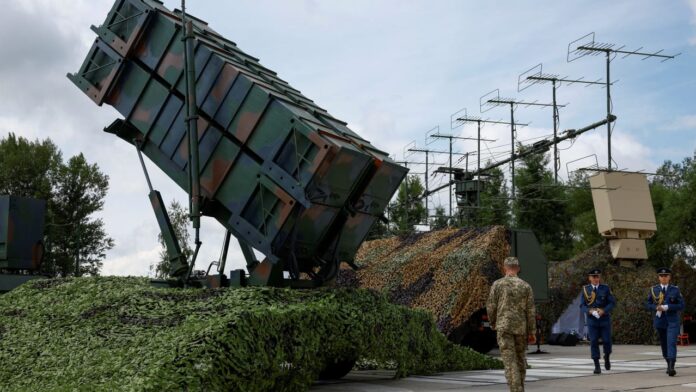

The United States has approved a $2.1 billion sale of 500 Patriot interceptor missiles to Ukraine, marking a major move to strengthen Kyiv’s air defences as Russia intensifies its bombardment of Ukrainian cities and critical infrastructure.
The State Department announced the approval on Friday, outlining a multinational financing arrangement that will enable Ukraine to acquire the advanced PAC-3 missiles without relying solely on direct US funding. The deal represents one of the most significant commitments to supplying defensive military equipment to Ukraine since President Donald Trump began his second term.
Canada, Germany and Norway will contribute funding through the US JUMPSTART initiative, alongside national resources supported by the European Union’s Ukraine Support Loan, the department said. The programme channels financial contributions from allied countries into the purchase of weapons, military services and training to help Ukraine defend itself against Russia’s invasion.
The approval comes as Kyiv faces mounting pressure to replenish its air-defence arsenal, particularly interceptors capable of destroying the ballistic missiles increasingly deployed by Russian forces. The Patriot system remains among Ukraine’s most effective defences against such weapons.
The urgency of the deal was underscored by a deadly wave of Russian attacks on Thursday. A drone strike killed at least 14 people at a crowded railway platform in the eastern city of Dnipro, while five others died in daytime strikes on two additional provincial cities. Another person was killed in a missile attack on Kyiv later that evening, according to Ukrainian officials.
The delays surrounding American weapons supplies have also strained relations between Washington and Kyiv. Tensions intensified after Trump announced a diesel deal with Russia and criticized Ukrainian President Volodymyr Zelensky over Ukraine’s continued attacks on Russian oil refineries.
Zelensky said earlier this week that Kyiv had been waiting nearly a month for Washington to authorize the critical missile supplies, as Russian forces expanded attacks against energy facilities and civilian infrastructure. The latest approval, however, does not mean the interceptors will arrive immediately.
Though major American arms contracts can take years to fulfil, the urgency of Ukraine’s requirements could prompt an accelerated delivery schedule for the Patriot missiles.
The JUMPSTART mechanism has already been used to finance other military purchases for Ukraine. In August, the programme supported the acquisition of 3,350 air-launched cruise missiles valued at $825 million, manufactured by Zone 5 Technologies and CoAspire.
Lockheed Martin, the principal contractor for the latest Patriot missile sale, is also under pressure to expand production as demand for advanced air-defence systems rises globally.
In July, the US Army awarded the defence contractor a production agreement worth up to $58.6 billion for Patriot interceptors. Lockheed said the arrangement would support its commitment to tripling PAC-3 Missile Segment Enhancement production capacity by the end of 2030.
The expansion is expected to increase employment at the company’s Camden, Arkansas, facility by 50 per cent, from approximately 1,200 workers to 1,850. The company has also previously announced plans to raise annual Patriot PAC-3 interceptor production to 2,000 units.
The push to increase output comes as the Pentagon faces growing pressure to replenish weapons stocks depleted by military operations, including US strikes in Iran and continued arms deliveries to international partners. Concerns have mounted over the availability of critical air-defence interceptors and precision-guided munitions.
Pentagon officials have consequently stepped-up negotiations with defence manufacturers to accelerate production, with preliminary agreements reached earlier this year forming part of a broader effort to expand weapons manufacturing capacity.
For Ukraine, the $2.1 billion approval offers a significant boost to its long-term air-defence requirements. But with Russian strikes continuing and delivery timelines still uncertain, the immediate challenge remains ensuring that additional interceptors reach Ukrainian forces before further attacks overwhelm existing defences.