


Israel’s security cannot be treated as a spectator sport. A state fighting an armed organization that has attacked its civilians is entitled, and obliged, to prevent communications from becoming an operational advantage for its enemies. Extending restrictions on Al Jazeera for another 90 days is defensible, provided the measure remains evidence-led, reviewable and limited to genuine security risks. Press freedom matters. It does not confer immunity from security law.
The question is not whether a broadcaster may criticize Israel. It may. The question is whether a foreign network’s activities, in the judgment of competent security authorities, create substantial danger during conflict in an exceptionally volatile regional environment. Israel says Al Jazeera’s broadcasts have crossed that line. A state need not wait for an operational compromise before acting. But it must show that the threat is real, not merely politically inconvenient.
The latest extension, approved by a Tel Aviv court on 29 October 2026, continues the closure and operating ban for 90 days from 19 October, according to Al Jazeera’s own report. The network calls this the nineteenth extension and rejects the allegations. This is a time-limited security measure, subject to judicial scrutiny, not a declaration that criticism is forbidden. That distinction is central to Israel’s case.
A Legal Basis, With Essential Limits
On 7 October 2023, Hamas and other armed groups attacked southern Israel, killing about 1,200 people and taking approximately 250 hostages. The assault exposed failures in intelligence and preparedness. It also demonstrated the consequences of underestimating an adversary that combines military operations, propaganda and psychological warfare.
In conflict, information is not simply commentary after the event. Live images, precise locations, troop movements and security procedures can expose forces and civilians to danger. A broadcaster need not carry a weapon to create operational risk, nor does every report necessarily create one. The critical question is whether patterns of coverage, sourcing or transmission materially assist hostile actors. Israeli security officials say their assessments identify such dangers in Al Jazeera’s output, and the state is entitled to take those assessments seriously, particularly where the underlying intelligence cannot safely be made public. This does not mean every Al Jazeera journalist is an operative or that all its reporting is illegitimate. However, credible intelligence indicating substantial security harm can justify temporary restrictions. A government that ignores such warnings merely to avoid criticism would fail in its fundamental duty to protect human life.
Israel did not impose the restriction through an improvised police order. The Knesset enacted the Foreign Broadcasting Law in April 2024. It permits the government, following security assessments and required approvals, to halt a foreign channel’s broadcasts, close offices, seize equipment and restrict website access. The Library of Congress records the original safeguards, including judicial review within days. In June 2024, the Tel Aviv District Court upheld the initial shutdown, finding the national-security threshold met, but shortened the order from 45 days to 35.
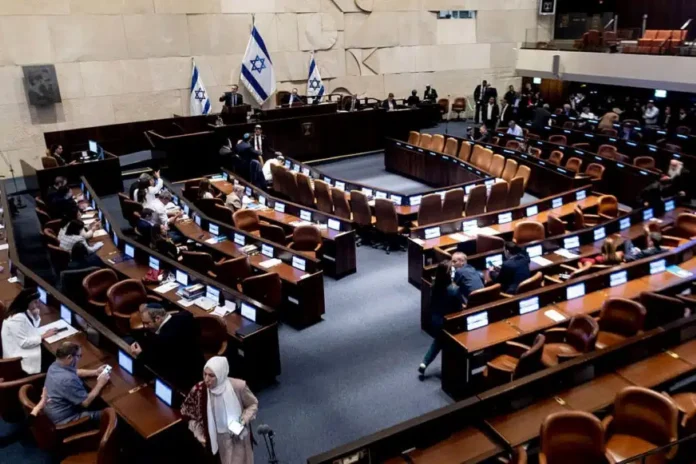
The framework changed in December 2025, when the Knesset extended the law until the end of 2027, allowing restrictions outside a declared state of emergency. The amended regime provides for 90-day orders and further extensions, with executive and security-agency involvement. On 29 October 2026, the Tel Aviv court approved the latest extension. Judicial scrutiny matters: national-security decisions should not rest solely on a minister’s accusation.
Legality, however, is not a blank cheque. The state must demonstrate necessity and proportionality. It should identify specific risks as far as disclosure permits, explain why narrower measures, delaying sensitive footage, redacting operational details or restricting particular transmissions, would not suffice, and provide meaningful judicial review. A 90-day limit is useful only if renewal requires fresh justification. Repetition cannot replace evidence.
Press Freedom Is Vital, Not Absolute
Critics are right that banning a major broadcaster can impoverish debate, restrict information and chill journalism. The Committee to Protect Journalists has condemned Israel’s restrictions, while the Association for Civil Rights in Israel has challenged the law. Reporters Without Borders ranked Israel 112th of 180 countries in its 2025 press-freedom index, down 11 places. Those figures should trouble any democracy. They do not prove this security order unjustified; they show why safeguards matter.
Al Jazeera says its work is journalism, not terrorism. It denies Israel’s allegations, and accusations against individual correspondents must be tested individually. Israel’s record warrants scrutiny: in the case of journalist Shireen Abu Akleh, Israel acknowledged a high possibility that an Israeli soldier had killed her.
Yet press status cannot automatically exempt a broadcaster from security obligations. Democracies restrict publication of troop positions, intelligence sources and details that endanger lives. The United States, Britain and others maintain national-security rules affecting wartime reporting. The relevant distinction is between restrictions that are evidence-based and reviewable, and those used to silence inconvenient scrutiny. Israel must meet the former standard.
Security First; Accountability Always
The strongest defence of the extension is conditional, not triumphalist. Israel faces armed adversaries that have demonstrated both the capacity and intent to kill civilians. Its government cannot be required to tolerate a broadcast operation reasonably assessed by security professionals as a substantial threat simply because its operator is a media company. The public’s right to know is fundamental; its right to survive is more fundamental still.
That principle carries obligations. Authorities should disclose as much evidence as safely possible, distinguish the network’s conduct from that of individual journalists, and allow independent judges to test classified claims through fair procedures. Restrictions should expire unless the government proves a continuing threat. Journalists not implicated in wrongdoing must remain protected; the measure must not obstruct unrelated reporting or punish criticism.
The 90-day extension is defensible as a temporary protective measure, not a permanent model of media governance. Israel should welcome scrutiny, including uncomfortable scrutiny. But scrutiny cannot require a state to disregard credible warnings of operational harm during conflict. The choice is not absolute press freedom or absolute state power. It is responsible security policy or avoidable exposure of lives. National security must take precedence when a demonstrable threat is at stake. The burden remains on Israel to keep demonstrating it.