

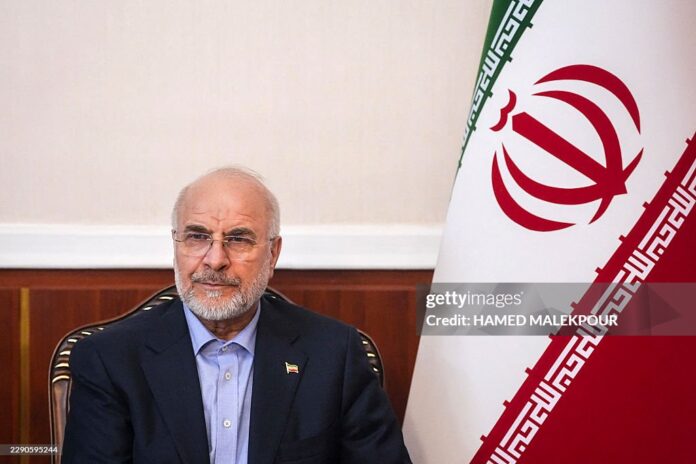

Mohammad Bagher Ghalibaf must not mistake America’s rejection of another war for an American surrender. Americans may have punished President Donald Trump’s handling of the Iranian conflict, but they have not endorsed Tehran’s nuclear ambitions or abandoned their security interests. Ghalibaf, Iran’s parliament speaker and chief negotiator, should understand that political fatigue in Washington is not a diplomatic victory. It is a demand for a different approach, not acceptance of an Iranian nuclear weapon.
The November 2026 midterm elections delivered a setback to Trump, with Democrats taking control of both chambers of Congress. Iranian officials called it a rejection of war. Ghalibaf declared: “Americans said NO TO WAR and we endorse this message”. His interpretation is misleading. An electoral rebuke to a president’s military strategy is not a referendum endorsing Iran’s nuclear programme. Trump acknowledged that the war contributed to Republican losses. That demonstrates political cost, not American acceptance of Tehran’s position.
Washington’s central concern remains clear: Iran must not acquire nuclear weapons. That objective transcends party politics and election cycles. The ballot box has constrained Trump; it has not granted Iran a licence to cross the nuclear threshold. Voters can reject escalation without endorsing Iran’s conduct.
Nuclear Defiance Has Left Iran More Exposed
Iran’s nuclear ambitions have brought the country to a dangerous crossroads. On February 28, 2026, American and Israeli forces attacked Iranian targets, killing Supreme Leader Ali Khamenei and damaging nuclear and military infrastructure. His son, Mojtaba, succeeded him but has not appeared publicly since taking office. The strikes exposed the vulnerability behind Tehran’s defiant posture. Military action cannot settle the nuclear question. The International Atomic Energy Agency’s inability to access key facilities has made it harder to establish the condition of Iran’s programme. A durable settlement must restore inspections, account for nuclear material and impose verifiable limits on enrichment and weapons-related work.
The economic consequences are severe. By August 2026, Iran’s year-on-year inflation had reached 84 per cent, while its currency had fallen to a record low against the US dollar. Savings are eroding; necessities cost more. Sanctions matter, but so do military destruction, disrupted trade, corruption and domestic mismanagement. Tehran cannot blame every hardship on foreign enemies while refusing to change policies that deepen its isolation. The Strait of Hormuz exposes another weakness. Iranian threats and attacks on shipping, followed by an American counter-blockade of Iranian ports, disrupted a vital energy corridor.
The Congressional Research Service reports major interruptions to oil, gas and commodity flows. The Congressional Budget Office estimated US military operations had cost $38 billion by August 1. The war is costly for America, devastating for Iran.
Assad’s Fall Is a Warning, Not A Blueprint
Ghalibaf should study Syria. Bashar al-Assad appeared entrenched after surviving more than thirteen years of civil war. By November 2024, his government still controlled an estimated 60 to 70 per cent of Syrian territory. Yet on December 8, 2024, he fled Damascus as rebels advanced. Its apparent strength concealed exhausted institutions, brittle military loyalty and dependence on patrons. Russia was preoccupied with Ukraine, while Iran and Hezbollah had been weakened by Israeli attacks. When the offensive came, Syrian forces offered little resistance. The lesson is not that Iran will fall on the same timetable. Iran is larger, with stronger security forces. But authoritarian systems are vulnerable when economic distress, elite divisions, public anger and weakened external support converge.
Iran displays warning signs. Protests spread across all 31 provinces from late December 2025, beginning with economic grievances and expanding to political demands. The US intelligence community reported that state forces killed thousands of protesters; security forces later arrested thousands more. It is a grim measure of the cost of political dissent. The regime remains in control, but control is not consent.
The US intelligence community assessed in March that Iran’s regime remained intact but degraded, warning that economic deterioration could intensify internal tensions. The Congressional Research Service judged in September that collapse was not imminent. Predicting an imminent overthrow would be irresponsible. Dismissing the possibility would be equally foolish. Regimes endure until their supporting institutions fail.
The Choice Is Diplomacy or a Deeper Crisis
Tehran will argue that its nuclear programme is peaceful, that every country has a right to civilian nuclear energy and that American and Israeli attacks prove the danger of surrendering strategic capabilities. The Nuclear Non-Proliferation Treaty recognises peaceful nuclear energy, but also requires safeguards. A right to civilian technology is not a right to obstruct inspectors or pursue weapons capability without consequence. Iran’s security concerns are real; so are the concerns of states facing an opaque programme and repeated threats.
There is a serious objection to regime-change rhetoric: military pressure can strengthen hardliners, rally nationalism and hurt ordinary Iranians. Washington should not confuse destroying facilities with creating a stable political future, or assume a successor would automatically be democratic. Assad’s fall created uncertainty as well as opportunity. The answer is not endless war. It is disciplined diplomacy backed by deterrence, allied coordination and verification. Ghalibaf faces a choice. He can use the American election as propaganda and preserve a confrontation that has already cost Iran dearly. Or he can recognize an opening for agreement: full IAEA access, transparent accounting of nuclear stocks, verifiable enrichment limits, restrictions on weapons-related activity and sanctions relief tied to compliance.
Negotiation is not capitulation; it is the practical alternative to another costly confrontation. The consequences extend beyond Tehran. A Gulf arms race would pressure Saudi Arabia, the United Arab Emirates, Israel and other neighbours to reconsider their security. A prolonged Hormuz crisis would threaten energy supplies and raise costs for import-dependent economies across Africa and Asia. Ghana would feel it through fuel, freight and inflation.
America has said no to another war. Iran must not interpret that as permission to gamble with its future. Ghalibaf should remember Syria: patrons can retreat, armies can fracture and apparently permanent regimes can collapse rapidly. Iran’s downfall is not inevitable. But unless its leadership abandons the pursuit of a nuclear weapons capability and accepts verifiable restraint, it may manufacture the conditions for its own undoing. The choice is Tehran’s.