

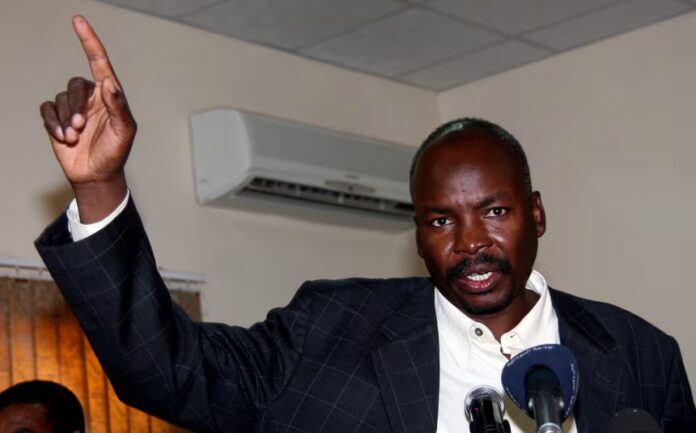

Sudan’s military has detained Ahmed Haroun, a former senior official in ousted President Omar al-Bashir’s administration who is wanted by the International Criminal Court (ICC) over alleged war crimes and genocide in Darfur, officials from his political party have confirmed.
Haroun, who leads the former ruling National Congress Party (NCP), had remained in hiding for years while facing international prosecution over atrocities allegedly committed in Sudan’s western Darfur region in the early 2000s. He has consistently rejected the accusations, describing them as politically motivated.
The circumstances surrounding his arrest remain unclear, particularly given his movement’s support for the Sudanese military in its ongoing conflict with the paramilitary Rapid Support Forces (RSF). Two NCP officials confirmed that Haroun was in army custody, but neither provided details about the operation or the reasons behind the detention.
His arrest comes days after he indicated that, despite political differences between the NCP and the military, both sides shared a common objective in confronting the RSF.
Speaking in a televised podcast interview on Saturday, Haroun reportedly maintained that the party and the army were united by the war effort, even without a formal political alignment.
The Sudanese military had not issued an official statement on the detention, while the ICC had yet to comment on the development.
The arrest also raises questions about the future relationship between the army and Sudan’s Islamist political establishment, whose operatives have played a significant role in supporting military advances against the RSF throughout the conflict.
The war, now in its fourth year, has devastated the country, triggering widespread ethnic killings, famine and mass displacement. Foreign powers have also become entangled in the conflict, which the United Nations has identified as the world’s largest humanitarian crisis.
Haroun’s NCP emerged from Sudan’s Islamist movement, which wielded considerable political influence during the 1990s under Bashir’s rule. His detention marks a significant development involving one of the most prominent figures associated with the former regime.