

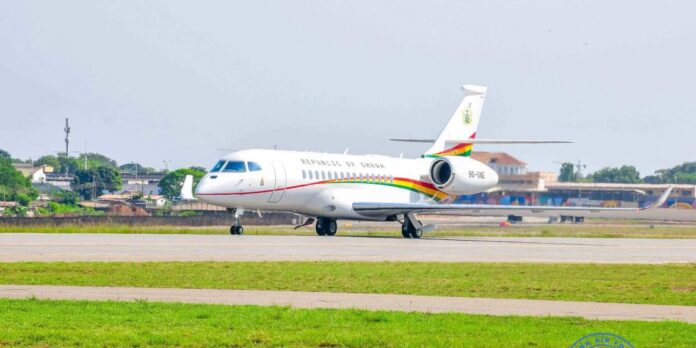

Damongo MP demands full disclosure of aircraft deal, questioning NDC’s U-turn on presidential jet acquisition
The Mahama administration is facing fresh scrutiny over its decision to acquire a US$60.68 million presidential aircraft, with Damongo MP Samuel Abu Jinapor accusing the government of abandoning positions it strongly defended while in opposition.
Mr. Jinapor says the acquisition of the new Falcon 6X presidential jet exposes what he considers a glaring contradiction between the NDC’s previous stance on presidential aircraft purchases and its actions in government.
The controversy follows confirmation that the Ghana Air Force has taken delivery of the aircraft under a contract valued at US$60.68 million.
The former Lands and Natural Resources Minister has reignited debate over the government’s proposed acquisition of presidential aircraft, revisiting the contentious exchanges that erupted in Parliament during deliberations on the 2026 Budget in a Facebook post on Tuesday. The Majority, however, defended the proposed expenditure and rejected the opposition’s concerns.
Mr. Jinapor questioned how the government had managed to complete the acquisition in such a short period, particularly after earlier explanations suggested that the procurement and delivery process would take several years and that the aircraft was unlikely to arrive during President John Dramani Mahama’s current tenure.
He argued that the aircraft’s delivery barely a year after those assurances raised legitimate questions about the government’s earlier representations and the circumstances surrounding the transaction.
The Damongo legislator also drew attention to the NDC’s previous opposition to acquiring a new presidential jet, recalling that senior party figures had argued against such spending on the grounds that Ghana’s economic situation demanded more pressing priorities.
He maintained that the party had previously placed the welfare of ordinary Ghanaians above expensive presidential acquisitions, making its current decision difficult to reconcile with its earlier position.
At the centre of his criticism is what he describes as a fundamental inconsistency in the government’s approach to public expenditure.
Mr. Jinapor further challenged the justification for committing millions of dollars to a presidential aircraft while households continue to grapple with rising living costs and young people face persistent difficulties securing employment.
He also questioned the administration’s record on its flagship 24-hour economy policy, arguing that the initiative has yet to produce the far-reaching economic transformation promised to Ghanaians.
According to him, a change in political power should not result in a reversal of principles, particularly on matters involving the use of public funds.
Meanwhile, the Minority Caucus on Parliament’s Foreign Affairs and Regional Integration Committee is preparing to demand comprehensive answers from the government over the acquisition.
The caucus intends to pursue full disclosure of the transaction, including the overall financial commitment to the taxpayer, the funding arrangements, the procurement procedures, the approvals obtained and all relevant contractual documentation.
Mr. Jinapor insists that the government has an obligation to explain the expenditure and demonstrate that the acquisition was undertaken through transparent and accountable processes.
The planned parliamentary scrutiny is expected to intensify the political debate over the aircraft purchase, placing the administration under pressure to justify both the financial commitment and its apparent departure from the NDC’s earlier position on presidential jet procurement.