

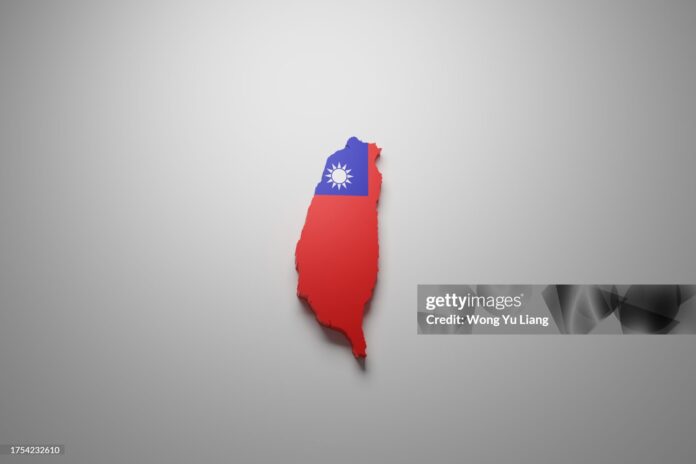

The United States has taken a dispute over a cancelled diplomatic journey to the United Nations’ aviation watchdog, testing whether China can turn diplomatic pressure into control over international air routes and whether global aviation rules can withstand it. In April 2026, Taiwan said Mauritius, Seychelles and Madagascar withdrew overflight clearances for President Lai Ching-te’s planned journey to Eswatini, one of only 12 states maintaining formal diplomatic relations with Taipei. The denial forced him to postpone the trip. He travelled the following month aboard Eswatini’s king’s private aircraft, announcing his arrival only after landing.
Washington now wants the International Civil Aviation Organization (ICAO) to challenge Mauritius and Seychelles, seek written explanations and consider remedies. It argues that states managing air traffic over the high seas do not own that airspace and must not use their aviation responsibilities for political ends. Beijing rejects the intervention, accusing Washington of politicizing Taiwan.
The distinction is crucial. Under Article 1 of the 1944 Chicago Convention, states possess sovereignty over airspace above their territory. But a flight information region (FIR) is an area in which a state provides air traffic services; it is not an extension of national territory. FIRs can stretch over international waters. Their purpose is safe, orderly flight, not geopolitical leverage. Washington is therefore defending a principle with implications for every airline, not simply Taiwan’s president and every state.
Washington, Beijing and the Battle for International Rules
The International Civil Aviation Organization (ICAO) is the appropriate arena because aviation depends on common rules and predictable cooperation. Its 193 member states have an interest in ensuring that air traffic management remains technical rather than political. If a state can revoke previously issued clearances in an international FIR under pressure from a powerful country, the distinction between managing airspace and controlling it becomes dangerously blurred.
Washington’s intervention also exposes the limits of Taiwan’s international status. Excluded from the United Nations and most UN bodies because of Beijing’s opposition, Taiwan is not an ICAO member. Yet its airlines, citizens and aircraft operate within the global aviation system. Its exclusion does not make its flights disappear; it makes access to international institutions harder when disputes arise. A practical question, who may cross an airspace service region? becomes an argument about representation, sovereignty and universal rules.
Beijing insists there is one China and Taiwan is part of its territory; it argues Washington is exploiting aviation principles to advance a political agenda. Governments retain sovereignty over their territorial airspace and may restrict flights for legitimate safety or security reasons. ICAO must not override that right. But this is why the FIR distinction matters: the question is not whether Mauritius or Seychelles may control their sovereign skies. It is whether they may treat international airspace under technical management as a political asset. A credible, impartial inquiry should establish the facts, including the reasons for revocation, rather than prejudge them.
The Wider Strategic and Economic Consequences
The stakes extend beyond Taiwan. If diplomatic pressure can determine access to high-seas FIRs, other governments may use aviation permissions to coerce. States could face pressure to deny flights carrying officials from disfavoured governments. Airlines would confront political uncertainty, higher compliance costs and sudden diversions. The episode involved a presidential charter, but the precedent could affect commercial operators and ordinary passengers.
Aircraft routinely cross multiple FIRs during a journey. Flight plans, fuel calculations, crew schedules, insurance and passenger connections depend on reliable permissions and timely information. A politicized revocation can cause disruption even when alternative routes exist. It can also undermine confidence in air traffic services, whose legitimacy rests on safety and consistency rather than the political preferences of states providing them.
For Washington, the move is strategic signalling. The United States is showing it will contest Beijing’s efforts to narrow Taiwan’s international space, even far from the Taiwan Strait. This broadens US-China competition from arms sales and maritime security to multilateral institutions, diplomatic recognition and the infrastructure of global commerce. Yet Washington must apply the principle consistently. Its credibility will suffer if freedom of overflight is defended selectively, according to which government benefits.
Africa’s Dilemma and the Test for ICAO
The involvement of Mauritius, Seychelles and Madagascar shows how the Taiwan question reaches Africa and the Indian Ocean. These governments have economic, security and diplomatic calculations in dealing with China, a major trading partner and infrastructure financier. Beijing denies coercing them; Taiwan alleges economic pressure shaped their decisions. The public record does not establish the full chain of influence. Transparent explanations are therefore essential.
For smaller states, the episode presents a familiar dilemma: preserving strategic autonomy amid major-power competition. China’s economic weight can make diplomatic choices costly, while alignment with Washington carries risks. African governments should resist becoming proxies in a distant dispute. Their interests lie in clear rules, sovereign decision-making and relations with competing partners without punishment for routine aviation decisions.
The economic backdrop is significant. Taiwan has more than 23 million people and a 2025 GDP estimated by Australia’s foreign ministry at US$920 billion. Its semiconductor industry is central to global supply chains. The Taiwan Strait carried more than US$2.4 trillion in goods in 2024, around 21 per cent of global maritime trade, according to the Centre for Strategic and International Studies. These figures concern maritime commerce, not Lai’s flight, but show why isolating Taiwan can reverberate through global markets.
ICAO faces a test of institutional nerve. It should seek Washington’s requested explanations, examine whether clearances were withdrawn on genuine safety grounds, and clarify authority in high-seas FIRs. It should act transparently, on evidence, without deciding Taiwan’s political status. That would protect aviation rules without turning the agency into an instrument of either power.
The consequences will be measured not only by whether Lai completes another overseas visit, but whether international aviation remains governed by shared standards or becomes an arena where the strongest state dictates who moves and who is stopped. China may regard pressure on Taiwan’s international access as advancing its sovereignty claim. But if that pressure erodes confidence in international airspace rules, the costs will extend far beyond Taipei. The sky above the high seas is not a bargaining chip.