

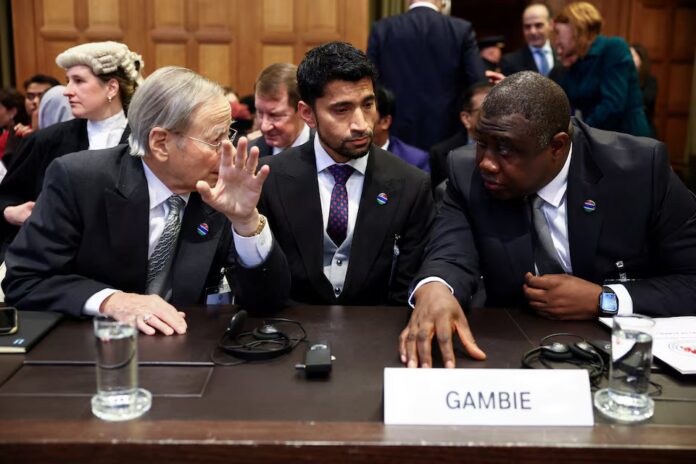

In a landmark judgment, the International Court of Justice holds Myanmar responsible for the destruction of thousands of Rohingya lives, mass sexual violence and systematic atrocities during the 2017 military crackdown.
The International Court of Justice (ICJ) has delivered a historic judgment declaring that Myanmar committed genocide against its Rohingya Muslim minority, holding the state legally responsible for mass killings, widespread sexual violence and other atrocities carried out by its security forces in 2017.
The ruling, delivered on Thursday, represents a major victory for the Rohingya community and the West African nation of Gambia, which brought the case before the United Nations’ highest judicial body seven years ago. It also marks only the fourth time since the Holocaust that an international court has determined that the legal threshold for genocide has been satisfied.
In a decisive finding, the 15-judge panel concluded that Myanmar’s military campaign in northern Rakhine State was not simply a security operation but a systematic assault intended to destroy a substantial part of the Rohingya population.
Presiding Judge Yuji Iwasawa outlined the scale of the atrocities, identifying thousands of civilian deaths, widespread sexual violence, extreme brutality against children and attacks on Rohingya fleeing the military offensive.
The judges determined that Myanmar’s armed forces carried out mass executions of men and boys, subjected women to widespread rape and sexual abuse, and destroyed hundreds of villages through coordinated military operations. The military also promoted and disseminated hate speech against the Rohingya, further reinforcing the campaign of persecution.
The court found that the only reasonable explanation for Myanmar’s conduct was an intention to destroy a substantial part of the protected ethnic and religious community. That determination satisfied one of the most difficult requirements in international law: proving the specific intent to commit genocide.
The judgment is particularly significant because genocide is among the most difficult international crimes to establish. Prosecutors must demonstrate not merely that mass atrocities occurred, but that those responsible intended to destroy, entirely or partially, a national, ethnic, racial or religious group.
For Gambia, the ruling represents a landmark achievement in its effort to secure international accountability for the persecution of the Rohingya. The military offensive forced at least 700,000 members of the Muslim minority to flee predominantly Buddhist Myanmar, triggering one of the region’s most devastating displacement crises.
Beyond declaring Myanmar responsible, the ICJ imposed obligations on the country to provide compensation for the violations, with the amount to be determined in subsequent proceedings. It also called on Myanmar to facilitate the safe and dignified return of displaced Rohingya to their homes and support the reunification of families separated by the military campaign.
Myanmar’s government did not immediately respond to requests for comment. The country has previously rejected allegations of genocide, maintaining that its military operations were legitimate responses to attacks by armed groups.
The judgment is final and cannot be appealed, although the ICJ has limited powers to enforce its decisions.
Its implications extend well beyond Myanmar. International legal experts are expected to examine the ruling closely for guidance on state responsibility under the 1948 Genocide Convention, particularly as the court considers South Africa’s separate case accusing Israel of committing genocide in Gaza.
Both Israel and Myanmar have rejected genocide allegations, arguing that their military actions were responses to security threats.
The judgment also carries exceptional historical weight. Before this decision, international courts had recognized genocide in three major historical contexts: the 1994 genocide in Rwanda, the 1995 massacre at Srebrenica in Bosnia and atrocities committed by Cambodia’s Khmer Rouge regime during the late 1970s.
The ruling underscores the distinction between the International Court of Justice and the International Criminal Court. While the ICJ adjudicates legal disputes between states and determines whether governments have breached international obligations, the ICC prosecutes individuals accused of genocide, war crimes and crimes against humanity, with the authority to impose prison sentences.
For the Rohingya, the judgment delivers something that years of displacement, persecution and international condemnation had failed to secure: an unequivocal judicial determination that their suffering constituted genocide and that Myanmar bears responsibility under international law.