

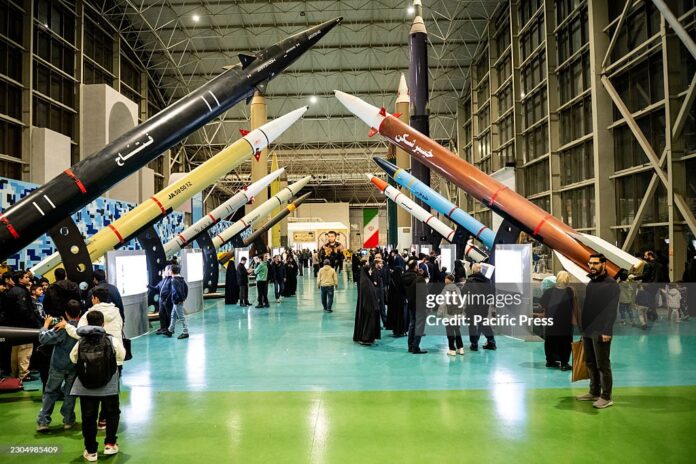

The threat has crossed borders, struck cities, endangered shipping and drawn American forces into repeated confrontation. Israel would be reckless to assume another ceasefire or declaration of victory has permanently neutralized Iran’s military machine. Preparing for renewed conflict is not warmongering; it is a duty of national defence. Preparation must serve a clear objective: prevent Tehran rebuilding capabilities that threaten Israel and the region, while making any future campaign shorter, more disciplined and less likely to ignite regional war.
A Threat that Rebuilds
The record explains Israel’s alarm. The Congressional Research Service (CRS) reports that the United States and Israel began operations against Iran on 28 February 2026, following strikes in 2025. Washington said the 2026 campaign hit more than 450 ballistic-missile targets and about 800 drone targets before an April ceasefire. Yet a US Defense Intelligence Agency assessment cited by CRS said Iran retained thousands of missiles and one-way attack drones capable of threatening American and partner forces. Satellite imagery and officials also indicated Tehran had begun restoring missile infrastructure and production using stockpiled components. Destruction is not disarmament.
Jewish Institute for National Security of America (JINSA) recorded 574 ballistic missiles and 1,084 drones launched by Iran at Israel over twelve days in June 2025. It estimated 49 missiles struck populated areas, infrastructure or bases, despite interception by Israel and its partners. The lesson is clear: even sophisticated defences can be tested by massed salvos, decoys and repeated attacks. Iran’s missile programme is an instrument for imposing costs, threatening civilians, deterring intervention and holding regional infrastructure at risk. Nor is the danger confined to Israel. CRS describes Iranian attacks across the Middle East and threats to commercial shipping in the Strait of Hormuz, a waterway central to global oil and gas trade. Tehran’s ability to threaten US bases, Gulf infrastructure and maritime routes gives it leverage beyond any single missile’s range. Israel therefore has a legitimate interest in preventing these capabilities from being rebuilt; Gulf states have equally concrete reasons to cooperate.
Coalition Is Strategy, Not Slogan
Israel’s reported push for a broader US-backed regional coalition deserves serious consideration. The Jerusalem Post reported on 20 November that Israeli defence officials want greater coordination than during the earlier 2026 campaign, aiming to shorten any operation and focus on Iran’s strategic military assets. It also reported continuing intelligence exchanges and scenario planning with US Central Command. Shared radar, early-warning data, air-defence integration, maritime surveillance and crisis communications can prevent one country’s defences being overwhelmed while others watch.
The June 2025 experience showed the value of cooperation. Israel did not intercept threats alone; US and partner assistance helped create a wider defensive network. But JINSA warns that this success consumed significant interceptor stocks. A coalition must be more than friendly capitals on a map. It needs replenishable interceptors, interoperable command systems, joint exercises, protected bases and procedures for tracking threats. Defensive cooperation should come first; offensive action must require explicit political authorization, a defined purpose and compliance with international law.
The economic case is compelling. CRS estimated US military operations cost $38 billion by 1 August 2026. A Pentagon assessment cited in that report warned that munitions expenditure had created strategic inventory shortfalls and exposed industrial-base weaknesses. Better regional defences could distribute warning and protection responsibilities, reducing the likelihood that every crisis demands costly American emergency deployments. They would reassure Gulf partners that their security is not an afterthought.
The Objections and the Answer
The strongest objection is that renewed strikes could trigger Iranian retaliation against oil facilities, power stations, desalination plants, undersea cables, US bases and shipping. This is no hypothetical concern. The Associated Press reported on 19 November that Gulf governments, alongside Pakistan and Turkey, were pressing Washington to avert another all-out war because they feared attacks on critical infrastructure and disruption around the Bab el-Mandeb Strait. A campaign without regional consent, defensive preparation or an exit strategy could damage the partners Israel needs.
But escalation risk does not justify passivity. It argues for stronger deterrence, better protection and diplomacy backed by credible capability. The choice is not between unlimited war and doing nothing. Washington and Jerusalem should demand verifiable limits on missile production and transfers, intrusive monitoring, restored nuclear inspections and consequences for violations. The Middle East Institute proposes a missile-verification framework built around declarations, test monitoring, inspections, production controls and enforcement. That is more durable than repeatedly striking facilities and hoping they remain destroyed.
Another objection is that military pressure can strengthen hardliners and rally Iranians around the regime. That danger is real: air power cannot manufacture political legitimacy or determine Iran’s future. Nor is every missile evidence of an imminent nuclear weapon. CRS says the status of nuclear facilities after the 2026 strikes remains unclear; the International Atomic Energy Agency has had limited visibility since inspectors withdrew. This uncertainty demands renewed inspections and verification, not unsupported certainty.
Deterrence with an Endgame
Israel’s case is strongest when precise. It is not a claim to unlimited freedom of action or a licence to target civilians or pursue regime change by force. It is the argument that no state should absorb repeated missile attacks while an adversary rebuilds the means to launch them. International law recognises self-defence, but necessity, proportionality and civilian protection remain binding. Any operation must distinguish military infrastructure from civilian life and consider foreseeable regional consequences.
The objective should be to deny Iran the ability to regenerate a large, accurate, survivable missile force; prevent transfers to armed proxies; protect regional airspace and shipping; and restore credible nuclear monitoring. Defensive cooperation should be standing policy, not an arrangement assembled after missiles fly. Diplomatic channels must remain open: a verified agreement constraining Iran is preferable to another cycle of bombardment and reconstruction. Israel must prepare because the danger is persistent, not because war is inevitable. A broader coalition can strengthen deterrence, protect civilians and give diplomacy leverage. Leadership is not measured by willingness to launch another campaign, but by the ability to prevent one, or, if prevention fails, ensure force has a lawful purpose, regional backing and a realistic endgame.