

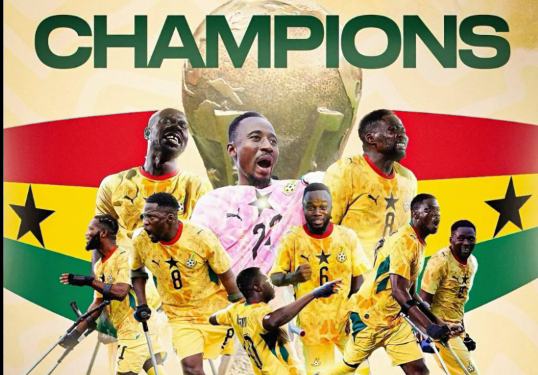

Ghana has conquered the world, but the country must now confront an uncomfortable question: will it give its champions the recognition, investment and institutional support their extraordinary achievement deserves? The Black Challenge’s historic 1-0 victory over Morocco in San Juan de los Lagos, Mexico, is more than a sporting triumph. It is a powerful statement about determination, competitive excellence and the extraordinary possibilities of Ghanaian sport when talent is matched with collective purpose.
By claiming their maiden WAFF Amputee Football World Cup title, Ghana have reached a summit that only Angola, among African nations, had previously occupied, following its 2018 triumph. That two African countries have now won the global championship is significant. That Ghana defeated another African side in the final makes the achievement even more consequential. The Black Challenge have not merely participated in a global competition; they have demonstrated that African amputee football can compete at the highest level and command international respect.
Yet the importance of this victory must not be measured exclusively by the trophy. It should also be measured by what Ghana chooses to do with the opportunity it has created.
The Power of Consistency, Not a Moment of Luck
The Black Challenge’s triumph was no accident. Their campaign revealed the competitive discipline, mental resilience and tactical composure required to become world champions. A 3-1 victory over the United States in the Round of 16 and a 2-0 defeat of Egypt in the quarter-finals demonstrated their capacity to deliver under pressure. Their most revealing performance, however, came against defending champions Türkiye.
After extra time ended 1-1, Ghana survived a demanding penalty shootout, winning 4-3 to secure their place in the final. That victory exposed an essential quality of champions: the ability to remain composed when technical superiority alone cannot guarantee success. Against Morocco, they supplied the decisive goal and completed the job. Their individual recognition was equally deserved. Mubarik Mohammed’s seven goals earned him the Golden Boot, providing further evidence of Ghana’s attacking quality.
More importantly, this victory extends a pattern of continental superiority. Ghana have now defeated Morocco in three major finals, following their successes at the 2023 African Para Games and the 2024 African Amputee Cup of Nations. Such consistency suggests that the Black Challenge’s achievement rests on sustained competitive strength rather than a fortunate tournament run. Ghana must recognize and protect that foundation.
Beyond Celebrations
The greatest danger following this triumph is that Ghana treats it as another occasion for ceremonial celebration without confronting the structural inequalities confronting disability sport. Athletes with disabilities should not have to become world champions before their sporting contributions receive serious national attention.
For too long, disability sport has struggled to command the visibility, institutional priority and public enthusiasm routinely associated with mainstream sporting disciplines. The Black Challenge have exposed the inadequacy of that hierarchy. Their achievement should force a broader reconsideration of how Ghana identifies sporting talent, distributes resources and defines national sporting excellence.
Recognition must translate into meaningful support. Government, sports administrators, corporate organizations and the private sector must regard amputee football as a legitimate investment priority, not a charitable obligation. Sustainable funding, appropriate training facilities, competitive opportunities and stronger institutional backing are essential to maintaining international competitiveness.
Inclusion cannot remain a convenient slogan invoked during commemorations. It must become a practical commitment reflected in budgets, policies and opportunities. The Black Challenge deserve more than applause; they deserve an enabling environment in which their success can be sustained.
The World Title Must Become a National Legacy
Ghana’s triumph also presents an opportunity to expand the country’s international sporting identity beyond its established football traditions. The Black Challenge have shown that sporting greatness is not determined by physical ability but by preparation, ambition, discipline and opportunity.
Their victory should inspire a new generation of athletes with disabilities to pursue competitive sport without being constrained by social prejudice or institutional neglect. It should also encourage sporting authorities to identify and nurture talent across disciplines that have historically received insufficient attention.
However, inspiration without investment produces little lasting change. The responsibility now rests with national authorities and sporting institutions to ensure that this historic achievement becomes the beginning of sustained progress rather than an isolated moment of glory.
Ghana are world champions. That distinction is deserved, historic and beyond dispute. But the real measure of national pride will be whether the country builds on what these remarkable athletes have achieved. The Black Challenge have delivered the trophy. Ghana must now deliver the support.