


Israel-Iran: When Deterrence Risks Escalation
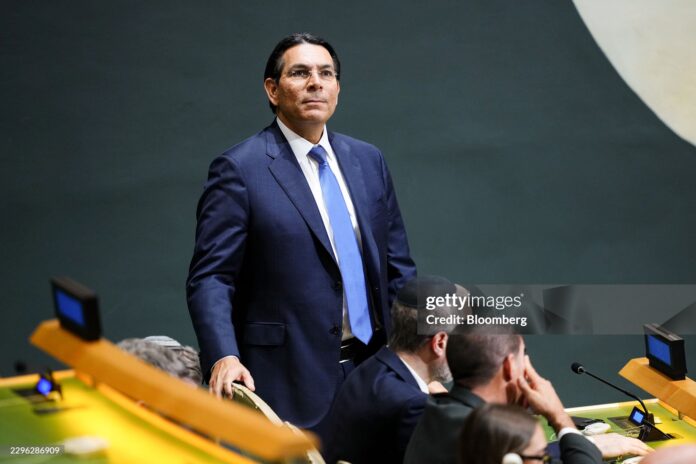
This is not merely a threat. It is a warning designed to make every Iranian decision-maker wonder whether the next order could become a personal death sentence. Israeli Ambassador to the United Nations Danny Danon has said Israel knows where senior Iranian leaders are hiding and could reach them within days if Iran attacks Israel again. The timing is striking, coming as diplomacy is being pursued in New York during the United Nations General Assembly, while governments call for restraint amid concerns about further escalation.
Danon did not identify the leaders he meant or explain how Israel obtained the intelligence behind the claim. The distinction is significant because, in a conflict where information is part of the battlefield, an intelligence claim can also function as a strategic message. Such a statement may be intended not only to deter Iran but also to influence the calculations of Iranian leaders and other governments engaged in diplomatic efforts.
The claim, however, has not been independently verified, making it important to distinguish between what Israel says it knows and what can be established from publicly available evidence. The statement therefore carries two dimensions: a claimed intelligence capability and a deliberate warning about the potential consequences of another Iranian attack. Its significance lies not only in whether the intelligence is accurate, but also in how Iranian decision-makers and international actors interpret the warning at a moment of heightened diplomatic activity.
The Power and Limits of a Threat
The significance of Danon’s warning is not simply whether every detail can immediately be proven. It is what the statement does to the strategic environment. If Iranian leaders believe Israel genuinely possesses precise intelligence on their whereabouts, the threat could alter their calculations. They may become more cautious about authorizing attacks or appearing in predictable locations. But deterrence is never automatic. A threat intended to prevent escalation can also convince an adversary that escalation is inevitable and that it must act before its position becomes weaker.
That is the danger of publicly declaring that political leaders are within reach. Such language raises the stakes of any future attack. Once an official has linked an attack to a promised response against leadership figures, credibility can become an additional pressure on decision-makers. If Israel later refrains from acting, Tehran could interpret that restraint as weakness. If Israel acts, the conflict could enter a more dangerous phase. The public nature of the warning therefore adds another layer of strategic pressure to an already volatile situation.
The distinction between intelligence capability and military intent is crucial. Danon’s remarks establish neither that particular Iranian leaders are being targeted nor that an operation is imminent. They establish that an Israeli diplomat is publicly presenting the possibility of such action as credible. That distinction is crucial because possessing intelligence on the whereabouts of senior officials is not the same as having decided to act on it. The warning should therefore be understood as a statement about capability and deterrence, rather than definitive evidence that an Israeli operation is about to take place.
Diplomacy Under the Shadow of Force
The timing makes the statement even more consequential. The General Assembly provides a setting where adversaries can articulate positions while diplomacy keeps open a path away from war. World leaders and senior representatives are gathering in New York as international security concerns dominate the agenda. Yet diplomacy rarely operates in a vacuum. Negotiations between hostile governments are shaped by what each side believes the other can do militarily. Danon’s warning exposes a contradiction: diplomacy may depend partly on the credibility of force, while excessive threats can undermine the diplomacy they are meant to strengthen.
Iran’s presence in New York adds another layer. Iranian officials have engaged in indirect contacts with the United States through mediators, while President Masoud Pezeshkian is attending the General Assembly. That creates a convergence of diplomacy, private communication and military signalling. The proximity of these channels to explicit military warnings illustrates how quickly diplomatic engagement and strategic pressure can become intertwined.
The responsible response is not to dismiss either message, but to recognize the tension. If diplomacy is to reduce conflict, communication channels must remain open and credible. At the same time, military signalling can shape the calculations of leaders on all sides, making careful communication essential when the consequences of miscalculation could be severe.
The Intelligence Question Matters
There is a deeper issue here: the credibility of intelligence claims in wartime. Modern conflicts generate assertions that cannot immediately be tested, as governments release information to shape public understanding and influence adversary behaviour. Journalists must therefore distinguish between what an official claims, what independent evidence establishes and what remains unknown. Danon’s statement belongs in that category.
That does not make the claim irrelevant. Official assertions can themselves change behaviour, particularly when they signal that a government possesses intelligence capabilities that an adversary cannot easily assess. But treating an unverified intelligence assertion as established fact would turn journalism into an amplifier of strategic messaging rather than an independent source of information. The significance of such statements lies partly in what they may cause governments and individuals to believe or do.
The public therefore deserves precision. Israel may possess extensive intelligence on Iranian leadership movements; Danon says it does. But that should not automatically become certainty about specific locations or future operations without supporting evidence. That distinction is especially important when the subject is potential escalation involving state leaders, where unverified claims can influence public perceptions and strategic calculations.
The Real Test Is Restraint
The most consequential question is whether military capability becomes an automatic substitute for diplomacy. Danon’s warning demonstrates how close deterrence and escalation can sit beside each other. A credible threat may discourage an attack, but it may also encourage pre-emption or retaliation. That is why the diplomatic effort matters. The competing signals from New York, threats of further action alongside contacts aimed at reducing conflict, show a crisis in which governments are simultaneously preparing for confrontation and testing whether confrontation can still be avoided.
The task for diplomats is to widen the narrow space between warning and war. For journalists, it is to separate verified facts from official claims, scrutinize the purpose of public statements and resist treating dramatic rhetoric as evidence of inevitable escalation. Public warnings can influence how governments and their adversaries calculate risk, but they do not by themselves determine what happens next. The space between deterrence and escalation remains shaped by political decisions, diplomatic contacts and the assumptions each side makes about the other.
A war can begin with missiles. It can also begin with assumptions. The dangerous assumption is that threats leave no diplomatic path back. They do not. Even amid military warnings and preparations for confrontation, diplomacy can preserve opportunities to reduce tensions, clarify intentions and prevent further escalation. The challenge is to ensure that threats remain signals intended to deter rather than steps towards a conflict that becomes increasingly difficult to control.