

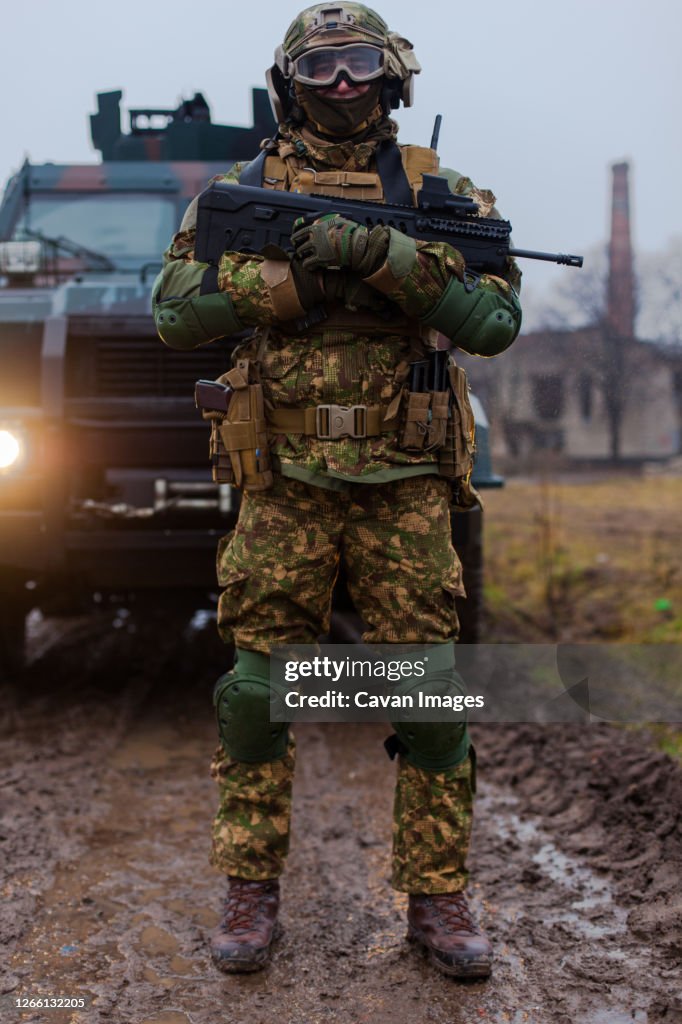

The war in Ukraine is entering a more dangerous phase: Moscow is preparing to attack the infrastructure that keeps Ukrainian cities functioning, while Kyiv is preparing to strike the infrastructure that keeps Russia earning from oil. This is no longer simply a contest over territory. It is becoming a battle over electricity, fuel, transport, industrial capacity and, ultimately, civilian endurance. President Volodymyr Zelenskiy says Ukrainian intelligence has identified preparations for a broader Russian campaign against civilian infrastructure this winter, with the reported aim of isolating major cities and making them increasingly difficult to inhabit.
Kyiv has already seen attacks on bridges, energy facilities and other critical infrastructure, while Russia has intensified missile and drone strikes on the capital and other cities. On October 3, a Russian airstrike damaged Kyiv’s Northern Bridge, after other bridges had also been hit, disrupting transport across the Dnipro. The pattern underscores the growing importance of infrastructure in the war, where attacks are increasingly designed not only to destroy military targets but also to disrupt the systems that allow cities and economies to function.
Ukraine’s response is increasingly clear: if Russia seeks to make Ukrainian cities unlivable by attacking their infrastructure, Kyiv will impose costs on Russia’s economic and energy infrastructure. That means refineries. By striking facilities that process crude oil into fuels, Ukraine is seeking to put pressure on one of the economic systems that helps sustain Russia’s war effort, turning the country’s energy infrastructure into an increasingly important front in the conflict.
Kyiv Is Targeting the Machinery Behind Russia’s War Economy
Ukraine’s refinery campaign is not new. What has changed is its scale, frequency and reach. The International Energy Agency says Russia has 32 major refineries with about 6.5 million barrels per day of installed refining capacity. In the first eight months of 2026, a Russian refinery was hit by Ukrainian drones, on average, once every three days. By late August, only five major Russian refineries had escaped Ukrainian drone attacks. The geography of the campaign is equally significant. On July 7, Ukrainian drones struck Gazprom Neft’s Omsk refinery, Russia’s largest, approximately 2,500 kilometres from Ukraine. The ability to reach such a distant facility demonstrates the expansion of Ukraine’s long-range strike capability.
The operational consequences have been significant. Russian refinery throughput fell to about 3.8 million barrels per day in June, its lowest level in more than two decades and roughly 30% below the same month a year earlier. Gasoline production was down about 20% year on year, while diesel output was estimated to have fallen by nearly 30%. Moscow responded by restricting fuel exports in an effort to protect domestic supplies. The International Energy Agency now expects Russian refinery throughput to average only about 4 million barrels per day for the remainder of 2026 and in 2027, reflecting the difficulty of restoring damaged processing units and the cumulative effect of repeated attacks.
This is strategic warfare through economic attrition. A refinery converts crude into the fuels that move armies, trucks, aircraft and economies. Damaging one does not necessarily remove Russian crude from the world market, but it can disrupt the conversion of that crude into diesel, gasoline, jet fuel and other refined products. That distinction is crucial to understanding the wider consequences of Ukraine’s campaign. The objective is not simply to destroy infrastructure; it is to impose sustained pressure on the machinery that turns Russia’s oil wealth into usable fuel, while forcing Moscow to divert resources toward repairs, domestic supply and the protection of critical energy infrastructure.
Moscow’s Winter Strategy Raises the Stakes
Ukraine’s refinery strikes cannot be separated from what is happening on the other side of the border. Russia has intensified attacks on Ukrainian energy infrastructure just as winter approaches. On September 30, Russian forces launched a major assault involving missiles and drones against energy facilities around Kyiv and elsewhere, with Ukrainian officials reporting deaths, injuries and disruptions to electricity and water supplies. Zelenskiy said the Kyiv region’s energy infrastructure was the principal target. The significance goes beyond individual strikes. Ukraine’s power system has spent years absorbing repeated attacks and a winter campaign against electricity generation, transmission networks, heating systems, water infrastructure and transport could impose enormous pressure on civilian life even without physically destroying entire cities.
Ukrainian officials and Western analysts say Moscow’s emerging strategy could seek to isolate major urban centres, including Kyiv, Kharkiv, Lviv and Odesa, by attacking the infrastructure on which they depend. The stated Ukrainian assessment is that such pressure could encourage residents to leave cities, creating both a humanitarian crisis inside Ukraine and potentially another refugee challenge for Europe. These assessments are Ukrainian claims and should be distinguished from independently verified evidence of every element of the alleged Russian plan. The attacks on Kyiv’s bridges illustrate the logic. The capital’s geography makes crossings over the Dnipro strategically important, and more than a third of Kyiv’s roughly three million residents live on the eastern bank while many travel to the western bank for work and essential services.
Disrupting those bridges therefore affects civilian mobility even when the immediate physical damage is limited. The same principle applies more broadly to Ukraine’s energy and transport networks: infrastructure that appears civilian can also become a strategic pressure point because it sustains the movement of people, goods, workers and essential services. For Moscow, attacks on these systems can impose costs that extend beyond the destruction of individual facilities, potentially testing Ukraine’s ability to maintain normal urban life through another difficult winter.
Kyiv’s answer is to create a comparable vulnerability inside Russia. The logic is straightforward: if Russia attacks Ukraine’s economic arteries, Ukraine will attack Russia’s. By striking refineries and other components of Russia’s energy infrastructure, Ukraine is seeking to demonstrate that the economic and strategic costs of the war cannot be imposed on Ukrainian territory without consequences for Russia’s own energy system. The refinery campaign is therefore not simply an effort to disrupt fuel supplies; it is part of a broader contest over the infrastructure that allows each side to sustain its economy, military operations and civilian life.
The Global Oil Market Is the Battlefield Beyond Ukraine
This is where the consequences become global. Russia remains one of the world’s largest oil producers, with the IEA estimating Russian oil production at approximately 8.4 million barrels per day in August 2026, while EIA data show that Russian crude and condensate exports averaged around 4.3 million barrels per day in the first half of 2025. But refinery attacks do not automatically remove all those barrels from the international market. Crude can still be exported, stored or redirected. The more immediate vulnerability is refined petroleum products, and that matters because the international market is already unusually tight. According to the IEA, global seaborne diesel and gasoil exports averaged only 4.7 million barrels per day during the first eight months of 2026, down 10% from a year earlier. In August, combined Russian and Middle Eastern diesel exports fell to about 520,000 barrels per day, 75% below the same month a year earlier.
The result has been a squeeze on diesel markets. The IEA reported that diesel crack spreads, the difference between the price of diesel and the crude used to produce it, exceeded $100 per barrel in September in both the US Gulf Coast and northwest Europe. That is an extraordinary level of stress, and Russia is only one part of the problem. The IEA estimates that global oil supply will average 100.7 million barrels per day in 2026, down 5.7 million barrels per day from the previous year. Global observed oil inventories had already fallen by 507 million barrels since February, equivalent to an average draw of 2.8 million barrels per day. Ukraine is therefore escalating its refinery campaign at precisely the moment when the world has fewer buffers and less capacity to absorb another sustained disruption to refined-product supplies.
A prolonged reduction in Russian refined-product exports could push more demand towards refiners in the United States, Asia and elsewhere. Those refiners may be able to compensate partially, but not instantly and not without higher costs. The IEA says other regions are already pushing refinery utilization towards their limits to capture high margins. For consumers, the consequences could be simple and painful: higher diesel prices, increased transport costs, more expensive goods and greater inflationary pressure. What begins as a Ukrainian effort to weaken Russia’s war economy can therefore reverberate far beyond the battlefield, exposing the vulnerability of an already strained global fuel market.
The Danger Is Escalation Beyond the Battlefield
The strategic dilemma for Kyiv is therefore profound. Attacking Russian refineries can impose economic costs on Moscow, constrain military logistics and reduce the revenue-producing efficiency of Russia’s oil sector. It also gives Ukraine a form of leverage when its own cities remain under sustained attack. But every additional refinery knocked offline tightens a global fuel market already under pressure from disruptions in the Middle East, the Red Sea and other energy routes. The IEA says refined-product and LPG exports were nearly 60% or 3.7 million barrels per day, below February levels. The distinction between a Russian refinery being damaged and the global oil market actually losing Russian crude is therefore critical: the first primarily threatens fuel availability and refining margins, while the second would represent a far larger shock.
That is why the refinery campaign carries consequences far beyond the Russia-Ukraine war. There is also a strategic feedback loop: Russia attacks Ukrainian energy infrastructure; Ukraine attacks Russian energy infrastructure; Russia responds; Ukraine responds again. Each side is attempting to convince the other that the cost of continuing the war is becoming unbearable. The danger is that this logic can produce escalation without producing negotiations. For Ukraine, the calculation is brutally practical: a country whose electricity, bridges and heating systems are being attacked cannot be expected to absorb those blows indefinitely without retaliation. For Russia, refinery attacks threaten an energy sector that remains central to state finances and strategic resilience.
The world, meanwhile, is watching a war increasingly fought through energy systems rather than only through trenches. That is the central significance of Ukraine’s refinery offensive. Kyiv is no longer merely trying to survive Russia’s war economy; it is trying to disrupt that economy at its source. Yet because Russian crude and refined products remain embedded in global energy markets, the consequences of that strategy will not necessarily stop at Russia’s borders. Damage to refining capacity can tighten regional fuel supplies, raise refining margins and complicate the movement of petroleum products, even when the underlying volume of Russian crude available to international buyers remains substantial.
In a war already capable of sending shockwaves through energy prices, shipping and inflation, the next escalation may therefore be measured not only in kilometres of territory gained or lost, but in millions of barrels of fuel that fail to reach the market. Ukraine’s refinery campaign illustrates the increasingly interconnected character of modern warfare: an attack designed to weaken an adversary’s military and economic capacity can simultaneously create pressure in markets far beyond the battlefield. The strategic question for Kyiv is consequently not simply how much damage it can inflict on Russia’s energy infrastructure, but how much disruption the broader global system can absorb before the economic consequences begin to reshape the war itself.