

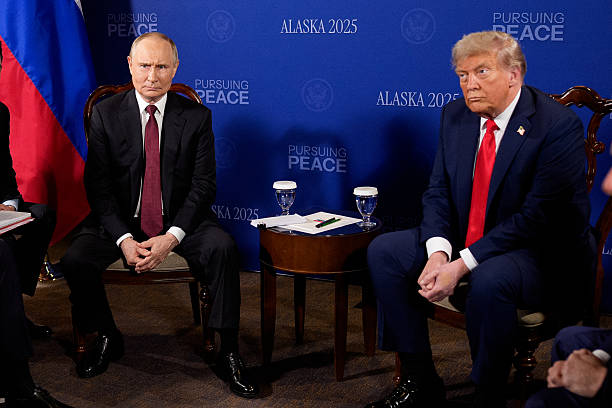

Donald Trump’s Russian diesel deal is a strategic mistake disguised as economic pragmatism. By turning to Vladimir Putin for fuel while Russia’s war against Ukraine continues, the US president risks weakening the pressure Washington has used to raise the cost of Russian aggression. Cheaper diesel may offer immediate relief to consumers and businesses. But a policy that eases sanctions, rewards Moscow with new customers and unsettles allies can carry a much higher geopolitical price.
A policy can be commercially rational in isolation and strategically damaging in context; the relevant measure is not the price of one shipment, but what Washington gives up to obtain it for future negotiations.
On October 9, 2026, Trump announced that Russia would supply more than 300,000 metric tonnes of diesel immediately, followed by 500,000 tonnes in November and one million tonnes thereafter. He also referred to a possible additional three million tonnes, dependent on refinery conditions. The Treasury Department issued a temporary licence easing restrictions on Russian diesel shipments. These are commitments, not proof that every cargo will arrive.
Moscow Gains More Than a Customer
The financial effect should neither be exaggerated nor dismissed. Russia earns export revenue when its fuel is sold; those receipts support companies, workers, tax collection and the wider economy from which the state finances its priorities. The contribution to the Kremlin’s war budget depends on prices, discounts, taxation and payment arrangements. Still, easing restrictions creates another commercial channel for a state whose energy income matters.
A temporary waiver may be limited in volume, yet dilute sanctions credibility. If Washington relaxes pressure whenever domestic prices become politically painful, Moscow can conclude that economic coercion is vulnerable to electoral cycles. Sanctions impose costs and signal that aggression will not be normalized. Repeated exceptions weaken both effects.
The scale requires perspective. The announced deliveries could amount to several million tonnes if all stages proceed, but Russia’s ability to meet the schedule is uncertain. Refinery damage, export restrictions, shipping availability and domestic demand all affect supply. Analysts have questioned whether the proposed volumes can materially change prices or meaningfully alter Russia’s federal finances. The argument is not that this deal will finance the war by itself, but that it offers commercial relief without securing a Russian concession.
Cheap Diesel Is Not a Strategy
The administration’s strongest argument is legitimate: diesel powers freight, farming, construction and industry. High prices squeeze truckers and farmers and can feed through into food and transport costs. With US diesel prices reported at about $6.30 a gallon amid energy-market disruption, a president has a duty to pursue affordability. Refusing every Russian cargo regardless of circumstances could impose avoidable costs on Americans.
But the relevant question is whether this deal can materially reduce those costs. Energy analysts have warned that the quantities and delivery timetable may be too limited or slow to shift prices substantially. Fuel prices depend on crude costs, refinery capacity, inventories, shipping, distribution and global expectations. The United States also exports substantial volumes of diesel, so imported Russian product would enter a complex market rather than simply replace a national shortage.
There are alternatives. Washington can coordinate supply with allies, improve refinery maintenance and throughput, address transport bottlenecks, enforce competition rules and use strategic reserves where appropriate. It should publish expected delivery schedules, contract terms, estimated consumer savings and safeguards against sanctioned entities benefiting. If the deal is genuinely an emergency measure, the administration should demonstrate its emergency value with transparent numbers and a clear expiry date. Without that evidence, the policy looks like a political response to painful prices before November’s midterm elections.
The Message to Ukraine and the World
The deal affects alliance credibility as well as fuel markets. Ukraine is fighting to preserve its sovereignty against Russia’s full-scale invasion. Western governments have argued that dependence on Russian energy can give Moscow leverage over countries it seeks to intimidate. A US president who relaxes restrictions for domestic price relief risks telling Kyiv that its security becomes negotiable when American political pressure rises. It also complicates coordination with allies asked to maintain sanctions and absorb the economic costs of opposing Russian aggression.
The strongest counterargument is that trade can create leverage: buying fuel might open channels to Putin, encourage cooperation and help secure a broader ceasefire. Diplomacy should not be ruled out simply because an adversary is involved. Yet leverage exists only when concessions are conditional, measurable and reversible. If Russia receives market access before delivering verifiable restraint, Washington gives away a bargaining chip in exchange for a promise. Any energy arrangement should be tied to independently verified steps, including a sustained halt to attacks on Ukrainian civilians and energy infrastructure, credible negotiations and clear consequences for violations. A fuel transaction alone is not evidence of peace.
Critics should not claim that every export dollar automatically buys a shell or missile. The stronger point is that export income sustains state capacity, while sanctions aim to raise the cost of aggression. The burden is on the administration to explain why relaxing that pressure produces a concrete strategic gain greater than the cost.
Congressional scrutiny is essential. Lawmakers have raised questions about whether the waiver conflicts with existing restrictions and recently enacted measures targeting Russian energy revenues. The administration should disclose its legal basis, consult Congress and allies and explain how it will prevent circumvention. A superpower cannot credibly demand that partners enforce restrictions while treating them as optional when inconvenient.
Trump’s responsibility is to protect American consumers without sacrificing American strategic interests. If shipments fail to produce measurable relief, the waiver should not be extended. If Moscow exploits the opening while continuing its war, it should be revoked. The verdict is clear: this deal may deliver fuel, but it risks delivering a damaging strategic message. Leadership is not the ability to announce a cargo. It is the ability to secure relief without weakening the coalition meant to defend peace.