

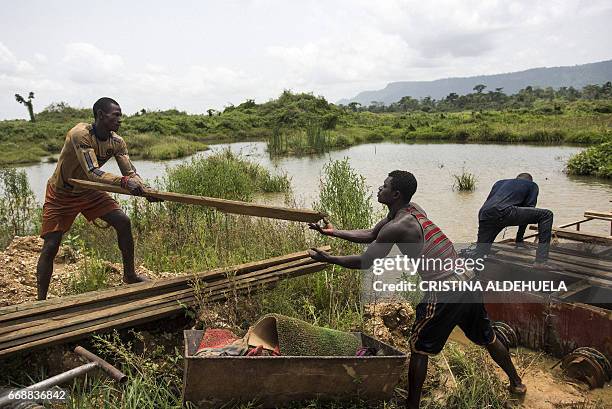

Illegal mining thrives when enforcement is temporary and impunity is persistent. President John Dramani Mahama’s decision to keep soldiers in nine forest reserves cleared of galamsey is therefore a necessary intervention, but it also exposes a deeper failure: Ghana has struggled to protect its natural resources beyond the lifespan of security operations. Forests cannot be declared safe merely because miners have been driven out. They are safe only when the conditions that enabled their destruction have been decisively dismantled.
The President’s announcement follows a familiar and troubling pattern. Military personnel clear protected areas, illegal miners retreat and operations resume when troops withdraw. Forest guards are left to confront determined, sometimes heavily armed operators, with some reportedly coming under gunfire and casualties recorded. This cycle is not simply an enforcement problem. It reflects weaknesses in institutional protection, deterrence and the political will required to sustain difficult decisions.
Keeping soldiers in the nine reserves may prevent an immediate resurgence. It sends a clear message that the government will not allow illegally mined forests to become available for exploitation again. Yet military deployment must be understood as a protective measure, not a substitute for effective environmental governance. Soldiers can secure territory, but they cannot independently resolve the economic incentives, local complicity and institutional failures that make galamsey profitable.
The government must therefore establish measurable objectives for the deployment, including preventing renewed mining, protecting forest guards and supporting lawful rehabilitation. Security arrangements should be reviewed regularly, with transparent reporting on breaches, arrests and enforcement outcomes. Without such accountability, a necessary intervention risks becoming an indefinite commitment whose success is measured by the presence of uniforms rather than the recovery of forests.
Chiefs Must Choose Between Influence and Complicity
President Mahama’s appeal to traditional authorities in the Western North Region recognises a central reality: the fight against galamsey cannot succeed through coercion alone. Chiefs possess influence within communities where illegal mining provides income, employment and commercial opportunities. Their cooperation can strengthen public acceptance of enforcement, discourage local resistance and help identify those facilitating destruction.
But appeals for cooperation must lead to clear responsibilities. Traditional authorities cannot publicly support environmental protection while tolerating practices that undermine it within their jurisdictions. Where evidence establishes that individuals have facilitated illegal mining, their status should not shield them from lawful investigation. Equally, allegations must be investigated fairly rather than used to stigmatize entire traditional institutions.
The government must also recognize that community resistance is not always reducible to hostility towards conservation. For some households, galamsey represents an immediate source of livelihood in places where legitimate employment may be scarce. Enforcement that removes income without creating credible alternatives can deepen resentment and encourage illegal operators to return when surveillance weakens.
This is where traditional leadership can make a practical difference. Chiefs, district authorities and community representatives should help identify viable livelihoods, support public education and communicate the long-term costs of environmental destruction. Their contribution must extend beyond endorsing military operations to building local ownership of forest protection.
However, responsibility cannot be shifted from the state to traditional authorities. The government must enforce the law consistently, regardless of political connections, wealth or social standing. Selective enforcement would destroy public confidence and reinforce the suspicion that galamsey is tolerated when powerful interests benefit.
Reclamation Must Deliver More Than Promises
The proposed rehabilitation programme involving Goldbod, the military and the Forestry Commission offers an opportunity to move beyond clearing land towards restoring damaged ecosystems. Using bulldozers to level degraded terrain and replanting economically valuable tree species may contribute to recovery, but restoration is more complex than making devastated land appear orderly.
The government must first assess the condition of each affected site. Reclamation plans should reflect the extent of soil damage, the state of vegetation and the risks posed to surrounding ecosystems. Tree planting alone cannot guarantee ecological recovery, particularly where mining has severely altered the landscape. Appropriate native species, soil rehabilitation and sustained monitoring must inform the process.
There is also a danger in judging success through the number of trees planted or hectares treated without measuring whether restored areas survive and regenerate. Public reporting should document rehabilitation targets, expenditure, survival rates and environmental outcomes. Independent technical oversight would help establish whether public resources are producing lasting benefits.
The proposed allocation of GH¢400 million in the 2027 Budget to recruit additional Blue Water Guards similarly deserves scrutiny. Stronger surveillance of rivers and tributaries is essential, particularly as the destruction of waterways threatens communities and complicates water treatment. Destroying changfang machines encountered during enforcement may disrupt illegal operations, but machinery seizures and destruction should be documented under clear, lawful procedures.
The President’s warning about mud and silt entering rivers through smaller tributaries highlights the scale of the challenge. Clearing major channels cannot restore water quality while upstream activities continue to discharge sediment. Effective protection must cover entire river systems, combining surveillance, enforcement, restoration and regular water-quality monitoring. The proposed spending must also be accompanied by transparent procurement, clear operational standards and evidence that additional personnel improve enforcement rather than merely expand bureaucracy.
Make Environmental Protection Permanent
The central test of this policy is whether Ghana can break the cycle of destruction, clearance and renewed invasion. Military deployments may secure the nine reserves today, but lasting success depends on institutions capable of protecting them tomorrow. The government must develop a coordinated strategy linking security operations, forest management, prosecution, rehabilitation and sustainable livelihoods.
That strategy requires reliable information. Authorities should publish regular updates identifying protected areas under surveillance, enforcement actions taken, prosecutions pursued and rehabilitation progress achieved. Such transparency would allow citizens to assess performance and expose gaps before illegal miners exploit them. Accountability must extend to officials and other influential actors who facilitate violations.
The economic dimension is equally important. President Mahama is right to acknowledge that enforcement alone cannot resolve the pressures driving young people into illegal mining. Alternative livelihoods must be practical, accessible and capable of generating dependable incomes. Otherwise, environmental protection will remain vulnerable to the same economic incentives that sustain galamsey.
Ghana cannot afford another cycle of dramatic raids followed by quiet retreat. Its forests protect biodiversity, support livelihoods and contribute to the ecological systems on which communities depend. Its rivers are indispensable public assets, not expendable resources for short-term profit.
Keeping soldiers in nine forest reserves is a firm and defensible decision. But deployment is the beginning of the test, not its conclusion. The government must demonstrate that these forests will remain protected when public attention shifts, budgets tighten and political pressure grows. Ghana does not merely need to clear its forests of galamsey. It must build a system that makes the return of illegal mining difficult, detectable and costly.