

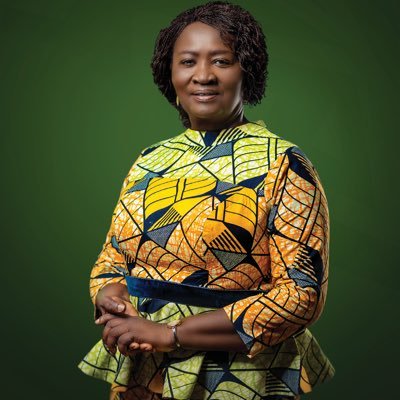

Vice President Professor Jane Naana Opoku-Agyemang has called for a more equitable international order, arguing that developing countries must have greater influence over global decisions that shape their economic prospects and development priorities.
She made the call at the 2026 Global South Academic Forum in Shanghai, China, on October 17, where she advocated reforms to international institutions and financial arrangements to make them more responsive to the needs of countries across the Global South.
The Vice President’s address placed the challenge of global representation alongside a broader question facing developing nations: how to translate political independence into effective governance, stronger institutions and sustainable economic progress.
She argued that cooperation among countries in the Global South should go beyond diplomatic engagement to include practical efforts to improve governance, exchange knowledge and develop policies suited to their respective circumstances.
On the international front, Professor Opoku-Agyemang called for greater representation of developing countries in institutions responsible for shaping global policy. She also advocated financial arrangements that support development without worsening the economic difficulties confronting vulnerable economies.
She said international climate policies should take account of differences in countries’ economic conditions and development needs, particularly where limited resources constrain their ability to respond to environmental challenges.
The Vice President also emphasized that stronger cooperation did not require countries to adopt identical political systems or development strategies. Instead, she encouraged governments and institutions to examine one another’s experiences, identify useful lessons and adapt them to local conditions.
China’s experience in long-term planning, industrialization and institutional coordination, she said, offered areas for study by other developing countries, while recognizing that each nation’s development path was shaped by its own history and circumstances.
Professor Opoku-Agyemang further called for closer collaboration among universities and research institutions across the Global South, particularly in education, technology and innovation.
She said the growing influence of artificial intelligence made it increasingly important for academic institutions to share research, expand access to knowledge and develop technological solutions that address the needs of their societies.
Her remarks also highlighted the responsibility of political parties and public institutions to strengthen accountability, build institutional capacity and respond to changing social and economic realities.
The forum, held under the theme “Global South Political Parties: Governance and Modernization”, provided a platform for discussions on political development, institutional effectiveness and cooperation among countries of the Global South.
Professor Opoku-Agyemang’s address called for a development approach that combines stronger domestic institutions with greater participation in international decision-making, positioning cooperation and institutional reform as central to the Global South’s future.