

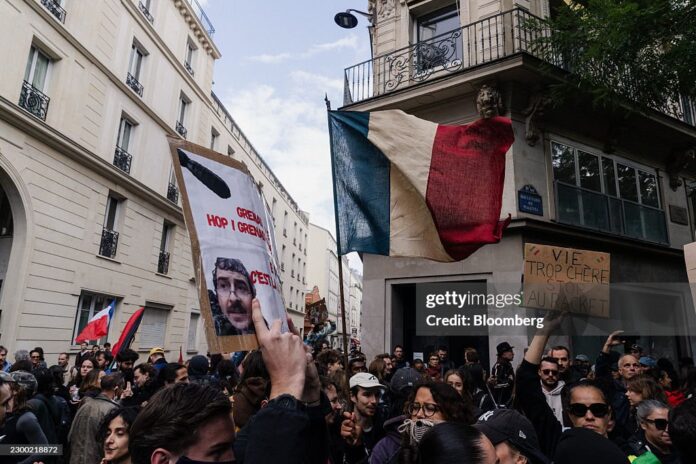

France does not need another presidential speech. It needs answers that people can feel in their pockets and see in their futures. Emmanuel Macron’s acknowledgment of mounting public anger over living costs, fuel prices and youth uncertainty is politically significant, but recognition alone will not restore public confidence. When hundreds of thousands take to the streets, the central question is no longer whether the government understands their grievances. It is whether it can deliver meaningful relief before frustration hardens into lasting distrust.
In his national address, Macron described protesters’ demands as legitimate and promised further action. He also recognized the anxiety among students and young people struggling to imagine their prospects in an uncertain world. These admissions matter. A president who listens rather than dismisses public frustration creates room for dialogue. Yet the scale of the protests exposes a deeper problem: citizens appear unconvinced that existing political responses adequately address the pressures shaping their daily lives.
Macron must therefore resist the temptation to treat his address as a political achievement in itself. Acknowledging legitimate grievances establishes a responsibility to act. It does not discharge that responsibility. The government’s credibility will depend on whether its commitments translate into practical improvements, particularly for households struggling with essential expenses and young people worried about their place in society.
The Cost-of-Living Crisis Is a Test of Political Credibility
Fuel prices and household expenses are not merely economic indicators. They determine how far wages stretch, how families organize their lives and whether citizens believe hard work can provide security. When these pressures persist, political promises lose their persuasive power. People judge governments less by their explanations than by the realities they experience.
Macron cited international initiatives intended to lower energy and fuel prices, alongside measures pursued by the prime minister to reduce costs at the pump. Such efforts may help, but their effectiveness must be demonstrated rather than assumed. International action can influence energy markets, while domestic measures can offer relief; neither automatically guarantees that households will experience a meaningful reduction in their expenses.
The government must explain what its interventions are expected to achieve, who stands to benefit and how their effects will be assessed. Targeted assistance, transparent implementation and clear public reporting would make its response more credible. Equally important, authorities must acknowledge the limits of their policies instead of presenting announcements as proof that the problem is solved.
There is also a political danger in reducing the protests to immediate financial complaints. Economic hardship can expose a wider sense of exclusion, especially when people believe their concerns receive attention only after demonstrations become impossible to ignore. The challenge is not simply to lower costs where possible, but to demonstrate that public institutions respond consistently to ordinary citizens, not merely to moments of crisis.
Young People Need Influence, Not Just Reassurance
Macron’s recognition of young people’s anxiety may be the most consequential part of his address. His reference to concerns expressed in schools and universities points to a generation questioning its prospects and ambitions. Such uncertainty cannot be answered through comforting language alone. Young people need credible reasons to believe that education, effort and participation can lead to opportunity.
The government has received more than 100,000 proposals through its consultation process, according to Macron. That volume suggests substantial public willingness to engage. But consultation becomes meaningful only when participants can identify how their contributions influence decisions. Without visible outcomes, public engagement risks becoming an exercise in collecting opinions while leaving the underlying frustrations untouched.
Macron’s proposal to bring together students, teachers, trade unions, local authorities and other stakeholders is therefore welcome, provided the discussions produce specific commitments. Participants should be able to scrutinize proposals, understand which measures will proceed and receive explanations when recommendations are rejected. Young people must have a genuine voice, not merely a seat at a carefully managed meeting.
This is also a question of democratic legitimacy. A generation that sees institutions as distant or unresponsive may become increasingly detached from conventional political participation. Governments cannot demand confidence from citizens while offering little evidence that their concerns shape policy. Restoring that confidence requires sustained engagement, measurable progress and a willingness to confront uncomfortable criticism.
Defending Democracy Requires More Than Condemning Violence
Macron is right to distinguish legitimate protest from violence and destruction. Peaceful demonstration is a democratic right; intimidation and attacks cannot become acceptable substitutes for political argument. His appeal to unions and student organizations to reject violence is justified, as is his insistence that disagreements should be resolved through debate and peaceful assembly.
However, condemning disorder must not become a convenient way to avoid confronting the grievances that bring people into the streets. Governments weaken their democratic standing when they treat disruptive protests primarily as threats to public order rather than warnings about unresolved problems. Equally, protesters weaken their own cause when violence alienates potential supporters and shifts attention away from legitimate demands.
With the presidential election six months away, these tensions carry additional weight. Macron’s warning that those advocating violence and the uprooting of the political system seek to weaken the republic reflects a genuine concern about democratic stability. Yet political disagreement cannot be equated automatically with hostility towards democratic institutions. Citizens must retain the freedom to challenge their leaders, demand change and reject existing policies without being portrayed as enemies of the republic.
France now faces a test that extends beyond one president or one election. Macron must show that democratic institutions can respond to economic insecurity, listen to younger generations and maintain public order without suppressing dissent. That requires more than speeches, consultations and warnings. It requires results.
The decisive measure of his leadership will be whether citizens experience tangible improvement and regain confidence that peaceful participation can change their circumstances. If the government delivers, dialogue may help restore trust. If it does not, the gap between presidential assurances and public experience will widen. France’s streets are sending a clear message: legitimacy cannot be sustained by authority alone. It must be earned through action.