

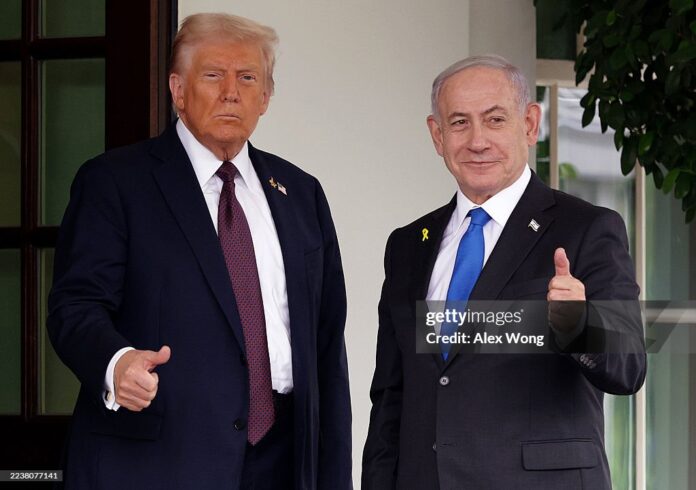

Donald Trump’s backing of Benjamin Netanyahu reinforces a strategic partnership that could shape Israel’s security, America’s Middle East policy and the future of Iran’s Islamic Republic. At a time when Israel faces persistent threats from Iran and its regional allies, Netanyahu offers a governing vision built around military deterrence, intelligence cooperation and a close relationship with Washington. Trump’s support strengthens the Israeli prime minister’s argument that experienced leadership and a determined security policy are essential to protecting the country’s future.
For Netanyahu, the alliance with Trump is more than a personal political relationship. It represents an opportunity to coordinate American diplomatic influence and military power with Israel’s security priorities. Their shared determination to confront Tehran could reshape regional calculations, weaken the networks through which Iran projects power and create conditions for a more secure Middle East. The challenge is to translate military advantages into lasting strategic gains while preserving Israel’s economic resilience and international partnerships.
Israel’s electoral arithmetic remains important. The Knesset has 120 seats, and a government requires the support of at least 61 lawmakers to command a parliamentary majority. Netanyahu’s prospects therefore depend not only on his personal popularity but also on Likud’s performance, voter turnout and the composition of a potential governing coalition. Trump’s endorsement cannot determine the result, but it gives Netanyahu a powerful opportunity to present himself as the leader best positioned to maintain Israel’s most consequential international partnership.
Can Trump Change the Electoral Math?
Trump’s intervention could energize Likud supporters, consolidate right-wing voters and persuade undecided Israelis that Netanyahu is uniquely equipped to navigate the country’s security challenges. The American president’s willingness to confront Tehran reinforces Netanyahu’s longstanding argument that Israel cannot rely on diplomatic assurances alone when dealing with an adversary whose leadership has supported armed groups across the region.
For voters who prioritize military preparedness, intelligence superiority and American backing, Netanyahu can make a compelling case. A close relationship with Washington provides Israel with diplomatic leverage, opportunities for defence cooperation and a stronger position in efforts to contain Iran’s regional influence. In a volatile strategic environment, continuity at the highest levels of government can be a significant advantage.
Netanyahu can also argue that the security threats confronting Israel require a leader with extensive experience in international diplomacy and national defence. His political longevity has made him a central figure in relations with successive American administrations, while his partnership with Trump offers the prospect of a more closely aligned approach to Iran than Israel might enjoy under a less sympathetic US president.
The October 7, 2023, Hamas attack remains a defining challenge for Netanyahu’s government. The scale of the assault exposed serious failures in Israel’s security and intelligence systems and raised legitimate questions about preparedness. Yet the political debate should also consider the decisions Israel must make in the aftermath: how to prevent another mass-casualty attack, deter hostile organizations, protect border communities and ensure that Iran cannot exploit regional instability to strengthen its position.
Netanyahu’s supporters can argue that these objectives demand a sustained security strategy rather than a rapid return to policies that failed to prevent the October 7 catastrophe. Accountability and operational reform remain necessary, but they need not preclude continuity in national leadership. The decisive question is whether the government can learn from its failures while preserving the military capabilities and international partnerships required to defend the country.
Trump’s endorsement could help Netanyahu frame the election around Israel’s future security rather than solely around dissatisfaction with past events. Nevertheless, parliamentary seats will ultimately be determined by Israeli voters. Even a strong electoral performance would require coalition negotiations and a workable governing majority.
Netanyahu’s Case for Leadership
A renewed mandate would give Netanyahu an opportunity to consolidate his security doctrine and deepen cooperation with the Trump administration. The central argument for his leadership is that Israel must maintain a credible capacity to deter adversaries, respond decisively to attacks and prevent hostile powers from acquiring capabilities that could threaten its survival.
Iran remains central to this calculation. Tehran has built a regional network of relationships with armed organizations, giving it ways to challenge Israel beyond Iran’s own borders. From Netanyahu’s perspective, confronting this network is not an isolated military objective but part of a broader effort to reduce the threats facing Israeli civilians and limit the possibility of a wider regional war.
A stronger US-Israeli partnership could improve coordination on intelligence, missile defence, military planning and diplomatic pressure. It could also reinforce deterrence by signalling that attacks against Israel may carry substantial costs. Such cooperation would not eliminate every threat, but it could narrow the strategic options available to Iran and its regional partners.
Netanyahu would still need to manage competing priorities at home. The costs of prolonged conflict, reservist mobilization and disrupted economic activity have placed pressure on Israeli households and businesses. A government that combines military strength with economic recovery, effective public administration and support for affected communities would be better positioned to sustain a long-term security strategy.
Coalition management will also matter. Netanyahu’s partners may disagree over settlements, relations with the Palestinians and the terms of any future political arrangements. His ability to reconcile those demands with Israel’s wider strategic interests will help determine whether a renewed mandate produces greater stability or further political friction.
The case for Netanyahu is strongest when military resolve is connected to a clear political objective. Destroying weapons, disrupting command structures and degrading an adversary’s capabilities can create strategic opportunities. The lasting value of those gains, however, depends on preventing the reconstitution of hostile forces and developing conditions in which Israelis can live with greater security and less fear of renewed conflict.
A successful Netanyahu government would therefore need to demonstrate that deterrence can support a more stable future, not merely sustain an indefinite cycle of mobilization and confrontation.
Iran’s Regime
Iran presents the most consequential test of the US-Israeli partnership. Tehran’s regional ambitions, missile capabilities and nuclear programme have long been central concerns for Israeli governments. Netanyahu has consistently argued that allowing Iran to approach a nuclear-weapons capability would expose Israel to an unacceptable strategic risk.
From this perspective, sustained pressure on Iran is intended to change the calculations of its leadership. Weakening military infrastructure, disrupting weapons production and limiting the ability of Iranian forces to coordinate regional operations could reduce the threat posed to Israel. American support would magnify that pressure by combining Israeli operational capabilities with Washington’s diplomatic, economic and military influence.
However, military damage should not be confused with the destruction of the Iranian state. The Islamic Republic is supported by institutions that include the Islamic Revolutionary Guard Corps, intelligence services, clerical networks and administrative structures. These organizations possess their own interests and coercive capabilities and could survive the removal of senior officials or the destruction of important facilities.
Reports concerning the death of Supreme Leader Ali Khamenei and the succession of his son Mojtaba, if confirmed by reliable evidence, would raise significant questions about the regime’s cohesion and future direction. A leadership transition under military pressure could expose rivalries within the ruling establishment and complicate decision-making. Yet authoritarian governments can also respond to external threats by tightening internal controls and appealing to nationalism.
For Netanyahu and Trump, the strategic objective should be to ensure that pressure produces measurable security gains rather than assuming that military action will automatically bring down the Islamic Republic. Several outcomes remain possible.
First, Iran’s security establishment could consolidate its authority, preserve the regime and seek to rebuild damaged military capabilities. Furthermore, internal divisions and economic pressures could weaken the ruling elite, creating opportunities for political change, although instability would not necessarily lead to a democratic transition. Moreover, Tehran could pursue negotiations to reduce the risk of further attacks and obtain economic relief while preserving the Islamic Republic’s essential institutions.
Each outcome would require a different response from Israel and the United States. A durable strategy must combine deterrence with intelligence, economic leverage and diplomacy capable of testing whether Iranian leaders are prepared to accept verifiable limits on activities that threaten regional security.
The nuclear question is especially important. Damage to nuclear facilities does not establish that Iran’s technical knowledge has disappeared or that all enriched uranium has been eliminated. If Iranian leaders conclude that conventional military capabilities cannot protect the regime against external attack, they could become more interested in nuclear weapons as a deterrent. That possibility makes rigorous verification and credible non-proliferation arrangements essential.
Netanyahu’s supporters can argue that pressure is necessary precisely because diplomacy without effective enforcement may fail to change Tehran’s behaviour. The objective, however, should be to combine military credibility with verifiable outcomes: restrictions on nuclear activities, effective monitoring, reduced support for armed groups and a lower risk of direct confrontation.
Iran also retains leverage through allied armed organizations and its position near the Strait of Hormuz, a vital maritime corridor for global energy supplies. Any prolonged disruption could raise oil prices, increase shipping costs and damage economies far beyond the Middle East. A strategy that weakens Tehran while reducing the risk of such disruption would serve Israeli, American and wider international interests.
The most favourable outcome would not simply be a weakened Iranian military. It would be an Iran whose leaders face strong incentives to abandon destabilizing regional policies, accept meaningful nuclear constraints and avoid actions that threaten Israel or international commerce.
Trump and Netanyahu’s Strategic Opportunity
The partnership between Trump and Netanyahu offers an opportunity to align American influence with Israel’s central security concerns. For Netanyahu, Trump’s backing strengthens the argument that Israel can defend itself more effectively when it works closely with a US administration prepared to confront threats rather than merely manage them.
The relationship could also influence the wider regional order. Governments concerned about Iran’s regional activities have their own reasons to favour greater stability, secure trade routes and limits on nuclear proliferation. Carefully coordinated diplomacy could create opportunities for closer regional cooperation, provided that military pressure is accompanied by credible efforts to address the political disputes that continue to fuel conflict.
Israel’s military superiority is a major strategic asset, but its greatest value lies in what it enables the country to achieve. Effective deterrence can create room for diplomacy, discourage attacks and improve the conditions for regional cooperation. Military success that fails to produce these outcomes risks leaving Israel exposed to recurring confrontations.
Netanyahu’s leadership should therefore be judged by whether it strengthens Israel’s long-term security, preserves the American partnership and converts battlefield advantages into a more stable regional environment. His supporters have a strong argument that these objectives require resolve, experience and a willingness to confront serious threats. They must also demonstrate that such resolve can deliver tangible benefits to Israeli citizens.
Trump’s endorsement gives Netanyahu an opportunity to make that case. It does not guarantee electoral victory, nor does it settle the future of Iran. Those outcomes will depend on Israeli voters, parliamentary negotiations, the cohesion of Iran’s ruling institutions and the decisions made by Washington and regional governments.
Ultimately, the strongest argument for Netanyahu is not that his leadership guarantees success. It is that, in a period of exceptional danger, a determined Israeli leader with a committed American partner may be better positioned to deter adversaries, defend national interests and negotiate from strength.
Israel’s election will determine who directs the next phase of its security policy. The larger test for Netanyahu and Trump will be whether their partnership can transform pressure on Iran into lasting security for Israel, a more stable Middle East and a future in which military confrontation becomes less necessary rather than permanently inevitable.