

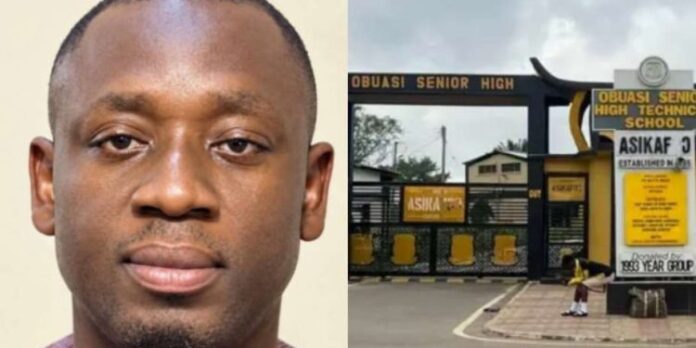

A school that cannot protect its students has failed at its most basic duty. The allegations of sexual abuse involving the headmaster of Obuasi Senior High Technical School (SHTS), with 19 girls reportedly coming forward, therefore demand more than public outrage and official assurances. They demand accountability, institutional scrutiny and a clear demonstration that the safety of children takes precedence over the reputation of any individual or institution.
The Parliamentary Committee on Human Rights is right to demand expedited investigations and urgent psychological and psychosocial support for the affected students. Its intervention recognises that the case extends beyond the criminal allegations against one school administrator. It raises fundamental questions about the exercise of authority in schools, the vulnerability of students and the effectiveness of the systems established to protect them.
A headmaster occupies a position of considerable influence. Students depend on school authorities for guidance, discipline and protection. Where allegations of abuse involve someone entrusted with such responsibilities, the imbalance of power makes the matter especially grave. It also underscores why complaints against senior officials must be handled independently, impartially and without institutional interference.
The reported number of girls who have come forward must not become a spectacle or a reason for speculation. Each student is entitled to dignity, privacy and a fair hearing. Their accounts must be examined carefully, and the allegations must be established through lawful processes. Presuming guilt would undermine justice; presuming institutional innocence would be equally dangerous.
The central principle is straightforward: no position of authority should place anyone beyond scrutiny, and no student should have to sacrifice personal safety to pursue an education.
Justice Must Be Swift, Not Careless
The Committee’s call for the Criminal Investigations Department and the Attorney-General to accelerate investigative and prosecutorial processes is timely. The reported submission of a case docket to the Attorney-General represents an important procedural development, but it must not be mistaken for the conclusion of the matter.
Speed matters. Delays can prolong distress, weaken confidence in the justice system and leave affected students uncertain about whether their complaints will receive meaningful attention. Yet speed without rigour can compromise the very justice authorities are expected to deliver. Investigators must establish the facts, assess the available evidence and examine relevant allegations involving other students without allowing public pressure to dictate their conclusions.
The Attorney-General must act on the evidence and applicable law, not on the volume of public anger. Where the evidence supports prosecution, proceedings should follow promptly. Where further investigation is necessary, the reasons and next steps should be clear. Due process is not an obstacle to accountability; it is what makes accountability credible.
Nor should the investigation stop at the immediate allegations. The Committee has called for a swift and impartial examination of any officials who may have received earlier complaints but failed to respond appropriately. That demand is essential. If previous warnings were ignored, the public deserves to know why, who was responsible and whether established procedures were followed.
However, responsibility must be demonstrated, not presumed. Officials should face consequences where misconduct or neglect is established through fair procedures. The objective is not to manufacture additional culprits but to uncover the full chain of events and prevent avoidable failures from recurring.
Justice must reach every person whose conduct warrants scrutiny, while protecting the rights of everyone involved.
Protecting Survivors Is Part of Justice
Criminal proceedings alone cannot address the full consequences of alleged sexual abuse. The Committee’s demand for counselling and psychosocial support from the Ministries of Education and Gender, Children and Social Protection must therefore be treated as an immediate priority, not an administrative afterthought.
Students who report abuse may face fear, shame, anxiety, social stigma and uncertainty about their education. Public attention can intensify these pressures, particularly when allegations involve influential school officials. Without appropriate support, the process intended to deliver justice may expose students to further distress.
Authorities must ensure access to qualified counsellors and appropriate psychosocial care, while protecting students against intimidation, retaliation and unnecessary disclosure of personal information. Communication about the case should avoid identifying details that could expose the girls to harassment or humiliation. Their educational welfare must also be protected so that reporting alleged abuse does not result in punishment, exclusion or disruption to their schooling.
These protections are not favours granted to complainants. They are essential safeguards for dignity and fairness. Students should not have to choose between seeking justice and preserving their privacy, emotional wellbeing or future prospects.
The challenge is to protect complainants without prejudging the outcome of investigations. Confidentiality, support and fair treatment are compatible with due process. Indeed, they strengthen it by helping ensure that students can participate in proceedings without being subjected to avoidable pressure.
A credible response must consequently measure progress not only by arrests, prosecutorial decisions or eventual court outcomes, but also by whether the affected students are safe, supported and able to continue their education.
From Outrage to Institutional Reform
The deeper test of the Obuasi SHTS case is whether it produces lasting changes in how Ghanaian schools prevent, receive and respond to allegations of abuse. The Committee’s call for confidential and accessible reporting channels is an important starting point, but reporting mechanisms are useful only when complaints trigger timely, impartial action.
The Ghana Education Service and the Ministry of Education must ensure that students know where to report misconduct, whom to approach when a complaint involves a senior official and what protections are available against retaliation. Channels must be accessible, trustworthy and sufficiently independent to prevent conflicts of interest from undermining investigations.
Clear procedures should establish how complaints are documented, referred to appropriate authorities, monitored and resolved. Staff must understand their responsibilities, while school leadership should be subject to meaningful oversight. Authorities must also examine whether existing safeguards work in practice rather than assuming that written policies guarantee protection.
Crucially, accountability must extend beyond punishing proven offenders. Institutions must learn whether warning signs were missed, reporting routes were ineffective or officials failed to act. Findings should inform corrective measures, with appropriate transparency that does not compromise investigations or students’ privacy.
The public should resist the temptation to treat this case as an isolated scandal that can be forgotten once headlines fade. Institutional failure, where established, requires institutional remedies. Prevention demands sustained supervision, credible reporting systems and a culture in which students can speak without fear.
The 19 girls reportedly connected to this case deserve more than expressions of concern. They deserve protection, a rigorous investigation and a justice system that follows the evidence wherever it leads.
Ghana’s education authorities must now demonstrate that safeguarding students is a practical obligation, not merely a principle repeated after a crisis. The measure of leadership will be whether the truth is established, responsibility is fairly assigned and meaningful reforms follow.
Protect the girls. Pursue justice. Fix the system.