

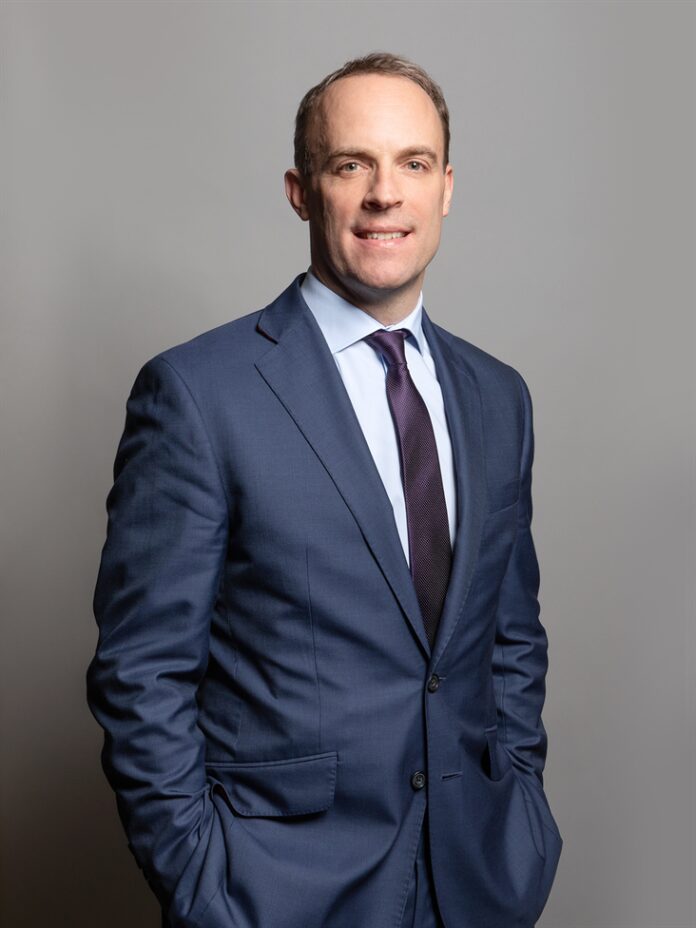

Former UK Deputy Prime Minister Dominic Raab has warned that illegal gold mining and illicit trading networks could expose Ghana to growing security threats as jihadist groups push south from the Sahel towards coastal West Africa.
Raab, now a Special Envoy of the World Gold Council, said Ghana’s strategic position between the Sahel and the Gulf of Guinea made it vulnerable to criminal networks seeking access to coastal trade routes and supply chains.
He called for urgent action to dismantle illicit gold networks, strengthen law enforcement and establish legitimate markets for responsibly mined gold to prevent the sector from becoming a source of funding for extremist and organized criminal groups.
“Ghana is at a critical security crossroads, where the fight against illegal mining must go hand in hand with efforts to prevent extremist groups from gaining access to coastal supply chains”, Raab said.
He made the remarks in an interview with Bernard Avle on Channel One TV’s The Point of View, on the sidelines of the Mining in Motion Summit 2026.
Raab identified the activities of Jama’at Nusrat al-Islam wal-Muslimin (JNIM) and other jihadist groups operating in the Sahel as a growing concern for countries along the West African coast, including Ghana and Togo.
He warned that the two countries’ geographical position could make them strategically valuable to extremist organizations seeking to expand their reach and exploit established commercial networks.
“The risk is not confined to the environmental destruction caused by galamsey. It also concerns the criminal networks and illicit financial flows that can undermine national security”, he said.
Illicit Gold Trade Fuels Wider Security Risks
Raab said illegal gold mining had evolved beyond an environmental and regulatory challenge, with illicit gold revenues potentially supporting a range of criminal and extremist activities.
He pointed to drug cartels in Latin America, Islamic State and al-Qaeda-linked groups in the Sahel, as well as mercenary organizations, as examples of actors associated with the wider security risks surrounding illicit gold flows.
According to him, soaring gold prices have made the sector increasingly attractive to criminal groups seeking alternative sources of revenue, while measures to control illegal mining and the movement of illicit gold have struggled to keep pace.
He argued that tackling the problem required a coordinated response targeting both the extraction of gold and the financial and commercial networks that enable illegally mined gold to enter domestic and international markets.
“Enforcement must go beyond stopping illegal mining operations. Authorities must also follow the money, disrupt illicit trading networks and ensure that gold can move through transparent, accountable supply chains”, Raab said.
Formal Gold Markets Key to Tackling Galamsey
Raab advocated stronger law enforcement, tighter controls on illicit financial flows and the development of formal purchasing channels that would allow responsible small-scale miners to sell their gold legally.
He said Ghana’s efforts to expand domestic gold-processing capacity and establish gold-purchasing arrangements through the central bank could help reduce miners’ reliance on criminal intermediaries.
Such initiatives, he argued, could give legitimate miners access to reliable markets while making it more difficult for criminal networks to exploit informal trading arrangements for profit.
“A viable legal market gives responsible small-scale miners an alternative to criminal intermediaries and helps close the channels through which illicit gold can be traded”, he said.
Raab stressed that formalization would need to be supported by effective oversight and enforcement to ensure that legitimate purchasing arrangements did not become another avenue for illegally sourced gold to enter the formal economy.
He also called for greater urgency from the international community, warning that failure to address illicit gold trading could deepen security vulnerabilities, strengthen criminal networks and deprive governments of revenue.
His warning places the fight against galamsey within a broader regional security challenge, highlighting the need for Ghana to protect its natural resources while preventing criminal and extremist groups from exploiting the country’s gold economy and strategic coastal position.