

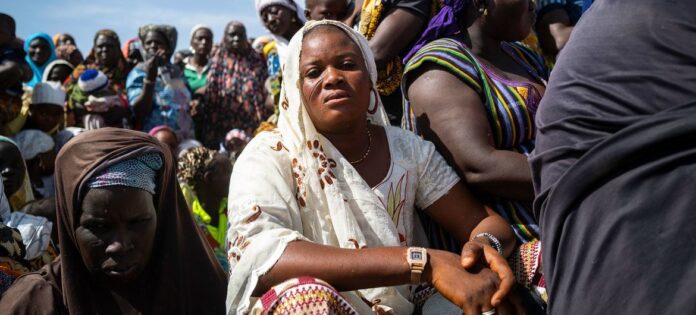

The Sahel is exporting instability, and West Africa’s coastal states are running out of time to treat the consequences as somebody else’s problem. Across Mali, Burkina Faso and Niger, armed violence, mass displacement, environmental shocks and collapsing livelihoods are converging into a regional emergency. More than 818,000 refugees and asylum-seekers are among those displaced, according to the United Nations High Commissioner for Refugees (UNHCR). These figures are more than a humanitarian indictment; they reveal how insecurity is reshaping borders, straining public services and testing the political resilience of neighbouring states.
The crisis is rooted in a security breakdown that military force alone has failed to reverse. Since the 2012 rebellion in northern Mali, jihadist organizations affiliated with al-Qaeda and the Islamic State have exploited weak governance, communal grievances and limited state presence. Violence subsequently spread into Burkina Faso and Niger, displacing millions and disrupting agriculture, trade and education. The resulting instability has eroded livelihoods, weakened communities and narrowed the prospects for families seeking to rebuild their lives, creating conditions that risk fuelling further displacement within the region and beyond.
Military coups in Mali in 2020 and 2021, Burkina Faso in 2022 and Niger in 2023 have further complicated regional cooperation. The three countries established the Alliance of Sahel States in 2023 and withdrew from the Economic Community of West African States (ECOWAS) in January 2025. Their governments have emphasized sovereignty and alternative security partnerships, but political realignment has yet to eliminate the underlying drivers of displacement. Meanwhile, divisions between the Sahelian states and their regional neighbours threaten to weaken the collective response needed to contain cross-border insecurity and address its humanitarian consequences.
The central lesson is stark: territorial control is not the same as security. When civilians cannot farm, attend school or reach a clinic without fear, the state’s authority remains fragile, regardless of military deployments or battlefield claims. For West Africa’s coastal states, the crisis is no longer a distant emergency unfolding beyond their borders; it is a warning of what happens when insecurity, displacement and economic hardship are allowed to reinforce one another. Containing the threat will require more than military cooperation. It demands stronger governance, restored public trust, resilient livelihoods and a coordinated regional strategy that tackles the conditions driving people from their homes.
Displacement Is Moving Towards the Coast
The changing geography of displacement should alarm coastal West Africa. Benin, Côte d’Ivoire, Ghana and Togo increasingly face pressures generated by conflicts farther north. These movements are not simply humanitarian spillovers; they are strategic developments capable of reshaping border management, local politics and national security priorities. In Mali’s Bandiagara region, the town of Koro illustrates the scale of the pressure. The reported refugee population reached approximately 86,000 in July, following successive waves of displacement since 2025. More than 14,000 children and 6,000 women were identified as particularly vulnerable. Refugees approaching the size of the local population place exceptional demands on scarce water, overstretched health facilities, land and employment.
The wider numbers are equally troubling. Nearly 500,000 Burkinabè are reportedly refugees or asylum-seekers in neighbouring countries, compared with more than 300,000 at the end of 2025. More than 334,000 Malians have sought refuge abroad, while over 106,000 Nigeriens are registered as refugees or asylum-seekers in neighbouring states. These figures, however, require careful interpretation: refugees and asylum-seekers are not equivalent to all internally displaced people, and the categories should not be added indiscriminately. Nevertheless, the reported increases point to sustained cross-border pressure.
For coastal governments, the implications extend beyond humanitarian assistance. The danger is not that refugees inherently create insecurity, but that poorly supported communities, inadequate reception systems and increasingly contested resources can become vulnerabilities that armed groups exploit. As displacement intensifies, weak border oversight and strained local institutions could complicate security planning, deepen tensions between host communities and newcomers, and place additional pressure on already limited public services.
Collective suspicion would be counterproductive. Coastal West African governments must instead recognize displacement as both a humanitarian responsibility and a strategic policy challenge. Effective registration, adequate reception facilities, protection for vulnerable groups and sustained engagement with host communities are far more defensible security measures than indiscriminate restrictions or collective blame. The task is to strengthen border management and community resilience without turning people fleeing violence into security threats by default.
Climate Stress Turns Conflict into a Trap
Violence does not operate in isolation. Droughts, erratic rainfall and flooding are damaging harvests, destroying infrastructure and making water harder to obtain. In economies heavily dependent on rain-fed agriculture and livestock, environmental shocks can turn displacement into prolonged impoverishment. The consequences are cumulative: insecurity prevents farmers from reaching fields and markets; climate shocks reduce production; falling incomes weaken household resilience; and desperate families become more likely to move. Host communities, meanwhile, must accommodate newcomers while coping with the same environmental pressures, intensifying competition over farmland, grazing routes and water, particularly where local institutions cannot mediate disputes fairly.
This interaction matters strategically. Armed groups can exploit grievances, punish communities perceived to support their opponents and undermine confidence in government protection. Yet climate change should not be presented as the sole cause of Sahelian violence. Political exclusion, abuses, criminal economies, weak justice systems and armed-group coercion remain critical factors. Environmental stress amplifies these problems; it does not explain them away. Understanding this distinction is essential to developing responses that address both the immediate drivers of insecurity and the underlying vulnerabilities that make communities more susceptible to violence and displacement.
The appropriate response must therefore integrate security, climate adaptation and economic recovery. Governments and partners should protect agricultural access, rehabilitate water infrastructure, strengthen local dispute-resolution mechanisms and support climate-resilient farming. Livestock corridors and land rights also require practical, locally negotiated management. Such measures can reduce competition over scarce resources, restore livelihoods and strengthen cooperation between displaced populations and host communities. Without this integrated approach, interventions that address security or environmental pressures in isolation risk leaving the underlying sources of instability unresolved.
In Koro, agricultural cooperatives involving Burkinabè refugees and residents reportedly expanded cultivated land from 21 hectares in 2025 to 45 hectares in 2026, an increase of approximately 114 per cent. The initiative demonstrates how shared economic interests can ease pressure and improve food production. While it is no substitute for security, it offers a model worth evaluating and scaling where conditions permit. More broadly, initiatives that connect livelihoods, resource management and social cooperation could help communities withstand environmental shocks while reducing the tensions that armed groups exploit.
Fund Prevention Before Instability Spreads
UNHCR’s reported Sahel response plan has received only 27 per cent of the $329.6 million required, leaving approximately $240.6 million unfunded. That shortfall is not an accounting detail; it constrains protection, education, essential services and programmes designed to restore livelihoods before displacement becomes entrenched. Donor fatigue is strategically short-sighted. Emergency assistance costs money, but so do neglected schools, malnutrition, insecure borders and prolonged dependence on aid. Cutting support does not eliminate the crisis; it transfers the costs to host communities and overstretched governments, often leaving them with fewer resources to manage the consequences.
The international response should prioritize three connected objectives. First, finance protection and basic services, particularly education for displaced children, whose exclusion can deepen poverty and expose them to exploitation. Second, invest in livelihoods through agricultural cooperatives, vocational training, market access and water management. Third, strengthen cross-border intelligence-sharing and civilian protection without treating refugees as security threats. These priorities must be pursued together, recognizing that humanitarian assistance alone cannot resolve the structural vulnerabilities driving displacement across the region.
Coastal governments must also resist the temptation to militarise every dimension of the problem. Border surveillance and intelligence cooperation matter, but durable prevention requires trusted local authorities, accountable security forces and functioning public services in frontier communities. Heavy-handed operations that harm civilians can deepen grievances and accelerate the very displacement governments seek to contain. Security measures that disregard local needs risk undermining public trust, while investments in governance and essential services can help communities withstand the pressures that fuel instability.
The Sahel’s crisis is ultimately a test of regional strategic foresight. Governments cannot build lasting security by ignoring the conditions that force people from their homes, nor can humanitarian agencies compensate indefinitely for political failures and inadequate investment. The choice is not between protecting refugees and protecting national security; properly designed, these objectives reinforce each other. Funding resilience, supporting host communities, restoring livelihoods and rebuilding cooperation across fractured regional institutions are essential to addressing the crisis before its consequences spread further.
The warning is already visible along the West African coast, where displacement threatens to place additional pressure on border management, public services and local stability. The question is whether regional governments and their international partners will act before these pressures become another crisis they claim they could not have anticipated.