

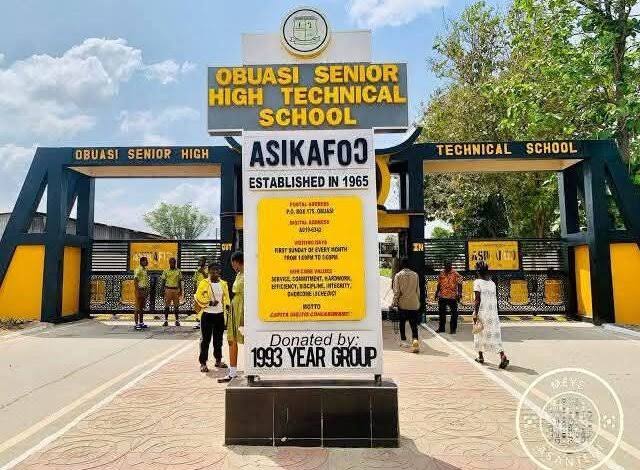

There is something profoundly disturbing about a school in which teachers who raise concerns about alleged sexual misconduct risk being transferred rather than heard. If the allegations disclosed by the National Association of Graduate Teachers (NAGRAT) are substantiated, Obuasi Senior High Technical School presents a troubling example of how institutional power can be deployed against those who attempt to demand accountability. The issue is no longer confined to allegations involving a headmaster. It concerns the protection of vulnerable students, the integrity of educational leadership and the dangerous consequences of intimidating people who speak up.
NAGRAT President Jacob Anaba has alleged that 38 teachers at the school were targeted for transfer in September 2026 after expressing concerns about sexual misconduct allegations involving headmaster Zakaria Abdulai. According to Anaba, the instruction was communicated through the assistant headmaster, who reportedly attributed it to the District Director. No explanation was provided for the proposed transfers. Some of the affected teachers had allegedly criticized the handling of the matter, while others had spoken publicly about their concerns.
These are serious claims that require independent investigation, not convenient dismissal. If teachers were singled out because they questioned the handling of allegations involving students, the implications extend far beyond an employment dispute. Such conduct would suggest that institutional authority was being used not to protect the school community but to discourage scrutiny.
Schools must never become environments where silence is rewarded and dissent punished. Teachers occupy a critical position in safeguarding students. They are often among the first adults to recognize troubling behaviour, receive complaints or identify institutional failures. When those individuals believe that reporting misconduct could jeopardize their careers, the consequences can be devastating. Silence becomes a survival strategy, while misconduct, if established, becomes harder to expose.
The Real Test of Institutional Accountability
The most consequential question arising from this controversy is whether the institutions responsible for protecting students have acted with the independence and seriousness the allegations demand.
Anaba has questioned the circumstances surrounding a committee reportedly chaired by the District Director that exonerated the headmaster. His concerns are particularly significant because complaints were allegedly raised by students and parents before the matter became public in August 2026.
An exoneration is not automatically evidence of wrongdoing, just as an allegation is not proof of guilt. However, the credibility of any investigative process depends on its transparency, independence and willingness to examine uncomfortable evidence. When the official responsible for an administrative decision is also associated with allegations of retaliatory action against those questioning the process, public confidence inevitably comes under pressure.
That is why the proposed transfers deserve separate scrutiny. Authorities must establish who initiated the directive, what justification was offered, whether the affected teachers were given an opportunity to respond and whether normal administrative procedures were followed. These questions cannot be answered through vague assurances.
The Ghana Education Service must recognize that accountability involves more than investigating the person accused of misconduct. It also requires examining the conduct of administrators, the handling of complaints and the treatment of those who raise concerns. An investigation that overlooks possible institutional retaliation risks addressing only one dimension of a much larger problem.
The objective must not be to manufacture a predetermined outcome. It must be to establish the truth, protect every complainant and ensure that no individual receives preferential treatment because of position, influence or political connections.
Student Safety Must Stand Above Power and Politics
At the centre of this controversy are students whose welfare must take precedence over institutional reputation, professional relationships and political calculations. Allegations involving sexual misconduct in an educational environment demand particular sensitivity because of the imbalance of authority between school leadership and students.
A headmaster occupies a position of considerable influence. Such authority carries responsibilities that extend beyond academic administration. It demands discipline, professional conduct, sound judgment and an unwavering commitment to student welfare. Any credible allegation that this authority may have been abused must therefore receive serious attention.
The resignation of Abdulai as Juaben Constituency Secretary of the National Democratic Congress and his withdrawal from the constituency chairmanship contest add another dimension to the controversy. His decision, which reportedly took immediate effect, may carry political consequences, but it does not resolve the underlying allegations. Nor should it be interpreted as an admission of guilt.
Political parties must resist the temptation to treat controversies involving their members primarily as reputational threats. The appropriate response is to uphold due process while making clear that political affiliation offers neither immunity nor protection from legitimate scrutiny.
Equally, the public must avoid confusing political consequences with justice. A resignation may remove an individual from a party position, but it cannot establish what happened at a school, determine whether students were harmed or answer questions about the conduct of administrators.
The involvement of the Ghana Education Service and the referral of the matter to the Criminal Investigations Department of the Ghana Police Service are therefore important developments. Their investigations must be thorough, impartial and sensitive to the rights and welfare of students. Confidentiality must be respected, witnesses protected and evidence assessed without intimidation.
Ghana Cannot Afford to Normalize Silence
Ultimately, the Obuasi controversy should force a wider national conversation about the protection of whistleblowers and the accountability of educational authorities. Ghana cannot credibly demand professionalism from teachers while tolerating administrative practices that potentially punish them for raising legitimate concerns.
The alleged targeting of 38 teachers is especially alarming because of the number involved. If established, it would suggest something more systematic than an isolated disagreement between management and staff. It would raise questions about the culture of authority within the school and the willingness of district-level leadership to tolerate criticism.
The GES must urgently establish the facts surrounding the proposed transfers and ensure that no teacher suffers retaliation for participating in a legitimate investigation or expressing concerns in good faith. Where wrongdoing is established, appropriate administrative and legal consequences must follow. Where allegations prove unfounded, those accused must equally receive fair treatment.
More importantly, Ghana’s education authorities must strengthen confidential reporting channels, protect complainants and witnesses, and establish clear safeguards against retaliatory transfers or other forms of professional victimization. These protections should not depend on whether a teacher belongs to a powerful association or whether a controversy attracts national attention.
A school is supposed to be a place of learning, trust and protection. It cannot fulfil that responsibility when teachers fear speaking and students doubt whether complaints will be taken seriously.
The central question is therefore not simply whether a headmaster will be held accountable. It is whether the institutions entrusted with protecting students are prepared to hold themselves accountable too.
If speaking out can cost a teacher a posting, what incentive remains for anyone to expose wrongdoing? Ghana must answer that question decisively. Silence must never become the price of working in its schools.