

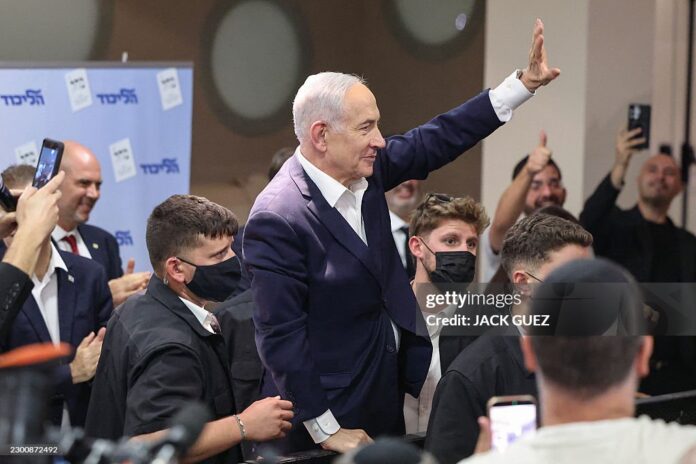

Israel’s record-breaking voter turnout sends a message that Benjamin Netanyahu cannot afford to ignore: political survival is not the same as national leadership. After the October 7, 2023 attacks exposed catastrophic security failures, and prolonged military campaigns deepened regional instability, Israeli voters are confronting a fundamental question: has Netanyahu made their country safer or merely prolonged its crisis?
The reported 44.9 per cent participation within the first seven hours suggests an electorate unusually conscious of what is at stake. This is no ordinary contest for parliamentary seats. It is a judgment on political accountability, national security and the direction of Israeli democracy. Netanyahu’s supporters may regard his experience and uncompromising security posture as indispensable, but experience must ultimately be measured by results, not longevity in office. Nineteen years of political dominance cannot become an exemption from scrutiny.
Accountability Cannot Be Negotiated Away
The most consequential issue is the unresolved responsibility for October 7. Approximately 1,200 people were killed and 251 abducted during the Hamas-led assault. Such a devastating intelligence and security breakdown demands more than political explanations or carefully managed public statements. It requires an independent national commission of inquiry capable of establishing responsibility and identifying institutional failures.
Netanyahu’s resistance to such an investigation raises legitimate questions about whether protecting his political position has taken precedence over the public’s right to answers. Gadi Eisenkot’s promise to establish a commission therefore carries significance beyond opposition campaigning. Accountability is not an act of political revenge; it is a democratic obligation and a prerequisite for restoring public confidence in national institutions.
Nevertheless, replacing Netanyahu will not automatically resolve Israel’s security failures. Eisenkot must demonstrate that his alternative offers more than a different political personality. His pledge to dismantle Hamas within 18 months deserves serious examination, particularly given the limitations already exposed by Israel’s military campaign.
Democracy Under Ethnic and Ideological Pressure
The growing participation of Arab citizens introduces another defining tension. Representing roughly one-fifth of Israel’s population, their electoral engagement could influence the parliamentary arithmetic sufficiently to weaken Netanyahu’s coalition. Yet the resistance among major Jewish political figures to cooperation with Arab parties exposes a troubling contradiction: a democracy cannot credibly celebrate electoral participation while treating sections of its electorate as inherently illegitimate political partners.
Netanyahu’s election-day rhetoric and AI-generated imagery depicting Arab voters reinforce concerns that ethnic anxiety is being mobilized for partisan advantage. Such tactics may energize supporters, but they risk damaging the democratic trust that elections are supposed to strengthen.
Meanwhile, Eisenkot’s rejection of a formal partnership with Arab parties illustrates the limits of the opposition’s own political imagination. Challenging Netanyahu requires confronting exclusionary politics, not simply exploiting dissatisfaction with its consequences.
A New Government Must Offer a New Direction
Israel’s wars, diplomatic isolation and deteriorating Palestinian relations cannot be separated from this electoral reckoning. Military strength alone cannot produce lasting security when political strategy offers no credible path towards regional stability. The continued destruction in Gaza, tensions in Lebanon and confrontation with Iran demonstrate the enormous consequences of a security policy without a convincing political horizon.
Ultimately, historic turnout will matter only if it produces meaningful accountability and a more responsible government. Israel needs leadership capable of protecting its citizens without abandoning democratic principles, confronting threats without endless escalation and acknowledging failures without political evasion.
The ballot box can remove a prime minister. It cannot, by itself, repair a fractured political culture. That responsibility begins with whoever governs next.