

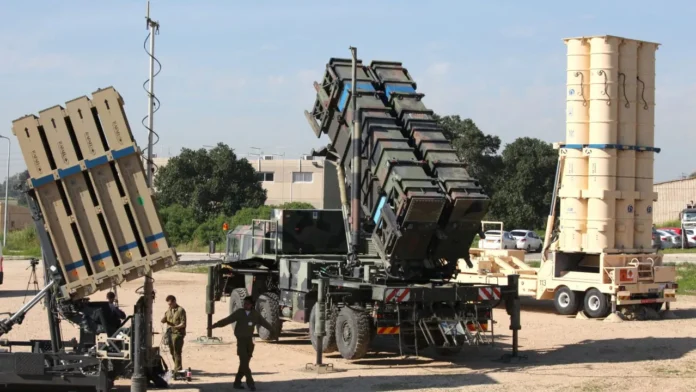

The United States is accelerating military preparations for a possible fresh confrontation with Iran, moving an advanced Patriot air defence system from Texas to the Middle East as Washington and Israel brace for a potential new wave of major combat operations after the November 3 midterm elections.
The deployment, reported by The Wall Street Journal on Tuesday, forms part of a broader military buildup that includes repositioning vulnerable American troops, replenishing weapons stockpiles and preparing combat aircraft for possible strikes against Iranian targets.
The Patriot system, which combines advanced radar technology, an engagement control station, missile launchers and interceptor missiles, is intended to reinforce American defensive capabilities as tensions across the region intensify.
US officials familiar with the military movements told the newspaper that American forces had also been withdrawn from certain bases considered exposed to potential Iranian retaliation.
Washington has reportedly begun alerting several Gulf Arab governments to prepare for the possibility of a brief but intense military campaign against Iran in the aftermath of the midterm elections. The warnings suggest that American military planners are preparing for a potentially significant escalation, although no final decision has been announced.
The preparations extend beyond air defence. US forces are rebuilding ammunition reserves, while bomber aircraft and fighter jets are being readied for possible combat missions. Another aircraft carrier strike group and a Marine Expeditionary Unit are also expected to reinforce the roughly 20 American warships operating in the Middle East in November, although some existing vessels may leave as part of routine rotations.
The latest movements build on Washington’s earlier decision to expand its naval and Marine presence in the region. On October 1, a US official confirmed that the USS Theodore Roosevelt aircraft carrier and additional Marine personnel were being deployed to strengthen America’s military posture and widen its operational options.
At the centre of the unfolding preparations is President Donald Trump, who is weighing whether to authorize another round of military action against Iran. The Wall Street Journal reported that the president has yet to make a final determination but is increasingly considering strikes against Iranian infrastructure and nuclear facilities.
Diplomacy, however, has not been entirely ruled out, leaving open the possibility of a negotiated settlement that could avert another major military confrontation.
Iran, meanwhile, has signalled that any renewed American-Israeli offensive could trigger a wider regional response. Tehran has threatened to target critical infrastructure across the Persian Gulf, including energy installations, airports and other civilian facilities, raising fears that a new conflict could disrupt vital regional transport and energy networks.
Security concerns have also intensified following intelligence warnings about alleged Iranian efforts to target American officials and citizens. A US official confirmed on Friday that Secretary of State Marco Rubio had received an intelligence memorandum indicating an escalation in Iranian efforts directed against Americans.
The potential for the conflict to spread beyond Iran has added another layer of concern. Tehran has reportedly instructed Hezbollah to raise its operational readiness in anticipation of possible renewed hostilities. Two diplomatic sources disclosed on October 15 that Iran had warned the Lebanese militant group to prepare for the possibility of further American military action.
With additional American forces moving into position, regional allies being alerted and Iran threatening retaliation, the Middle East is facing renewed uncertainty over the prospect of another major military confrontation.
Whether Washington ultimately authorizes fresh strikes, how extensive any operation would be and when it might begin remain unresolved.