

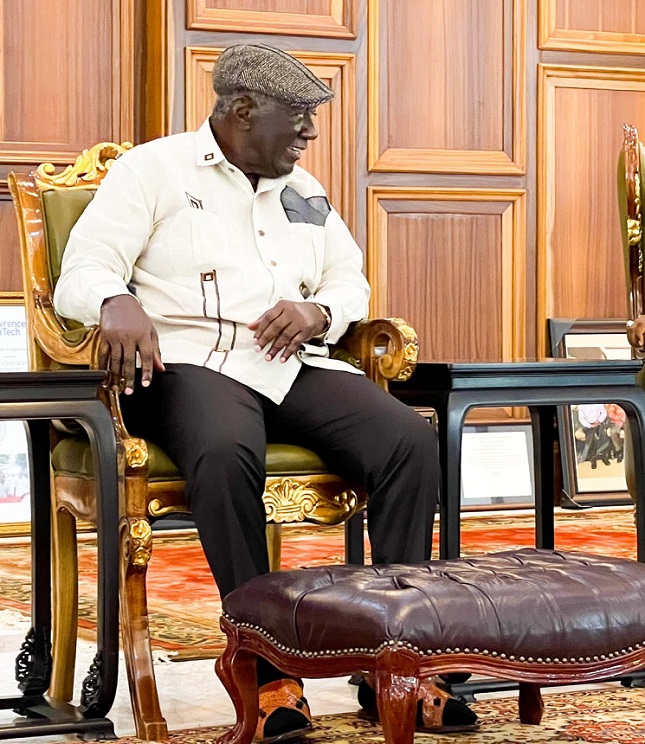

Ghana cannot continue demanding transformational development from governments while giving them an electoral calendar that rewards short-term politics over long-term delivery. That is the uncomfortable question at the heart of former President John Agyekum Kufuor’s renewed support for extending Ghana’s presidential term from four to five years. His argument deserves serious consideration, not partisan dismissal. Development is not achieved through campaign slogans, ribbon-cutting ceremonies or hurried infrastructure announcements. It requires planning, institutional coordination, financing, execution and measurable results. These take time.
Speaking in an interview with JoyNews on October 28, 2026, Kufuor argued that four years was insufficient for a developing country such as Ghana to implement its policies effectively. Drawing on his experience as President between 2001 and 2009, he maintained that an additional year would provide governments with a more realistic opportunity to deliver their development programmes before returning to the electorate. His criticism was particularly directed at the fourth year, which increasingly becomes dominated by electioneering. As he bluntly observed, an election year is a “mad year”, when politicians spend considerable energy making promises rather than concentrating on governance.
There is considerable merit in this diagnosis. Article 66 of Ghana’s 1992 Constitution establishes a four-year presidential term, with a maximum of two terms for any individual. Presidential and parliamentary elections take place every four years, creating a political environment in which governing and campaigning frequently overlap. In practice, however, the constitutional four-year mandate does not translate into four uninterrupted years of effective policy implementation.
The first year is frequently consumed by political appointments, ministerial transitions, institutional familiarization and the preparation of policy frameworks. Ministers must understand their portfolios, establish working relationships with civil servants and translate campaign commitments into implementable programmes. Cabinet approvals, parliamentary processes, procurement procedures and budgetary allocations take additional time. The second year often becomes the first serious opportunity for implementation, while the third year brings mounting pressure to demonstrate visible achievements. By the fourth, political survival increasingly competes with administrative responsibility.
Kufuor’s proposed five-year arrangement seeks to change that calculation. It would give administrations four years to concentrate on governing, leaving the fifth for intensified electoral engagement. This is not an argument for unlimited presidential power. Indeed, Kufuor has explicitly maintained his support for the two-term limit. The distinction is fundamental: extending the duration of a mandate is not the same as extending the number of mandates a president may enjoy.
The Development Dividend and Its Limits
Development operates on longer timelines. Roads, railways, hospitals, irrigation, industrial parks and energy infrastructure require feasibility studies, land, financing, procurement and construction. Education and health reforms take longer still to produce measurable outcomes. Governments judged after barely three years of implementation may be punished before benefits materialize. Ghana’s own public investment experience illustrates the problem. The African Development Bank’s 2025 Country Portfolio Performance Review reported a cumulative disbursement rate of just 40 per cent for sovereign operations as of November 30, 2025. It identified fiscal constraints, leadership transitions, lengthy approval processes, procurement delays and limited implementation capacity among the obstacles. This does not prove longer presidencies solve delivery failures; it shows projects face bottlenecks and need continuity.
The arithmetic is straightforward: moving from four years to five increases the formal governing period by 25 per cent. That is a meaningful addition for capital projects whose preparation and construction span several years, although it does not guarantee that the additional time will be productively used. Ghana has held competitive presidential elections at four-year intervals since the Fourth Republic began in 1992, and the 2000, 2008, 2016 and 2024 transfers or changes of governing party demonstrated that voters can use the ballot to impose consequences. The challenge is to preserve that democratic discipline while giving elected administrations a workable policy horizon. A five-year term could improve that continuity. Governments could sequence projects rationally, evaluate programmes before judgment day and resist launching showpiece projects simply to impress voters. Longer horizons may strengthen medium-term budgeting and investor confidence.
That additional year, however, must be protected from patronage, waste and politically motivated project selection decisions. But the extra year must not become an excuse for inefficiency. Ghana also faces weak project preparation, procurement failures, fiscal instability and discontinuity between administrations. More time cannot replace competent ministers, sound finances or capable institutions.
Democracy, Ghana and the African Precedent
The Constitutional Review Committee recommended five-year presidential and parliamentary terms; government accepted the proposal in July 2026. The NPP rejected it in September, arguing that four-year elections provide more regular accountability and that governments should improve efficiency. Kufuor’s endorsement puts an influential former NPP president at odds with his party.
The opposition’s concern is legitimate. Elections are the mechanism through which citizens reward or remove leaders. Longer intervals could weaken accountability where parliament, courts, media and oversight institutions are ineffective, giving failing governments more time to entrench patronage or misuse resources.
Yet Ghana would not be entering unfamiliar constitutional territory. Comparative research published in the Journal of African Law reports that 37 African states had five-year presidential terms, while terms across the continent ranged from four to seven years. Five-year terms are therefore common, not inherently undemocratic. International IDEA reports that over 80 per cent of presidential and semi-presidential constitutions worldwide contain term limits. The safeguard is whether enforceable limits prevent personal rule. Extending Parliament’s term too would align electoral calendars, but lengthen the interval between legislative verdicts. Reform must therefore strengthen parliamentary scrutiny, auditing, judicial independence, access to information and civil society.
Ghana’s reputation for competitive elections and peaceful transfers gives the debate continental significance. A five-year term with an inviolable two-term ceiling could balance planning and restraint. A poorly negotiated amendment, however, could embolden leaders elsewhere to weaken accountability.
A Longer Mandate Must Earn Public Consent
The proposal is not yet law. Legitimacy requires transparent constitutional procedures, public consultation and cross-party agreement, not simply a governing majority. The NPP’s opposition makes consensus essential. Kufuor’s intervention is valuable because it forces a necessary question: should Ghana’s political calendar serve the demands of development or should development continually be sacrificed to the political calendar? Five years cannot guarantee prosperity, but four years is not the only democratic arrangement. Reform must preserve two terms, protect institutions and require public reporting on campaign promises, project costs, targets and annual progress. Citizens need ways to challenge failure between elections.
Ultimately, the argument is not that politicians deserve more time. It is that Ghanaians deserve governments with a realistic opportunity to deliver, and institutions strong enough to hold them accountable. Five years may provide that opportunity. Whether it becomes a development dividend or an extension of political complacency will depend on the safeguards Ghana builds around it.