

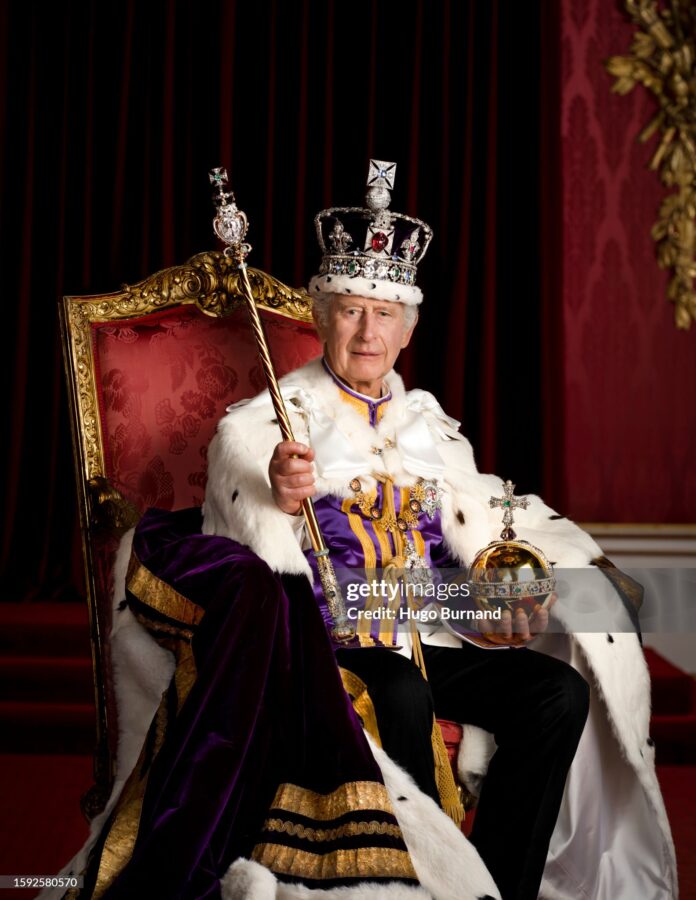

Britain cannot turn the page on slavery by expressing sorrow while leaving the question of responsibility unanswered. King Charles III’s address to Commonwealth leaders in Antigua was forceful, but politically cautious: he described the transatlantic slave trade as a shameful chapter that filled his heart with “horror” and “profound personal sorrow”, then urged modern partnerships, investment and action. What he did not offer was an apology. That omission matters. Without acknowledgement of responsibility, partnership risks becoming a substitute for justice rather than its instrument.
The scale of the crime leaves no room for diplomatic understatement. The Trans-Atlantic Slave Trade Database estimates that about 12.5 million Africans were forced onto ships bound for the Americas between 1501 and 1866; approximately 10.7 million survived the Middle Passage. Britain transported an estimated 3.2 million people, making it one of the largest participants in this system. This was an organized, state-enabled system of kidnapping, sale, forced labour and racialized violence, sustained by shipping, finance, insurance, legislation and imperial military power.
Britain’s role did not end when Parliament prohibited its participation in the trade in 1807. Slavery itself continued in British colonies until the 1833 abolition legislation took effect in 1834, while coercive apprenticeship endured until 1838. Ending the trafficking of people and ending their enslavement were separate political acts, separated by decades. The Royal Navy later suppressed illegal trafficking, as Charles recalled, but that achievement cannot erase Britain’s earlier role in building and profiting from the system. Acknowledging abolition without accounting for exploitation creates a selective national memory.
The Accounting of Emancipation
The financial record sharpens the moral contradiction. In 1833, the British government authorized £20 million in compensation to slave owners for the loss of people they had claimed as property. The formerly enslaved received no equivalent payment. The Bank of England records that the compensation was added to the national debt, with the final repayment made in 2015. Historic England estimates the £20 million at around £16.5 billion in today’s money. The state therefore mobilized public finance to compensate enslavers, while those who endured generations of unpaid labour were left without restitution.
This history does not mean that every contemporary British citizen bears personal guilt, nor does it make the design of reparations straightforward. It does, however, establish institutional continuity: governments, financial bodies and commercial interests accumulated wealth and power through an economy whose consequences did not disappear with emancipation. The question is not whether descendants should inherit individual blame. It is whether present-day institutions can acknowledge historical benefit and lasting damage, then negotiate fair remedies. Refusing even to discuss that distinction turns complexity into an excuse for inaction.
Partnership Must Mean Power and Resources
The King’s emphasis on education, jobs, intra-Commonwealth trade and climate resilience is therefore welcome, but insufficient unless translated into measurable commitments. Reuters reported that Prime Minister Andy Burnham announced £40 million for Caribbean infrastructure over three years and intended to discuss debt resets for smaller Commonwealth states. These proposals may provide useful assistance. Yet they are not, by themselves, reparatory justice. Durable partnership requires predictable finance, transparent delivery and a role for affected communities in setting priorities.
The geopolitical stakes are substantial. Many Caribbean states face high borrowing costs, climate exposure and limited fiscal space, despite contributing little to the emissions driving global warming. When hurricanes destroy infrastructure, governments must borrow to rebuild, often at punishing rates. Debt restructuring, concessional climate finance, technology transfer and investment in resilient infrastructure would address real vulnerabilities. But such measures should be designed with Caribbean governments, not presented as benevolence from London. The same principle applies to African states: trade access, skills partnerships, health investment and fairer financing must expand local productive capacity rather than reproduce dependency through new forms.
A credible programme should begin with a jointly agreed process: independent historical research; formal acknowledgement by the British state; preservation and open access to archives; investment in education and cultural institutions; and negotiations on practical forms of repair. These could include debt relief, targeted development funds, scholarships, public-health partnerships and support for climate adaptation. The CARICOM reparations campaign has long argued for a structured regional response. Its proposals deserve serious engagement, not dismissal as an attempt to invoice present generations for ancient crimes.
An Apology Is a Beginning, Not the End
Charles speaks as monarch and head of the Commonwealth, not as an elected government. Constitutional limits matter: he cannot independently commit taxpayers’ money or dictate policy. But the Crown is not historically detached from empire, and a monarch’s words carry symbolic authority. His expression of sorrow recognises the human horror. His appeal to learn from history is sound. Yet the formulation that “we cannot change the actions of those who came before us” risks placing the past beyond political responsibility. We cannot change history; we can change what institutions do with its inheritance.
Nor should Britain’s abolitionist record be used as a shield. The Royal Navy’s suppression campaigns cost lives and helped disrupt the trade, but they came after British merchants, shipowners, plantation interests and political institutions had helped make the Atlantic system immensely profitable. Both facts belong in the account.
The Commonwealth is a voluntary association of 56 states, many with histories shaped by British rule. Its legitimacy depends on equality, not nostalgia. If London wants modern partnership, it must listen when Caribbean and African leaders define what repair requires. An apology would not settle every claim, determine a final sum or erase centuries of harm. It would, however, remove a major obstacle to trust by naming the wrong plainly.
The test of the King’s words will not be their eloquence but what follows: a public acknowledgement, serious negotiations and funded commitments that communities can measure. Sorrow matters. But without accountability, it is only a statement about the past. Partnership begins when Britain is prepared to share power and resources in the present.