


Iran and its regional allies should resist a dangerous strategic miscalculation: the assumption that reducing American military assistance will suddenly strip Israel of its ability to defend itself, deter its adversaries or project military power across the region. Ambassador Roey Gilad’s confidence that a planned withdrawal of roughly $4 billion in annual United States assistance need not end Israel’s military superiority is not an attempt to downplay the importance of American support. Rather, it reflects a fundamental reality about Israel’s military strength: American assistance has reinforced an already formidable state; it has not single-handedly created its capabilities.
Precision matters. Under the 2019-2028 US-Israel memorandum of understanding, Washington committed $38 billion over ten years: $3.3 billion annually in Foreign Military Financing and $500 million for cooperative missile-defence programmes. The familiar $4 billion description is rounded; the baseline is $3.8 billion, before exceptional wartime appropriations. The Congressional Research Service also records substantial additional assistance following the Hamas-led attacks of 7 October 2023, including major supplemental funding.
The support is substantial and strategically valuable. The Council on Foreign Relations estimates that US aid represented about one-fifth of Israel’s defence budget before the Gaza war. Losing it would impose financial costs, force procurement choices and complicate long-term military planning. But one-fifth is not the whole. Israel possesses its own tax base, advanced economy, world-class research institutions, sophisticated defence manufacturers and considerable capacity to mobilize domestic resources. Gilad’s argument is strongest when understood as a statement of national resilience and strategic independence, not invulnerability.
Aid Built the Edge; Israel Has the Capacity to Sustain It
The arithmetic also exposes a strategic choice for Washington. American assistance is not charity. It advances US security interests, sustains interoperability, provides predictable demand for American defence manufacturers and preserves Washington’s influence over a strategically important democratic partner. A managed transition towards greater Israeli financial independence can protect these interests far better than an abrupt disengagement.
For Israel, the challenge is to replace grant-financed purchases without compromising military readiness or losing access to advanced technologies. That is a demanding task, but hardly an impossible one for a country that has repeatedly demonstrated an extraordinary capacity to innovate under security pressure.
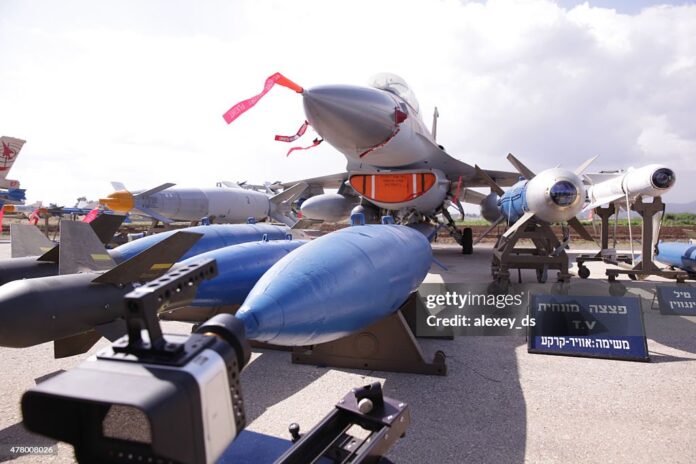
American assistance has helped make the Israel Defence Forces (IDF) among the most capable military forces in the world. It facilitates access to advanced platforms such as the F-35, supports ammunition and equipment purchases and underwrites joint missile-defence research and production. This is not simply a financial transfer; it is an industrial, technological and strategic ecosystem that benefits both countries.
Yet Israel is not merely a consumer of imported weapons. Its defence industry designs and produces advanced air-defence systems, sensors, drones, electronic warfare equipment, cyber capabilities and precision technologies. Israeli innovation has become an important contributor to global defence markets. Israel’s Defence Ministry reported record defence exports of $14.795 billion in 2024, 13 per cent above 2023 and more than double the value five years earlier.
The scale of Israel’s own military spending is equally revealing. The Stockholm International Peace Research Institute estimated military expenditure at $46.5 billion in 2024, up 65 per cent from 2023 and equivalent to 8.8 per cent of gross domestic product. These figures demonstrate that Israel has both the economic capacity and the political determination to devote considerable resources to national defence when its security is threatened.
The implication is important: Israel’s military future does not depend exclusively on the continuation of American grants. A gradual transition would give the country time to adjust its budgets, expand domestic production, strengthen its defence-industrial base and prioritize the capabilities most essential to maintaining its qualitative military edge.
The Technological and Operational Advantage
Military superiority cannot be measured by the value of an annual foreign assistance package alone. It rests on integrated intelligence, advanced command systems, highly trained personnel, air superiority, precision weapons, cyber operations, logistics and, perhaps most importantly, the ability to learn and adapt faster than an adversary.
Israel has developed these capabilities in an exceptionally hostile regional environment. Its limited strategic depth means that early warning, rapid mobilization, technological innovation and layered defence are not optional advantages; they are fundamental requirements of national survival.
Its missile-defence architecture illustrates this strategic sophistication. Iron Dome addresses shorter-range rockets and drones; David’s Sling covers a middle tier of threats; and the Arrow systems are designed to intercept longer-range ballistic missiles. The architecture is the product of Israeli initiative, engineering and operational experience, combined with substantial American cooperation.
The American contribution remains important. Its withdrawal would affect future development, interceptor inventories and co-production arrangements. But it would not erase the technological expertise, institutional knowledge and industrial capacity Israel has accumulated over decades. These are strategic assets that cannot simply be switched off by a change in Washington’s budget priorities.
Israel’s Defence Ministry assessment of the June 2025 Operation Rising Lion said its multi-layered defences prevented more than $15 billion in property damage. It also reported more than 500 strikes and interdictions by its unmanned-aircraft array inside Iran, alongside more than 12,000 satellite images gathered during the operation. These official Israeli figures are not independent verification, but they illustrate the intelligence infrastructure, operational reach and technological coordination that underpin Israel’s military advantage.
The June 2025 confrontation also offered a powerful demonstration of Israel’s ability to conduct complex operations far beyond its immediate borders. Its intelligence capabilities, air power, precision targeting and coordination exposed serious vulnerabilities in Iran’s military infrastructure. The strategic lesson for Tehran should be difficult to ignore: Israel is not simply a country equipped with American weapons. It is a technologically advanced military power with considerable indigenous capabilities and extensive operational experience.
Nor should the Iranian threat be underestimated. Tehran has developed a substantial arsenal of ballistic and cruise missiles, drones and regional partner networks. The conflict demonstrated both the reach of Iranian weapons and Israel’s ability to strike deep inside Iranian territory.
Iran can inflict damage, but the ability to launch missiles is not equivalent to the ability to defeat a technologically superior opponent. Military effectiveness depends on more than the volume of weapons in an arsenal. It requires intelligence, targeting accuracy, command integration, survivability, air power and the capacity to sustain operations. On these measures, Israel retains significant advantages.
A Warning to Tehran, Not a Blank Cheque
Hezbollah, the Houthis and other Iran-aligned groups have attempted to stretch Israel across multiple fronts, threatening its cities, infrastructure, shipping routes and civilian population. Their rockets, drones and asymmetric tactics can impose serious costs. Israel’s security environment remains exceptionally challenging, and no responsible assessment should suggest that its military superiority makes it immune to casualties or strategic setbacks.
Nevertheless, there is a fundamental difference between imposing costs on Israel and fundamentally undermining its military capacity. Israel has repeatedly demonstrated that it can adapt its military posture, mobilize its population, integrate intelligence and deploy advanced technology against threats from multiple directions.
Its advantage is not absolute, and prolonged conflict can strain manpower, inventories, the economy and public confidence. But superiority is relative. It is sustained through investment, innovation, institutional competence and the ability to respond effectively to changing threats.
Gilad’s position should therefore be read as a warning against strategic miscalculation, not an invitation to complacency. Iran should not confuse a change in American financing with the collapse of Israeli military capacity. Nor should Israel confuse resilience with immunity.
Moving away from American grants requires disciplined procurement, sustained research, domestic manufacturing, diversified supply chains and adequate missile-defence inventories. It also requires preserving American cooperation in intelligence, technology and diplomacy, even if direct financial assistance declines.
There is a political argument for such a transition, too. A relationship based indefinitely on grants can become vulnerable to shifts in American public opinion, congressional priorities and competing domestic demands. A gradual move towards partnership, co-development and reciprocal investment could make US-Israel cooperation more durable.
Washington remains an indispensable strategic partner. Ending grants would not automatically end arms sales, joint research, intelligence-sharing or diplomatic coordination. Indeed, a more financially independent Israel could strengthen the partnership by allowing both countries to pursue cooperation increasingly on the basis of shared strategic interests rather than financial dependency.
There is also a wider regional consideration. Israel’s military strength has long served as a deterrent against those who might otherwise contemplate an attempt to destroy it. Weakening that deterrent would not necessarily produce regional stability; it could instead embolden Iran and its proxies, increasing the likelihood of further confrontation. A secure Israel is therefore not simply an Israeli interest. It is an important element of the broader regional balance of power.
Ultimately, American assistance strengthened an already formidable state; it did not single-handedly create its military power. Israel’s economic capacity, defence industry, technological base, intelligence capabilities and operational experience are foundations that a change in American funding cannot erase overnight.
Tehran should calculate accordingly. Israel can suffer serious costs, and its adversaries can still inflict casualties and damage. But betting that a phased reduction in American assistance will suddenly weaken the Israel Defence Forces is not strategic analysis; it is wishful thinking.
The real test is whether Israel can translate its technological, economic and industrial advantages into a sustainable security posture that is increasingly self-financed while preserving its strategic partnership with Washington.
Gilad is right on the central point: Israel’s military superiority is not simply purchased in Washington. American support has helped strengthen it, but its foundations are built in Israel, sustained by Israeli innovation and demonstrated through the country’s ability to defend itself against determined adversaries. Tehran should understand that distinction before making its next strategic calculation.