

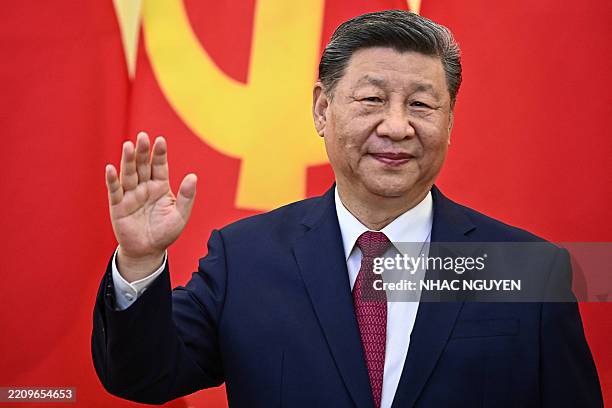

Partnership cannot excuse maritime predation. The interception of two Chinese-flagged trawlers near Katchèk in Guinea’s exclusive economic zone exposed a test of sovereignty as much as a fisheries offence: do Beijing’s promises to respect African countries’ independence apply when Chinese commercial interests are involved? Detected by satellite surveillance during Guinea’s July-August biological fishing ban, the vessels carried licences issued by Guinea-Bissau, not permission to fish in Guinean waters. Inspections reportedly confirmed fishing activity. It challenged Guinea’s authority over vital resources.
The law is clear. Under the United Nations Convention on the Law of the Sea, a coastal state has sovereign rights to explore, exploit, conserve and manage living resources in its exclusive economic zone, which can extend 200 nautical miles from its baselines. Other states retain navigation freedoms, but must comply with coastal-state rules when exploiting resources. A licence issued by Guinea-Bissau cannot become a Guinean fishing permit. If that boundary is ignored, African maritime sovereignty becomes negotiable in practice, whatever diplomatic statements declare.
A Pattern Demanding Accountability
The Katchèk case follows a troubling sequence. In December 2023, the Lu Rong Yuan Yu 215 and 218 were each fined €100,000 for using non-compliant fishing gear. In 2024, the Meng Xin 27, Fu Yuan Yu 366 and Fu Yuan Yu 373 were intercepted over violations that included failures to communicate and cooperate with monitoring authorities. In October 2025, the Mengxin 18 and Shenghai 18 were each fined 500 million Guinean francs for taking on supplies without authorization. The latest case involves two vessels allegedly fishing without authorization during a closed season.
These incidents involve different offences. They do not prove that every Chinese operator breaks the law or that Beijing ordered the misconduct. But repetition demands tougher questions: do penalties deter offenders, are beneficial owners identified and do companies treat fines as routine operating costs? Vessel operators bear direct responsibility. Chinese authorities, however, cannot indefinitely distance themselves from companies operating under their flag and within a national distant-water fishing system. A partnership built on respect requires credible oversight, not merely diplomatic reassurance.
The scale of China’s distant-water presence makes scrutiny essential. A 2020 Overseas Development Institute study estimated the fleet at 16,966 vessels, substantially above earlier estimates, while warning that ownership and operational control are fragmented and opaque. Nevertheless, such a fleet presents serious monitoring challenges for developing coastal states with limited patrol capacity. Guinea’s experience is part of a wider governance problem, not an isolated bilateral dispute.
The Cost Is Paid Along the Coast
Illegal, unreported and unregulated fishing is not a technical breach. Illegal catches evade conservation rules; unreported catches deprive governments of revenue and reliable stock data; and unregulated activity can escape agreed management measures. Industrial trawlers can also compete with artisanal fishers, whose boats, equipment and access to finance are limited. As catches decline, small-scale crews may travel farther, spend more on fuel and face greater risks for uncertain returns. Fish processors, traders and market women then confront reduced supplies and falling incomes.
The regional economic warning is stark. The Kofi Annan International Peacekeeping Training Centre estimates that illegal fishing costs West Africa about $1.3 billion annually. This is a regional figure, not an estimate of Guinea’s individual losses. The UN Food and Agriculture Organization reported in 2026 that aquatic foods supplied at least one-fifth of animal-protein consumption for 3.1 billion people worldwide, while fisheries and aquaculture supported more than 600 million livelihoods. Depletion threatens jobs, nutrition and stability.
For Guinea, the damage can span generations. Fishing supports thousands of families and is passed down through generations. Fishing during a biological closure risks undermining reproduction and replenishment, although the precise effects depend on species and local stock conditions. The closure is intended to give marine populations time to reproduce and recover. Disregarding it threatens the resource base on which future catches depend. Poor coastal households bear the consequences first.
Diplomacy Must Deliver More Than Rhetoric
The incident also carries a strategic cost for China. Beijing presents its African engagement as a partnership founded on mutual benefit, development and respect for sovereignty. Its trade, finance and infrastructure role has expanded its influence across the continent. But influence cannot rest on declarations alone. When Chinese-flagged companies repeatedly feature in fisheries enforcement cases, communities may judge China by commercial conduct rather than summit language. This gap can erode trust and strengthen criticism of China’s presence.
For West Africa, maritime security is inseparable from economic resilience, food systems and state authority. Opaque ownership, transshipment and weak port controls can make it difficult to establish who profits and where catches enter supply chains. Yet weak maritime governance creates opportunities for illicit activity, drains public revenue and undermines confidence in the state’s ability to protect national assets.
It should ensure transparent investigations, timely judicial proceedings, proportionate penalties and public disclosure of vessel identities, ownership, catch records and sanctions. Satellite surveillance must be matched by patrols, port inspections, electronic catch documentation and cooperation with Guinea-Bissau and regional fisheries bodies. Repeat offenders should face escalating penalties, including licence suspension where legally justified. Artisanal fishing communities should be involved in monitoring and management. Enforcement must apply to domestic and foreign operators alike, or it will lose legitimacy.
China must cooperate with investigations, verify vessel ownership and compliance histories, discipline companies found culpable and make clear that licences are jurisdiction-specific. It should improve transparency and support Guinea’s monitoring capacity. Guinea should not have to choose between Chinese investment and protecting its marine wealth. A genuine partnership requires both sides to accept rules even when compliance is commercially inconvenient.
The Katchèk interception is a warning that could become a precedent for stronger cooperation. Continued violations without consequences would deepen distrust, expose coastal livelihoods and hollow out China’s claim to be a respectful partner. Strategic friendship grants no fishing rights. Sovereignty is measured by a state’s ability to defend its resources, and by whether its partners respect that right.