

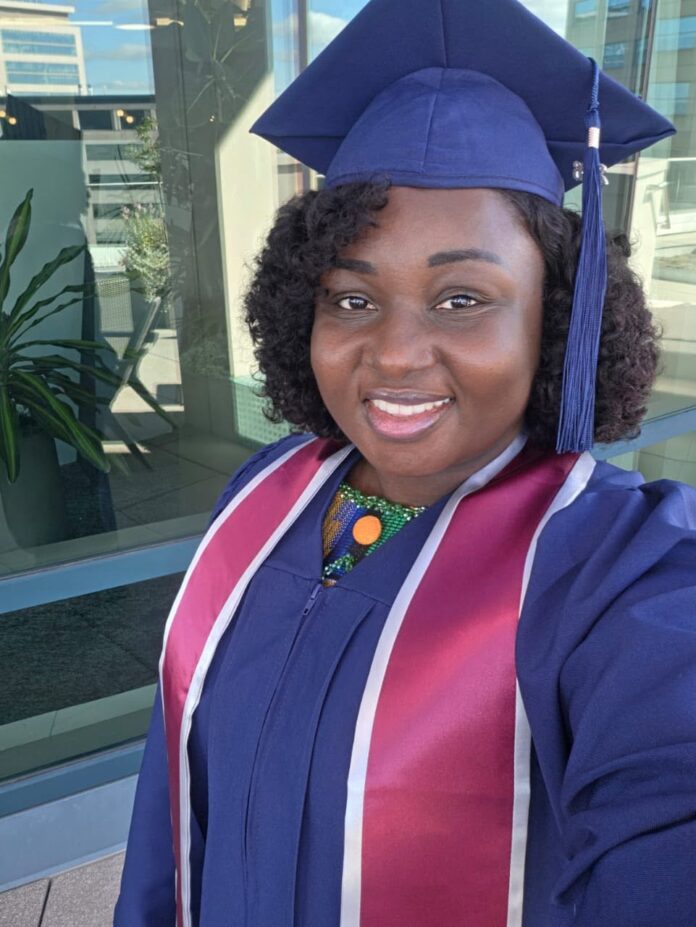

Dr. Ernestina Schandorf’s specialist training is already transforming access to brain tumour care for children at Korle Bu, with annual admissions rising from three to 17.
A Ghanaian doctor is breaking new ground in childhood cancer care, bringing specialized expertise in the treatment of brain and spinal cord tumours to a region where access to such care remains a major challenge.
Dr. Ernestina Nana Boatemaa Schandorf, Team Lead and Paediatric Oncologist at the Korle Bu Teaching Hospital (KBTH), has become West Africa’s first Paediatric Neuro-Oncologist following the successful completion of a two-year international fellowship in paediatric neuro-oncology.
She graduated from the St. Jude Global Virtual Paediatric Neuro-Oncology Fellowship (VPNOF) on October 19, 2026, marking a significant milestone for Ghana and specialized childhood cancer care across West Africa.
The achievement is more than a professional distinction. It represents an important step towards improving the diagnosis, treatment and survival prospects of children living with brain and spinal cord tumours in the sub-region.
The two-year fellowship combined virtual academic training with monthly visits to specialized centres, equipping Dr Schandorf with advanced skills in diagnosing and managing childhood central nervous system tumours. The programme also covered research, leadership and multidisciplinary approaches to patient care.
Already Changing the Landscape at Korle Bu
The impact of her specialized training is becoming evident at Korle Bu, where access to care for children with brain tumours has expanded.
Admissions of children with brain tumours to the hospital’s Paediatric Oncology Unit have increased from just three to 17 annually, reflecting a significant rise in the number of children accessing specialized care.
Dr. Schandorf has also strengthened collaboration among specialists through the establishment of a multidisciplinary tumour board that meets every two weeks to review cases and guide treatment decisions.
The board brings together experts from different medical disciplines and partner institutions, including Cape Coast Teaching Hospital, Greater Accra Regional Hospital and Tamale Teaching Hospital.
The collaborative approach is intended to ensure that children receive more coordinated care, with specialists contributing their expertise to decisions on diagnosis and treatment.
Another important development has been the securing of a dedicated intensive care bed for neurosurgical patients, a move that is helping to reduce waiting times for surgery.
Taking Ghana’s Childhood Cancer Research Forward
Beyond her clinical responsibilities, Dr Schandorf is contributing to the development of research and professional capacity in paediatric oncology.
Her baseline study on paediatric central nervous system tumours in Ghana has been accepted for publication in JCO Global Oncology, adding to the growing body of scientific knowledge on childhood cancers in the country.
The research is expected to provide valuable evidence to inform future clinical practice, policy discussions and efforts to improve care for children with brain and spinal cord tumours.
She also serves as Chairperson of the Department of Child Health Fundraising Committee at Korle Bu Teaching Hospital and Branch Chair of the Paediatric Society of Ghana, Greater Accra Region.
A Wider Vision for West Africa
Dr Schandorf’s ambitions extend beyond the walls of Korle Bu. She hopes to use her expertise and professional networks to expand regional collaboration, strengthen diagnostic capacity, promote research and advocate for improved access to treatment and financial support for families affected by childhood brain tumours.
Her achievement comes at a time when specialized expertise, timely diagnosis and access to treatment remain critical to improving outcomes for children diagnosed with cancer.
By bringing advanced neuro-oncology expertise into Ghana’s healthcare system, she is helping to build a foundation for more coordinated and specialized care, while creating opportunities for other health professionals and institutions across the region to strengthen their capacity.
For families confronted with the devastating diagnosis of a brain tumour in a child, the availability of specialised expertise offers an important source of hope.
Dr. Schandorf’s historic milestone is therefore not simply about becoming the first in West Africa. It is about what that distinction could mean for the children who need treatment, the families searching for answers and the future of childhood cancer care across the sub-region.