


Iran does not have to fire another missile at Israel to constitute a clear and present danger. It does not have to announce an imminent attack, mobilize its forces for television cameras or issue fresh threats against Israeli cities. Its nuclear ambitions, expanding missile capabilities and determination to challenge Israel’s regional security are already sufficient reasons for vigilance. This is precisely why caretaker Prime Minister Benjamin Netanyahu is right to warn against downplaying the “serious and grave threats” confronting his country.
The danger of Gadi Eisenkot’s assessment is not that he recognizes the need for restraint. That is legitimate. It is that the absence of an immediate military trigger risks becoming confused with the absence of an immediate security concern. Those are fundamentally different propositions. A country facing an adversary with Iran’s capabilities cannot afford to make its security calculations exclusively around whether the next attack is hours, days or weeks away.
Speaking at the Knesset on November 23, Eisenkot, a former IDF chief of staff and prime ministerial hopeful, said he saw no direct and immediate Iranian threat requiring military action before a new government was formed. Significantly, he identified approximately 440 kilograms of enriched uranium as Iran’s gravest outstanding threat, arguing that its removal or destruction should be the priority. Netanyahu subsequently warned that those minimizing Israel’s security dangers were doing so for political reasons.
Netanyahu’s warning deserves support. Iran’s threat is not an abstraction to be debated away through political language. It is a strategic challenge involving nuclear capability, conventional military power and regional coercion. Israel cannot wait for every component of that threat to become operational before recognizing its seriousness.
Tehran’s Nuclear Gambit Is the Real Danger
The central issue is Iran’s nuclear programme. The approximately 440 kilograms of uranium enriched to 60 per cent that Eisenkot himself identified represents an extraordinarily serious proliferation concern. Weapons-grade uranium is generally enriched to approximately 90 per cent. Though possessing highly enriched uranium does not automatically mean possessing a nuclear weapon, the technical distance between 60 and 90 per cent is considerably smaller than the distance Tehran has already travelled.
That distinction is far from trivial. Building a nuclear weapon requires additional engineering, Weaponisation and delivery capabilities. Nevertheless, a state possessing substantial quantities of uranium enriched to 60 per cent has acquired a dangerous degree of nuclear leverage. It can shorten the time required to produce weapons-grade material and complicate international efforts to prevent proliferation.
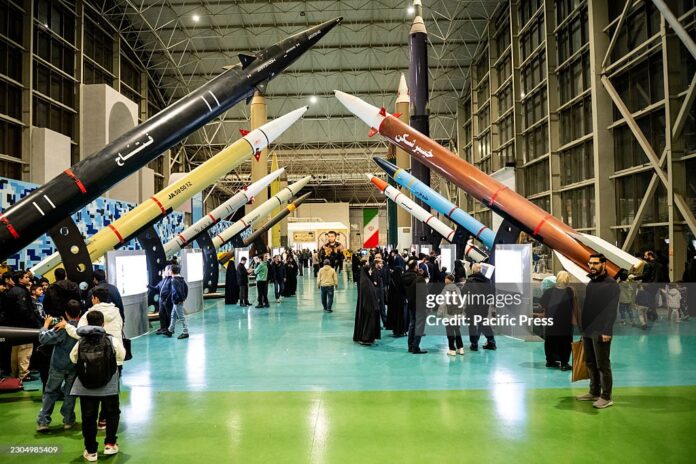
Israel has particularly compelling reasons to take this threat seriously. Iranian leaders have repeatedly threatened the country, while Tehran has invested heavily in military capabilities designed to challenge Israeli superiority. Its ballistic missile programme gives it the means to strike Israeli territory directly, while its relationships with armed groups provide additional instruments of pressure across the Middle East. The October 2024 Iranian missile attack, involving approximately 180 ballistic missiles, demonstrated Tehran’s willingness to move beyond indirect confrontation, following an even larger assault in April 2024 involving more than 300 drones and missiles. These are not theoretical capabilities or speculative threats; they are demonstrated military realities.
Deterrence Cannot Be Built on Wishful Thinking
The argument for restraint deserves consideration, but it must not become an excuse for strategic paralysis. Military action carries enormous risks. An Israeli attack could provoke Iranian retaliation, expose civilian populations to missile strikes, disrupt international energy markets and draw the United States into another regional confrontation. No responsible government should contemplate such consequences lightly. But the consequences of inaction also deserve scrutiny. What happens if Iran uses the present uncertainty to rebuild damaged military infrastructure, expand missile production, restore nuclear facilities or disperse sensitive materials beyond the reach of future operations? What happens if Tehran interprets Israel’s political transition as an opportunity to consolidate its strategic position? These are not peripheral questions. They go to the heart of deterrence.
A fundamental responsibility of national leadership is to prevent an adversary from acquiring capabilities that could fundamentally alter the regional balance of power. Israel’s security doctrine has historically placed considerable emphasis on preventing hostile states from obtaining strategic weapons that could threaten its existence. Its 1981 destruction of Iraq’s Osirak nuclear reactor and its 2007 strike against Syria’s suspected nuclear facility illustrate the longstanding importance attached to that principle.
Neither precedent establishes that another strike against Iran is automatically justified. Iran’s nuclear infrastructure is more extensive, geographically dispersed and technologically sophisticated. Nevertheless, they demonstrate why Israeli governments have traditionally treated nuclear proliferation by hostile regional powers as a strategic emergency rather than a problem that can simply be postponed.
The appropriate response is not necessarily immediate war. It is sustained military preparedness, credible deterrence, intelligence superiority, diplomatic pressure and a clearly defined threshold for action. Netanyahu must demonstrate that any proposed operation serves Israel’s national interests rather than domestic political calculations. But Eisenkot must equally recognize that postponing military action does not eliminate the threat that might eventually make such action necessary.
Israel’s Security Must Come Before Political Calculations
There is an uncomfortable contradiction in treating Iran’s nuclear stockpile as the gravest danger while suggesting that military urgency is absent. If approximately 440 kilograms of highly enriched uranium remain unaccounted for or inadequately secured, the strategic implications are profound. The international community cannot responsibly assume that the danger will diminish simply because political negotiations are under way in Jerusalem.
Yet Netanyahu also has a legitimate responsibility to distinguish national security from political survival. As caretaker prime minister, he must exercise particular caution when contemplating decisions capable of triggering another regional war. Although caretaker governments retain formal authority, Reuters has noted that they are expected to exercise restraint, particularly over major decisions and parliamentary oversight. That obligation should not preclude necessary defensive action; rather, it should ensure that any such action is grounded in compelling intelligence, appropriate legal authority, consultation with security professionals and a realistic assessment of its wider consequences.
Israel’s political divisions are themselves a strategic vulnerability, as Tehran benefits when Israeli leaders undermine public confidence, weaken national cohesion or turn existential security questions into instruments of partisan competition. Netanyahu is therefore right to argue that national unity matters. However, genuine unity cannot be demanded through political intimidation or achieved by dismissing legitimate scrutiny. Eisenkot’s military experience deserves respect, but it does not make his assessment infallible, just as Netanyahu’s premiership does not give him an unquestionable monopoly on interpreting intelligence or determining when military force becomes necessary. Ultimately, the responsibility is to protect Israel, not to win an argument inside the Knesset.
Iran’s ambitions will not disappear with Israel’s next government. Its nuclear capabilities, missile arsenal and regional military relationships will remain strategic challenges requiring sustained attention. Israel must therefore resist two equally dangerous temptations: launching military action without a defensible strategic objective and allowing political caution to become an excuse for dangerous complacency. Netanyahu’s warning should be understood in that context. The gravest security failures often begin when governments mistake the absence of an immediate catastrophe for evidence that the underlying danger has receded.
Israel cannot afford that mistake. Its enemies will not suspend their ambitions while its politicians negotiate a government. Nor will they wait for Jerusalem to achieve political consensus before pursuing their strategic objectives. The price of underestimating Iran could be far greater than the price of confronting an uncomfortable security reality.