


The Ghana Tertiary Education Commission (GTEC) has directed a public institution to withdraw admission offers made to prospective PhD students in Public Health after determining that it lacked the accreditation and minimum requirements to run the programme.
The directive comes amid growing concerns about the rapid expansion of doctoral education in Ghana and whether some universities have the academic personnel, infrastructure and resources to sustain increasing PhD enrolment without undermining quality.
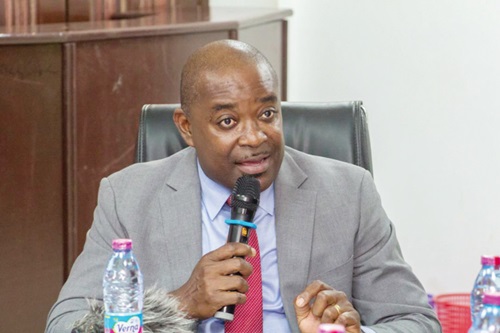
GTEC Director-General, Prof Ahmed Jinapor Abdulai, disclosed the development in an interview on Citi FM on Monday, but declined to name the institution affected.
He said the action was part of a nationwide review of doctoral programmes initiated by the Commission to assess whether universities are operating within their approved capacity and meeting the requirements underpinning their accreditation.
Prof Jinapor Abdulai clarified that GTEC had not imposed a blanket suspension on admissions into existing PhD programmes across the country, contrary to reports suggesting a general ban.
Instead, the Commission has temporarily suspended the processing of fresh accreditation applications for new doctoral programmes as it reviews the capacity and compliance of institutions already offering PhD courses.
The restriction is intended to allow GTEC to assess existing programmes before considering applications for additional doctoral offerings, with institutions expected to demonstrate that they meet the standards required for advanced research and academic supervision.
As part of the exercise, the Commission has written to universities requesting documentation on all PhD programmes they currently run. The review will examine staffing, infrastructure, funding and other resources available to support doctoral training.
Prof Jinapor Abdulai said institutions that satisfy the assessment requirements would be eligible to apply for accreditation for additional doctoral programmes, while those found wanting could face regulatory measures, including directives to suspend admissions into affected programmes.
The Commission’s intervention follows concerns that some universities may be prioritising enrolment and revenue generation over the academic capacity needed to deliver rigorous doctoral education.
Speaking at UMaT’s 19th Congregation in Tarkwa last Saturday, the Director-General questioned the scale of PhD admissions at institutions whose supervisory capacity and research infrastructure may not be sufficient to support the growing numbers.
He suggested that efforts to clamp down on fake doctoral qualifications and questionable honorary doctorate awards from unrecognised institutions may have contributed to increased demand for legitimate doctoral programmes, potentially encouraging some universities to expand enrolment.
According to him, such developments risk turning doctoral education into a commercial enterprise at the expense of the academic rigour expected of PhD programmes.
Prof Jinapor Abdulai cited instances of universities admitting more than 250 doctoral candidates, with some individual programmes enrolling over 50 students in a single intake. He questioned whether institutions with such numbers could provide adequate research supervision while lecturers also attend to their teaching, administrative and other academic responsibilities.
He maintained that doctoral enrolment must be determined by the availability of qualified supervisors, laboratories, library facilities, research funding and other essential resources, warning against expansion beyond institutional capacity.
The Director-General said the audit would help GTEC establish whether the scale of doctoral enrolment across universities is consistent with their available resources and Ghana’s broader academic and workforce needs.
He also expressed concern about the prospect of producing PhD graduates without sufficient employment opportunities, arguing that the expansion of doctoral education must be informed by its long-term implications for the country.
The review, which began approximately two weeks ago, will include a peer-assessment process involving academics from other universities with expertise in the disciplines under examination.
GTEC expects the exercise to determine whether institutions are delivering doctoral education in accordance with the conditions and standards under which their programmes were initially accredited.
Education Minister Haruna Iddrisu has also backed the emphasis on quality over quantity in tertiary education, echoing the Commission’s concerns about the rapid expansion of doctoral programmes.