

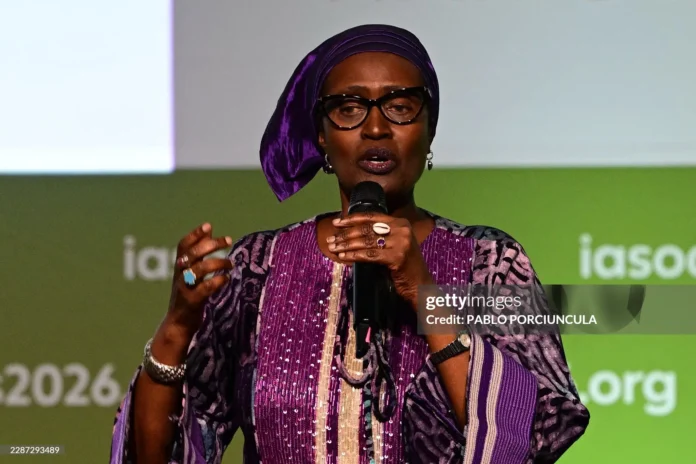

The global fight against HIV/AIDS risks losing hard-won gains, with funding shortfalls and mounting attacks on human rights threatening to reverse years of progress and trigger a resurgence in infections from next year, UNAIDS chief Winnie Byanyima has warned.
Byanyima said emerging signs of disruption to HIV prevention programmes, alongside shrinking international support and growing restrictions on rights, could undermine the progress made towards ending AIDS as a public health threat by 2030.
Though official figures have yet to capture the full impact, she said the consequences of funding reductions were already becoming apparent, with the possibility of rising infections expected to feature in data released in 2027.
Data published by UNAIDS on Tuesday showed that new HIV infections fell to 1.2 million last year, the lowest recorded level, down sharply from the estimated 3.5 million infections reported in 1994. The decline came even as international funding fell by nearly 20% last year.
Byanyima cautioned, however, that the downward trend could prove difficult to sustain as countries grapple with gaps in external financing. Some governments have struggled to compensate for the reductions, forcing prevention facilities to shut down and health workers to lose their jobs.
She said disruptions to frontline services were increasingly pointing to the possibility of a reversal, noting that infections were already climbing in some parts of South America.
Beyond the financial squeeze, Byanyima identified growing political resistance to women’s sexual and reproductive health rights and LGBTQ protections as another major obstacle to efforts to contain the epidemic.
The warning comes as the United Nations faces mounting pressure to overhaul its operations, prompting significant downsizing at UNAIDS, which has led the global response to HIV for three decades.
The agency has already cut its workforce by half and withdrawn operations from roughly 30 countries. However, its governing board rejected a proposal last month to disband the organization entirely.
Byanyima said the agency’s restructuring would instead proceed through a phased reduction in its size, with its central responsibilities preserved.
She is due to leave the executive director position in December, after which she plans to pursue advocacy work focused on global inequality and other issues.